
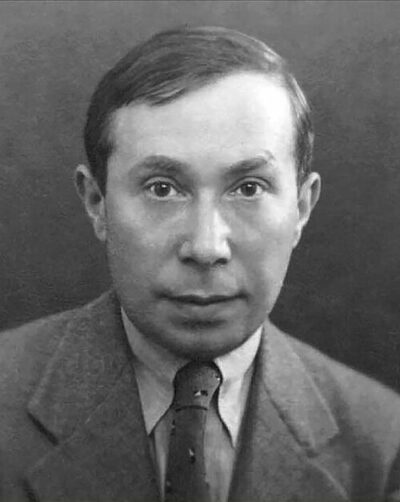
Leo Strauss
Leo Strauss was a History of Political Philosophy scholar. Born September 20, 1899, in Kirchhain. Died October 18, 1973, in Annapolis. Positions held include professor (1949–1969). Known for Persecution and the Art of Writing, Thoughts on Machiavelli and History of Political Philosophy. Educated at University of Hamburg and University of Freiburg. Awards include Commander's Cross of the Order of Merit of the Federal Republic of Germany and honorary doctor of the University of Hamburg.
Facts
35 facts · 2 confirmed by two sources · 6 cited · 27 from one source
Where this comes from
Papalocal keeps its own record. It started from these sources; what each one said is kept here as it was copied, so a change on their side never changes this page by itself. Tap one to read its version.
What Wikidata says · copied November 13, 2026 · revision 2568768428
- Described as
- History of Political Philosophy scholar (1899-1973)
- Born
- September 20, 1899 · 8 references
- Died
- October 18, 1973 · 8 references
- Born in
- Kirchhain · 1 reference
- Died in
- Annapolis · 1 reference
- Citizen of
- United States; Germany
- Occupation
- politician; political scientist · 1 reference; philosopher · 2 references; university teacher · 1 reference; political philosophy · 1 reference
- Positions held
- professor (1949–1969)
- Worked for
- University of Chicago; University of Cambridge; The New School; Columbia University; Hamilton College; Claremont McKenna College; St. John's College; Hebrew University of Jerusalem · 1 reference
- Education
- University of Hamburg (1918–); University of Freiburg (1925–); University of Marburg; Columbia University; Gymnasium Philippinum
- Member of
- American Academy of Arts and Sciences (1968–)
- Known for
- Persecution and the Art of Writing · 1 reference; Thoughts on Machiavelli · 1 reference; History of Political Philosophy · 1 reference
- Awards
- Commander's Cross of the Order of Merit of the Federal Republic of Germany (1965); honorary doctor of the University of Hamburg (1965)
- Field
- philosophy; political philosophy · 1 reference
- Children
- Jenny Strauss Clay
- Religion
- Orthodox Judaism · 1 reference
- Wikipedias with a page
- 52
Wikidata item Q77144 (wikidata.org/wiki/Q77144), public domain (CC0). Copied November 13, 2026.
What Wikipedia says · copied November 13, 2026 · revision 1380695370
Leo Strauss (September 20, 1899 – October 18, 1973) was a German-American political philosopher and historian of philosophy whose work greatly influenced twentieth-century political theory in the United States and the study of classical political thought. He is known best for his interpretation of ancient and medieval philosophy, his account of classical natural right, and his claim that philosophers often wrote esoterically, presenting different teachings to general and specialist readers. Strauss argued that the modern turn in philosophy, beginning with Niccolò Machiavelli and culminating in historicism and relativism, marked a decisive break with the classical understanding of politics and the good life. His work sought to recover the questions and methods of ancient political philosophy as a corrective to the perceived crisis of modern thought.
Born in Germany to Jewish parents, he emigrated to the United States in 1937, going on to hold positions at the New School for Social Research and later at the University of Chicago, where he taught from 1949 to 1969. His seminars shaped several generations of political theorists, many of whom became influential scholars in their own right at major American universities. Strauss's students and interlocutors played significant roles in the development of political philosophy in the postwar United States, particularly in the neoconservative movement; his ideas have been taken up and debated within fields including political theory, classics, intellectual history, and religious studies. His major works include Natural Right and History (1953), Persecution and the Art of Writing (1952), The City and Man (1964), and On Tyranny (1948). Strauss's work has also been the subject of debate, including disputes over his interpretations of ancient texts and discussions of the political influence of some of his students, though these issues remain contested within academic scholarship.
Strauss's scholarship ranges from studies of Plato, Aristotle, and Xenophon to examinations of Thomas Hobbes, Baruch Spinoza, Friedrich Nietzsche, and the medieval Islamic and Jewish philosophical traditions, particularly Al-Farabi and Maimonides. Central to his writings is the tension between reason and revelation, the nature of political prudence, and the relationship between philosophy and political authority. His methodological emphasis on close textual reading, the pedagogical value of classical texts, and the critique of modernity formed the basis of what came to be known as "Straussian" approaches to political theory.
- Born, in its opening lines
- September 20, 1899
- Died, in its opening lines
- October 18, 1973
From the Wikipedia article “Leo Strauss” (en.wikipedia.org/wiki/Leo_Strauss), by its contributors, under CC BY-SA 4.0 (creativecommons.org/licenses/by-sa/4.0/). Copied November 13, 2026; not changed.
Confirmed Two sources agree. Cited One source, and it names where it got it. One source One source, without a reference of its own. Sources disagree The sources disagree. We show the best-supported value and keep theirs below.
