
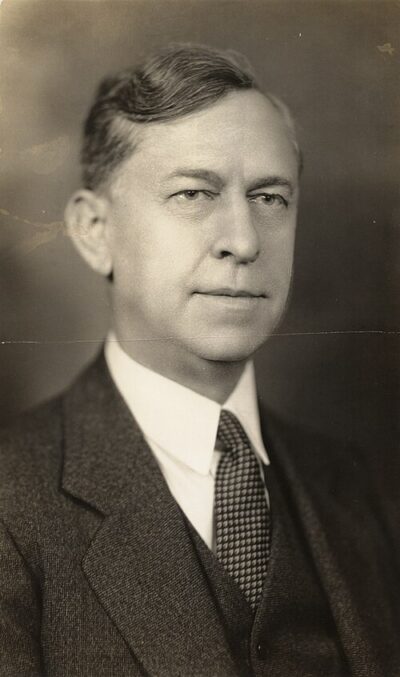
Leonard Eugene Dickson
Leonard Eugene Dickson was an American mathematician. Born January 22, 1874, in Independence. Died January 17, 1954, in Harlingen. Positions held include chairperson (1917–1918). Known for Cayley–Dickson construction, Dickson's conjecture and Dickson's lemma. Educated at University of Chicago and University of Texas at Austin. Awards include Cole Prize and Newcomb Cleveland Prize.
Facts
32 facts · 2 confirmed by two sources · 14 cited · 16 from one source
Where this comes from
Papalocal keeps its own record. It started from these sources; what each one said is kept here as it was copied, so a change on their side never changes this page by itself. Tap one to read its version.
What Wikidata says · copied November 15, 2026 · revision 2562183379
- Described as
- American mathematician (1874–1954)
- Other names
- Leonard Dickson
- Born
- January 22, 1874 · 5 references
- Died
- January 17, 1954 · 5 references
- Born in
- Independence
- Died in
- Harlingen
- Buried in
- Cleburne Memorial Cemetery · 1 reference
- Name at birth
- Leonard Eugene Dickson · 1 reference
- Citizen of
- United States
- Occupation
- mathematician · 1 reference; historian of mathematics; university teacher
- Positions held
- chairperson (1917–1918) · 1 reference
- Worked for
- University of Texas at Austin (1899) · 1 reference; University of Chicago (1900–1936) · 1 reference; University of California, Berkeley (1898) · 1 reference
- Education
- University of Chicago (–1896) · 1 reference; University of Texas at Austin (–1894) · 1 reference
- Member of
- National Academy of Sciences (1913–) · 1 reference; American Academy of Arts and Sciences; American Mathematical Society · 1 reference; American Philosophical Society · 1 reference; London Mathematical Society · 1 reference; French Academy of Sciences · 1 reference; Union of Czech mathematicians and physicists · 1 reference
- Known for
- Cayley–Dickson construction; Dickson's conjecture; Dickson's lemma; Dickson polynomials; History of the Theory of Numbers
- Awards
- Cole Prize (1928) · 1 reference; Newcomb Cleveland Prize (1923) · 1 reference
- Field
- algebra; number theory
- Wikipedias with a page
- 26
Wikidata item Q891058 (wikidata.org/wiki/Q891058), public domain (CC0). Copied November 15, 2026.
What Wikipedia says · copied November 15, 2026 · revision 1383662959
Leonard Eugene Dickson (January 22, 1874 – January 17, 1954) was an American mathematician. He was one of the first American researchers in abstract algebra, in particular the theory of finite fields and classical groups, and is also remembered for a three-volume history of number theory, History of the Theory of Numbers. The L. E. Dickson instructorships at the University of Chicago Department of Mathematics are named after him.
- Born, in its opening lines
- January 22, 1874
- Died, in its opening lines
- January 17, 1954
From the Wikipedia article “Leonard Eugene Dickson” (en.wikipedia.org/wiki/Leonard_Eugene_Dickson), by its contributors, under CC BY-SA 4.0 (creativecommons.org/licenses/by-sa/4.0/). Copied November 15, 2026; not changed.
Confirmed Two sources agree. Cited One source, and it names where it got it. One source One source, without a reference of its own. Sources disagree The sources disagree. We show the best-supported value and keep theirs below.
