
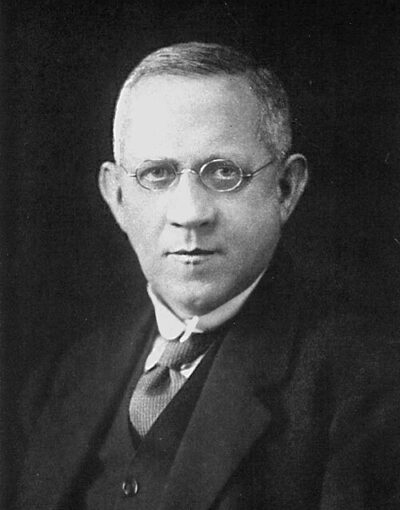
Martin Lowry
Martin Lowry was an English chemist. Born October 26, 1874, in Low Moor. Died November 2, 1936, in Cambridge. Educated at Imperial College London. Awards include Fellow of the Royal Society and Royal Society Bakerian Medal.
Facts
15 facts · 2 confirmed by two sources · 5 cited · 8 from one source
Where this comes from
Papalocal keeps its own record. It started from these sources; what each one said is kept here as it was copied, so a change on their side never changes this page by itself. Tap one to read its version.
What Wikidata says · copied November 16, 2026 · revision 2567432658
- Described as
- English chemist (1874–1936)
- Other names
- Thomas Martin Lowry, T. Martin Lowry, T. M. Lowry
- Born
- October 26, 1874 · 5 references
- Died
- November 2, 1936 · 4 references
- Born in
- Low Moor · 1 reference
- Died in
- Cambridge · 1 reference
- Citizen of
- United Kingdom; United Kingdom of Great Britain and Ireland (–1927)
- Occupation
- chemist · 1 reference; physicist · 1 reference
- Worked for
- University of Cambridge
- Education
- Imperial College London · 1 reference
- Member of
- Royal Society of London (1914–)
- Awards
- Fellow of the Royal Society (1914); Royal Society Bakerian Medal (1921) · 1 reference
- Field
- physical chemistry
- Father
- Edward P. Lowry · 1 reference
- Wikipedias with a page
- 29
Wikidata item Q908567 (wikidata.org/wiki/Q908567), public domain (CC0). Copied November 16, 2026.
What Wikipedia says · copied November 16, 2026 · revision 1384298536
Thomas Martin Lowry (; 26 October 1874 – 2 November 1936) was an English physical chemist who developed the Brønsted–Lowry acid–base theory simultaneously with and independently of Johannes Nicolaus Brønsted and was a founder-member and president (1928–1930) of the Faraday Society.
- Born, in its opening lines
- October 26, 1874
- Died, in its opening lines
- November 2, 1936
From the Wikipedia article “Martin Lowry” (en.wikipedia.org/wiki/Martin_Lowry), by its contributors, under CC BY-SA 4.0 (creativecommons.org/licenses/by-sa/4.0/). Copied November 16, 2026; not changed.
Confirmed Two sources agree. Cited One source, and it names where it got it. One source One source, without a reference of its own. Sources disagree The sources disagree. We show the best-supported value and keep theirs below.
