
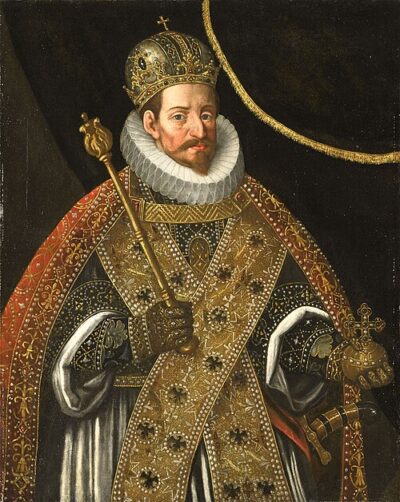
Matthias, Holy Roman Emperor
Matthias, Holy Roman Emperor was a Holy Roman Emperor. Born February 24, 1557, in Vienna. Died March 20, 1619, in Vienna. Positions held include Holy Roman Emperor (1612–1619), Prince-Elector and King of Bohemia (1611–1619). Awards include Knight of the Order of the Golden Fleece.
Facts
29 facts · 2 confirmed by two sources · 7 cited · 20 from one source
Where this comes from
Papalocal keeps its own record. It started from these sources; what each one said is kept here as it was copied, so a change on their side never changes this page by itself. Tap one to read its version.
What Wikidata says · copied November 16, 2026 · revision 2564005757
- Described as
- Holy Roman Emperor (1557-1619)
- Other names
- Emperor Matthias
- Born
- February 24, 1557 · 2 references
- Died
- March 20, 1619 · 8 references
- Born in
- Vienna · 3 references
- Died in
- Vienna · 3 references
- Buried in
- Imperial Crypt
- Citizen of
- Holy Roman Empire · 1 reference
- Occupation
- collector · 1 reference; politician · 1 reference
- Positions held
- Holy Roman Emperor (1612–1619); Prince-Elector; King of Bohemia (1611–1619); Apostolic King of Hungary (1608–1619) · 1 reference
- Awards
- Knight of the Order of the Golden Fleece
- Field
- state governance · 2 references; politics · 1 reference
- Spouse
- Anna of Tyrol (1611–1618) · 1 reference
- Father
- Maximilian II, Holy Roman Emperor
- Mother
- Maria of Austria, Holy Roman Empress
- Siblings
- Archduchess Margaretha of Austria; Anna of Austria, Queen of Spain; Elisabeth of Austria; Maximilian III, Archduke of Austria; Archduke Wenceslaus of Austria; Emperor Rudolf II; Albert VII, Archduke of Austria; Archduke Ernest of Austria; Ferdinand von Habsburg; Marie von Habsburg
- Religion
- Catholic Church
- Wikipedias with a page
- 60
Wikidata item Q152157 (wikidata.org/wiki/Q152157), public domain (CC0). Copied November 16, 2026.
What Wikipedia says · copied November 16, 2026 · revision 1379822346
Matthias (24 February 1557 – 20 March 1619) was Holy Roman Emperor from 1612 to 1619, Archduke of Austria from 1608 to 1619, King of Hungary and Croatia from 1608 to 1618 and King of Bohemia from 1611 to 1617. His personal motto was Concordia lumine maior ("Unity is stronger in the light").
Matthias played a significant role in the opposition of the Habsburg family against his brother, the Emperor Rudolf II. After gaining power, he showed little political initiative of his own. The course of his politics was determined by Cardinal Melchior Klesl until his fall in 1618. As a consequence of his failed religious and administrative policies, the Bohemian Revolt, the initial theatre of the Thirty Years' War, began during the final year of Matthias' reign.
- Born, in its opening lines
- February 24, 1557
- Died, in its opening lines
- March 20, 1619
From the Wikipedia article “Matthias, Holy Roman Emperor” (en.wikipedia.org/wiki/Matthias,_Holy_Roman_Emperor), by its contributors, under CC BY-SA 4.0 (creativecommons.org/licenses/by-sa/4.0/). Copied November 16, 2026; not changed.
Confirmed Two sources agree. Cited One source, and it names where it got it. One source One source, without a reference of its own. Sources disagree The sources disagree. We show the best-supported value and keep theirs below.
