
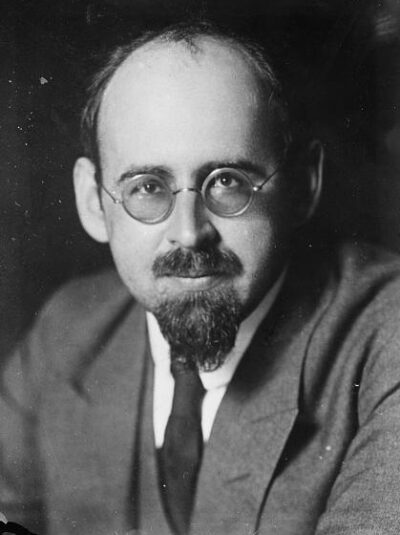
Nikolai Krestinsky
Nikolai Krestinsky was a Soviet diplomat. Born October 13, 1883, in Mahilyow. Died March 15, 1938, in Moscow. Positions held include Member of the Russian Constituent Assembly, ambassador (1922–1930) and Member of the Politburo of the CPSU Central Committee (1919–1921). Educated at Saint Petersburg State University.
Facts
22 facts · 2 confirmed by two sources · 3 cited · 17 from one source
Where this comes from
Papalocal keeps its own record. It started from these sources; what each one said is kept here as it was copied, so a change on their side never changes this page by itself. Tap one to read its version.
What Wikidata says · copied November 16, 2026 · revision 2524197336
- Described as
- Soviet diplomat (1883-1938)
- Other names
- Nikolai Nikolaevich Krestinsky
- Born
- October 13, 1883
- Died
- March 15, 1938 · 1 reference
- Born in
- Mahilyow
- Died in
- Moscow
- Buried in
- Kommunarka shooting ground
- Cause of death
- gunshot wound
- Citizen of
- Russian Empire; Soviet Union
- Occupation
- diplomat; lawyer; politician; revolutionary; jurist · 1 reference
- Positions held
- Member of the Russian Constituent Assembly; ambassador (1922–1930); Member of the Politburo of the CPSU Central Committee (1919–1921)
- Political party
- Communist Party of the Soviet Union; Russian Social Democratic Labour Party (bolshevik) · 1 reference
- Education
- Saint Petersburg State University · 1 reference
- Member of
- All-Union Society of Old Bolsheviks
- Field
- politics · 1 reference; law · 1 reference
- Wikipedias with a page
- 32
Wikidata item Q444914 (wikidata.org/wiki/Q444914), public domain (CC0). Copied November 16, 2026.
What Wikipedia says · copied November 16, 2026 · revision 1378215969
Nikolay Nikolayevich Krestinsky (Russian: Никола́й Никола́евич Крести́нский; 13 October 1883 – 15 March 1938) was a Soviet Bolshevik revolutionary and politician who served as the Responsible Secretary of the Communist Party of the Soviet Union.
Born in Mogilev to a Ukrainian family, Krestinsky studied law at Saint Petersburg Imperial University, where he embraced revolutionary politics. He became a member of the Russian Social Democratic Labour Party (RSDLP) in 1903, and two years later he supported Vladimir Lenin's Bolshevik faction following the RSDLP split. Repeatedly arrested, he was exiled to the Urals in 1914, shortly before the outbreak of the First World War. After the 1917 February Revolution brought an end to the monarchy, Krestinsky led the Bolsheviks in Yekaterinburg before returning to Petrograd. He was named People's Commissar for Finance and elected to the first Politburo. After the death of Yakov Sverdlov, Krestinsky also served as Responsible Secretary of the Russian Communist Party.
Krestinsky was an ally of Leon Trotsky and supported the Left Opposition. With the rise of Joseph Stalin, Krestinsky gradually fell from power and lost his positions in the government, save for his post as Soviet ambassador to Germany. He eventually repudiated his opposition and capitulated to Stalin. Krestinsky was arrested in 1937 in the Great Purge and charged with treason. He was found guilty in the 1938 Trial of the Twenty-One and executed.
- Born, in its opening lines
- October 13, 1883
- Died, in its opening lines
- March 15, 1938
From the Wikipedia article “Nikolay Krestinsky” (en.wikipedia.org/wiki/Nikolay_Krestinsky), by its contributors, under CC BY-SA 4.0 (creativecommons.org/licenses/by-sa/4.0/). Copied November 16, 2026; not changed.
Confirmed Two sources agree. Cited One source, and it names where it got it. One source One source, without a reference of its own. Sources disagree The sources disagree. We show the best-supported value and keep theirs below.
