
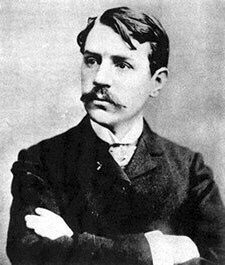
Paul Bourget
Paul Bourget was a French writer, playwright and critic. Born September 2, 1852, in Amiens. Died December 25, 1935, in Paris. Positions held include Member of the Académie française (1894–1935), president (1926–1930) and chairperson. Known for Cruelle énigme, Au bord de la mer and Les Aveux / Donner pour donner. Educated at Lycée Louis-le-Grand and Collège Sainte-Barbe. Awards include Grand Cross of the Legion of Honour, Concours général and Taylorian Lecture.
Facts
41 facts · 2 confirmed by two sources · 8 cited · 31 from one source
Where this comes from
Papalocal keeps its own record. It started from these sources; what each one said is kept here as it was copied, so a change on their side never changes this page by itself. Tap one to read its version.
What Wikidata says · copied November 16, 2026 · revision 2570005454
- Described as
- French writer, playwright and critic (1852–1935)
- Born
- September 2, 1852 · 15 references
- Died
- December 25, 1935 · 15 references
- Born in
- Amiens · 3 references
- Died in
- Paris · 3 references
- Buried in
- Montparnasse Cemetery
- Citizen of
- France
- Occupation
- playwright · 1 reference; writer · 3 references; essayist; novelist; literary critic · 1 reference; poet · 1 reference; journalist
- Positions held
- Member of the Académie française (1894–1935); president (1926–1930); chairperson
- Political party
- Action Française
- Education
- Lycée Louis-le-Grand; Collège Sainte-Barbe; École pratique des hautes études · 1 reference; University of Paris; Lycée Blaise-Pascal
- Member of
- Académie Française (1894–); Ligue de la Patrie Française; Zutiste
- Genre
- psychological novel; thesis novel
- Known for
- Cruelle énigme; Au bord de la mer; Les Aveux / Donner pour donner; Un crime d'amour; André Cornélis; Un Divorce; The noon demon; L'Étape
- Awards
- Grand Cross of the Legion of Honour (1935) · 1 reference; Concours général; Taylorian Lecture; Vitet Prize (1885)
- Father
- Justin Bourget
- Religion
- Catholicism · 1 reference
- Wikipedias with a page
- 61
Wikidata item Q198644 (wikidata.org/wiki/Q198644), public domain (CC0). Copied November 16, 2026.
What Wikipedia says · copied November 16, 2026 · revision 1380716596
Paul Charles Joseph Bourget (French: [buʁʒɛ]; 2 September 1852 – 25 December 1935) was a French poet, novelist and critic. He was nominated for the Nobel Prize in Literature five times.
Paul Bourget was born in Amiens, France. He initially abandoned Catholicism but eventually returned to it in the late 19th century. Bourget is known for his psychological and moralistic novels that often portrayed the complex emotions of women and the ideas, passions, and failures of young men in France. Some of his notable works include Le Disciple (1889), a bestseller that explored the consequences of materialism and positivism, and other novels such as Cruelle énigme (1885), André Cornelis (1886), and Mensonges (1887). He was admitted to the Académie Française in 1894 and was promoted to be an officer of the Légion d'honneur in 1895.
Bourget's early career was marked by volumes of verse, but he later found success in literary journalism, and his critical works such as Sensations d'Italie (1891) are highly regarded. Though his novels were widely popular in his time, they have since been largely forgotten by the general reading public. Nonetheless, Bourget remains an important figure in French literature for his psychological and moralistic approach to fiction, and his influence can be seen in the works of several composers, including Claude Debussy, who set some of Bourget's poems to music.
- Born, in its opening lines
- September 2, 1852
- Died, in its opening lines
- December 25, 1935
From the Wikipedia article “Paul Bourget” (en.wikipedia.org/wiki/Paul_Bourget), by its contributors, under CC BY-SA 4.0 (creativecommons.org/licenses/by-sa/4.0/). Copied November 16, 2026; not changed.
Confirmed Two sources agree. Cited One source, and it names where it got it. One source One source, without a reference of its own. Sources disagree The sources disagree. We show the best-supported value and keep theirs below.
