
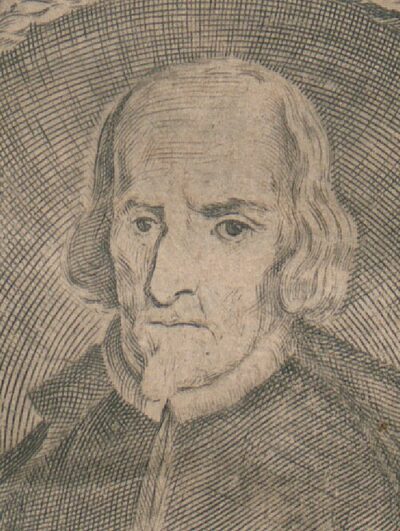
Pedro Calderón de la Barca
Pedro Calderón de la Barca was a Spanish dramatist. Born January 17, 1600, in Madrid. Died May 25, 1681, in Madrid. Positions held include Chaplain of the King of Spain (1663–). Known for Life is a Dream, The Constant Prince and The Great Theater of the World. Educated at University of Salamanca and University of Alcalá.
Facts
37 facts · 2 confirmed by two sources · 8 cited · 27 from one source
Where this comes from
Papalocal keeps its own record. It started from these sources; what each one said is kept here as it was copied, so a change on their side never changes this page by itself. Tap one to read its version.
What Wikidata says · copied November 16, 2026 · revision 2565593973
- Described as
- Spanish dramatist (1600-1681)
- Other names
- Calderon de la Barca, Calderón de la Barca, Pedro Calderon de la Barca
- Born
- January 17, 1600 · 16 references
- Died
- May 25, 1681 · 17 references
- Born in
- Madrid · 2 references
- Died in
- Madrid · 2 references
- Buried in
- Madrid
- Name at birth
- Calderón de la Barca Henao de la Barreda y Riaño · 1 reference
- Citizen of
- Spain
- Occupation
- playwright · 2 references; poet · 1 reference; military personnel · 1 reference; writer · 2 references; Catholic priest; cleric · 1 reference; librettist · 1 reference
- Positions held
- Chaplain of the King of Spain (1663–) · 1 reference
- Education
- University of Salamanca (–1615); University of Alcalá; Colegio Imperial de Madrid (1608–1613)
- Member of
- Order of Santiago; Congregation of Secular Priests of Saint Peter the Apostle
- Genre
- theatre; comedy · 1 reference; drama fiction · 1 reference
- Known for
- Life is a Dream; The Constant Prince; The Great Theater of the World; El médico de su honra; The Mayor of Zalamea; El mágico prodigioso; The Phantom Lady; El Pintor
- Field
- theatre · 1 reference
- Children
- Pedro José Calderón de la Barca
- Siblings
- Diego Calderón de la Barca; Dorotea Calderón de la Barca; José Calderón
- Religion
- Catholicism
- Wikipedias with a page
- 107
Wikidata item Q170800 (wikidata.org/wiki/Q170800), public domain (CC0). Copied November 16, 2026.
What Wikipedia says · copied November 16, 2026 · revision 1380207527
Pedro Calderón de la Barca y Henao (UK: , US: ; Spanish: [ˈpeðɾo kaldeˈɾon de la ˈβaɾka]; 17 January 1600 – 25 May 1681) was a Spanish dramatist, poet, and writer. He is known as one of the most distinguished poets and writers of the Spanish Golden Age, especially for the many verse dramas he wrote for the theatre. Calderón has been termed "the Spanish Shakespeare", the national poet of Spain, and one of the greatest poets and playwrights in the history of world literature.
Calderón de la Barca was born into the minor Spanish nobility in Madrid, where he lived for most of his life. He served as soldier and a knight of the military and religious Order of Santiago, but later became a Roman Catholic priest. His theatrical debut was a history play about the life of King Edward III of England; it was first performed on 29 June 1623 at the Royal Alcázar of Madrid, during the surprise visit to Spain of Charles, Prince of Wales to negotiate for a dynastic marriage alliance with the Spanish Habsburgs.
As he continued writing verse dramas, Calderón's favorite theatrical genres included mystery plays illustrating the doctrines of Transubstantiation and the Real Presence for performance during the Feast of Corpus Christi and both comedy of intrigue and tragic theatre rooted in many of the same plot devices as Shakespeare's plays and in ethical dilemmas under the Spanish nobility's code of honour. Born while the unwritten rules of Spanish Golden Age theatre were still being defined by Lope de Vega, Calderón pushed their limits even further by introducing radical and pioneering innovations that are now termed metafiction and surrealism.
His masterpiece, La Vida es Sueño ("Life is a Dream"), combines a beauty and the beast plotline, a disguised woman reminiscent of Viola from Shakespeare's Twelfth Night, surrealist concepts, romantic complications, and the threat of a dynastic civil war, while exploring the philosophical question of whether each individual's fate has already been written without their involvement or if the future can be altered by free will.
Calderón's poetry and plays have since wielded an enormous global influence upon Romanticism, symbolism, literary modernism, expressionism, dystopian science fiction, and even postmodernism. His many admirers have included August Wilhelm Schlegel, Johann Wolfgang von Goethe, John Dryden, Lord Byron, Percy Bysshe Shelley, Fr. Félix Sardà y Salvany, Hugo von Hoffmannsthal, Vyacheslav Ivanov, Jorge Luis Borges, Konstantin Stanislavsky, and Boris Pasternak.
In 1881, the Royal Spanish Academy awarded a gold medal to Irish poet Denis Florence MacCarthy for his highly praised and accurate literary translations of Calderón's verse dramas into English. In 2021, a renewed search for Calderón's missing remains gained media attention worldwide.
- Born, in its opening lines
- January 17, 1600
- Died, in its opening lines
- May 25, 1681
From the Wikipedia article “Pedro Calderón de la Barca” (en.wikipedia.org/wiki/Pedro_Calderón_de_la_Barca), by its contributors, under CC BY-SA 4.0 (creativecommons.org/licenses/by-sa/4.0/). Copied November 16, 2026; not changed.
Confirmed Two sources agree. Cited One source, and it names where it got it. One source One source, without a reference of its own. Sources disagree The sources disagree. We show the best-supported value and keep theirs below.
