
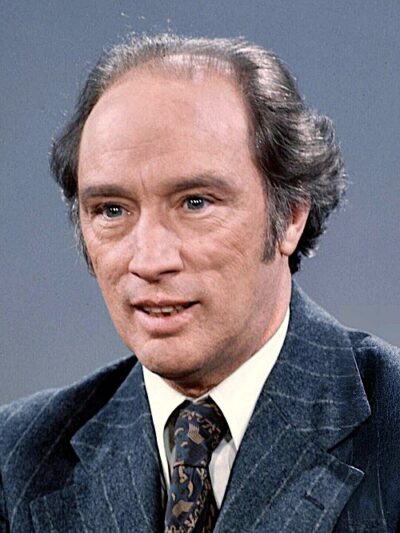
Pierre Trudeau
Pierre Trudeau was a Prime Minister of Canada from 1968 to 1979 and 1980 to 1984. Born October 18, 1919, in Montreal. Died September 28, 2000, in Montreal. Positions held include Prime Minister of Canada (1968–1984), Leader of the Official Opposition (1979–1980) and Minister of Justice and Attorney General of Canada (1967–1968). Educated at Faculté de droit de l'Université de Montréal and London School of Economics and Political Science. Awards include Companion of the Order of Canada, Albert Einstein Peace Prize and Companion of Honour.
Facts
51 facts · 2 confirmed by two sources · 16 cited · 32 from one source · 1 where the sources disagree
What’s different
- Cause of death: we show disease (Sources disagree). Wikidata also lists prostate cancer
Where this comes from
Papalocal keeps its own record. It started from these sources; what each one said is kept here as it was copied, so a change on their side never changes this page by itself. Tap one to read its version.
What Wikidata says · copied November 13, 2026 · revision 2565536504
- Described as
- Prime Minister of Canada from 1968 to 1979 and 1980 to 1984 (1919–2000)
- Other names
- Pierre Elliott Trudeau, Joseph Philippe Pierre Yves Elliott Trudeau
- Born
- October 18, 1919 · 13 references
- Died
- September 28, 2000 · 12 references
- Born in
- Montreal · 2 references
- Died in
- Montreal · 2 references
- Buried in
- St-Rémi-de-Napierville Cemetery · 1 reference
- Cause of death
- prostate cancer; disease · 1 reference
- Name at birth
- Joseph Philippe Pierre Yves Elliott Trudeau · 1 reference
- Citizen of
- Canada
- Occupation
- politician · 1 reference; lawyer · 1 reference; journalist; judge; diarist; memoirist · 1 reference; jurist · 2 references; teacher · 1 reference
- Positions held
- Prime Minister of Canada (1968–1984); Leader of the Official Opposition (1979–1980); Minister of Justice and Attorney General of Canada (1967–1968); President of the King's Privy Council for Canada (1968); Leader of the Liberal Party of Canada (1968–1984); member of the House of Commons of Canada (1965–1984) · 1 reference
- Political party
- Liberal Party of Canada
- Worked for
- Cité Libre
- Education
- Faculté de droit de l'Université de Montréal; London School of Economics and Political Science; John F. Kennedy School of Government; Paris Institute of Political Studies; Collège Jean-de-Brébeuf
- Member of
- Royal Society of Canada (1964) · 1 reference; Club of Rome
- Awards
- Companion of the Order of Canada; Albert Einstein Peace Prize (1984); Companion of Honour; Queen Elizabeth II Silver Jubilee Medal; doctor honoris causa of Keiō University; Honorary doctor of the University of Ottawa; Canadian Newsmaker of the Year (1968); honorary doctor of the University of Poitiers (1974) · 1 reference; Person of National Historic Significance · 1 reference
- Spouse
- Margaret Trudeau (1971–1984) · 1 reference
- Children
- Justin Trudeau · 1 reference; Alexandre Trudeau; Michel Trudeau; Sarah Coyne
- Father
- Charles Trudeau
- Mother
- Grace Elliott · 1 reference
- Siblings
- Charles Elliott Trudeau · 1 reference
- Religion
- Catholicism
- Military rank
- officer cadet
- Height
- 1.72 m (5 ft 8 in) · 1 reference
- Wikipedias with a page
- 88
Wikidata item Q8619 (wikidata.org/wiki/Q8619), public domain (CC0). Copied November 13, 2026.
What Wikipedia says · copied November 13, 2026 · revision 1384971082
Joseph Philippe Pierre Yves Elliott Trudeau (October 18, 1919 – September 28, 2000) was a Canadian politician, lawyer, jurist, academic, author, and journalist who served as the 15th prime minister of Canada from 1968 to 1979 and from 1980 to 1984. He served as leader of the Official Opposition from 1979 to 1980. He led the Liberal Party from 1968 until 1984 and was the member of Parliament (MP) for Mount Royal from 1965 to 1984.
Born and raised in Outremont, Quebec, Trudeau studied law and political economy. He co-founded Cité Libre in 1950 and rose to prominence in Quebec politics by opposing the conservative Union Nationale government. He was also an associate professor of law at the Université de Montréal. Trudeau was initially part of the New Democratic Party (NDP), but then joined the Liberal Party in 1965 because he believed the NDP could not attain power. In the election held that year, he was elected to the House of Commons and afterwards was appointed as Prime Minister Lester B. Pearson's parliamentary secretary. Trudeau served as minister of justice and attorney general from 1967 to 1968, during which time he liberalized divorce and abortion laws and decriminalized homosexuality. His outgoing personality and charisma caused a sensation, termed "Trudeaumania", which helped him win the leadership of the Liberal Party in 1968. He then succeeded Pearson and became prime minister of Canada.
From the late 1960s until the mid-1980s, Trudeau dominated the Canadian political scene. After his appointment as prime minister, he led the Liberals to victory in the 1968, 1972, and 1974 federal elections, before narrowly losing in 1979. He won a fourth election victory in 1980. Trudeau is the most recent prime minister to win four federal elections (having won three majority governments and one minority government) and to serve non-consecutive terms. His tenure of 15 years and 164 days makes him the third longest-serving prime minister in Canadian history, behind John A. Macdonald and William Lyon Mackenzie King.
As prime minister, Trudeau pioneered official bilingualism and multiculturalism. Amid the Quebec sovereignty movement, he invoked the War Measures Act in response to the 1970 October Crisis and later led the federalist campaign to victory in the 1980 Quebec referendum. In economic policy, he introduced the capital gains tax, expanded social programs, sharply increased deficit spending, and responded to the 1970s recession through wage and price controls. In a bid to move the Liberal Party towards economic nationalism, Trudeau established Petro-Canada and launched the National Energy Program, both of which generated significant controversy in oil-rich Western Canada and increased Western alienation. Trudeau's government also converted Canada to the metric system, created Via Rail, and enacted the Access to Information Act and the Canada Health Act. In foreign policy, Trudeau reduced Canada's alignment with the United States, maintained cordial relations with the Soviet Union, established diplomatic relations with the People's Republic of China, and developed strong ties with Cuban leader Fidel Castro. He also oversaw Canada's entry into the G7 forum. In 1982, Trudeau enacted Constitution Act, 1982, which patriated the Constitution of Canada and established the Canadian Charter of Rights and Freedoms, achieving full Canadian sovereignty.
Trudeau retired from politics shortly before the 1984 federal election. In his retirement, he practised law at the Montreal law firm of Heenan Blaikie. He also spoke out against the Meech Lake and Charlottetown accords (which proposed granting Quebec certain concessions), arguing they would strengthen Quebec nationalism. Trudeau died in 2000, aged 80. He is ranked highly among scholars in historical rankings of Canadian prime ministers, but remains a divisive figure in Canadian politics. Critics accused him of arrogance, economic mismanagement, and unduly centralizing Canadian decision-making to the detriment of the culture of Quebec and the economy of the Prairies, while admirers praised what they considered to be the force of his intellect and his political acumen, which helped maintain national unity during the Quebec sovereignty movement. Trudeau's eldest son, Justin Trudeau, served as prime minister of Canada from 2015 to 2025, and was the first child of a former prime minister to serve as prime minister.
- Born, in its opening lines
- October 18, 1919
- Died, in its opening lines
- September 28, 2000
From the Wikipedia article “Pierre Trudeau” (en.wikipedia.org/wiki/Pierre_Trudeau), by its contributors, under CC BY-SA 4.0 (creativecommons.org/licenses/by-sa/4.0/). Copied November 13, 2026; not changed.
Confirmed Two sources agree. Cited One source, and it names where it got it. One source One source, without a reference of its own. Sources disagree The sources disagree. We show the best-supported value and keep theirs below.
