
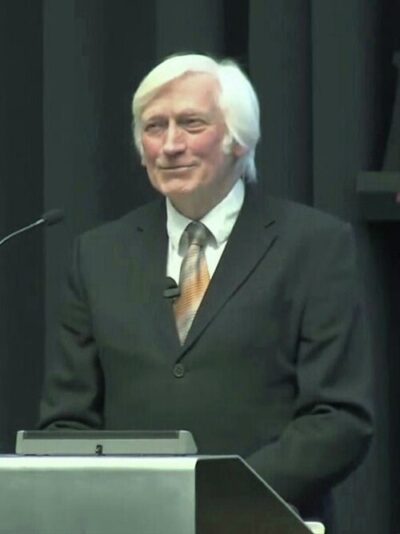
Richard Overy
Richard Overy is a British historian. Born December 23, 1947, in London. Known for 1939: Countdown to War. Educated at University of Cambridge and Gonville and Caius College. Awards include Wolfson History Prize, Fellow of the British Academy and Fellow of the Royal Historical Society.
Facts
20 facts · 1 confirmed by two sources · 5 cited · 14 from one source
Where this comes from
Papalocal keeps its own record. It started from these sources; what each one said is kept here as it was copied, so a change on their side never changes this page by itself. Tap one to read its version.
What Wikidata says · copied November 18, 2026 · revision 2570368182
- Described as
- British historian
- Other names
- Richard James Overy, R. J. Overy
- Born
- December 23, 1947
- Born in
- London · 1 reference
- Citizen of
- United Kingdom · 1 reference
- Occupation
- military historian; historian · 2 references; university teacher · 2 references
- Worked for
- King's College London; University of Exeter; Queens' College
- Education
- University of Cambridge; Gonville and Caius College
- Member of
- British Academy; Royal Historical Society
- Known for
- 1939: Countdown to War
- Awards
- Wolfson History Prize (2005) · 1 reference; Fellow of the British Academy; Fellow of the Royal Historical Society; T. S. Ashton Prize (1983); Hessell-Tiltman Prize (2005)
- Field
- history
- Wikipedias with a page
- 20
Wikidata item Q1376016 (wikidata.org/wiki/Q1376016), public domain (CC0). Copied November 18, 2026.
What Wikipedia says · copied November 18, 2026 · revision 1372549953
Richard James Overy (born 23 December 1947) is a British historian who has published on the history of World War II and Nazi Germany. In 2007, as The Times editor of Complete History of the World, he chose the 50 key dates of world history.
- Born, in its opening lines
- December 23, 1947
From the Wikipedia article “Richard Overy” (en.wikipedia.org/wiki/Richard_Overy), by its contributors, under CC BY-SA 4.0 (creativecommons.org/licenses/by-sa/4.0/). Copied November 18, 2026; not changed.
Confirmed Two sources agree. Cited One source, and it names where it got it. One source One source, without a reference of its own. Sources disagree The sources disagree. We show the best-supported value and keep theirs below.
