
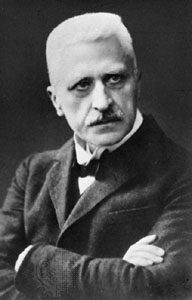
Rudolf Otto
Rudolf Otto was a German theologian, philosopher, and comparative religionist. Born September 25, 1869, in Peine. Died March 7, 1937, in Marburg. Positions held include Member of the Prussian House of Representatives and member of Landtag of Prussia. Educated at University of Erlangen–Nuremberg. Awards include honorary doctor of the University of Uppsala.
Facts
26 facts · 2 confirmed by two sources · 8 cited · 16 from one source
Where this comes from
Papalocal keeps its own record. It started from these sources; what each one said is kept here as it was copied, so a change on their side never changes this page by itself. Tap one to read its version.
What Wikidata says · copied November 16, 2026 · revision 2569214822
- Described as
- German theologian, philosopher, and comparative religionist (1869–1937)
- Born
- September 25, 1869 · 6 references
- Died
- March 7, 1937 · 2 references
- Born in
- Peine · 2 references
- Died in
- Marburg
- Buried in
- Main Cemetery of Marburg
- Cause of death
- pneumonia
- Citizen of
- German Reich; Germany · 1 reference
- Occupation
- politician · 1 reference; philosopher; non-fiction writer; university teacher · 1 reference; religious studies scholar · 1 reference; member of parliament · 1 reference; Protestant theologian · 1 reference; theologian · 1 reference
- Positions held
- Member of the Prussian House of Representatives; member of Landtag of Prussia
- Political party
- German Democratic Party; National Liberal Party
- Worked for
- University of Marburg; University of Wrocław
- Education
- University of Erlangen–Nuremberg
- Awards
- honorary doctor of the University of Uppsala
- Mother
- Katharina Karoline Henriette Sophie Otto
- Religion
- Lutheranism
- Wikipedias with a page
- 41
Wikidata item Q76748 (wikidata.org/wiki/Q76748), public domain (CC0). Copied November 16, 2026.
What Wikipedia says · copied November 16, 2026 · revision 1379646182
Rudolf Otto (25 September 1869 – 7 March 1937) was a German Lutheran theologian, philosopher, and comparative religionist. He is regarded as one of the most influential scholars of religion in the early twentieth century and is best known for his concept of the numinous, a profound emotional experience he argued was at the heart of the world's religions. While his work started in the domain of liberal Christian theology, its main thrust was always apologetical, seeking to defend religion against naturalist critiques, making him a more conservative figure. Otto eventually came to conceive of his work as part of a science of religion, which was divided into the philosophy of religion, the history of religion, and the psychology of religion.
- Born, in its opening lines
- September 25, 1869
- Died, in its opening lines
- March 7, 1937
From the Wikipedia article “Rudolf Otto” (en.wikipedia.org/wiki/Rudolf_Otto), by its contributors, under CC BY-SA 4.0 (creativecommons.org/licenses/by-sa/4.0/). Copied November 16, 2026; not changed.
Confirmed Two sources agree. Cited One source, and it names where it got it. One source One source, without a reference of its own. Sources disagree The sources disagree. We show the best-supported value and keep theirs below.
