
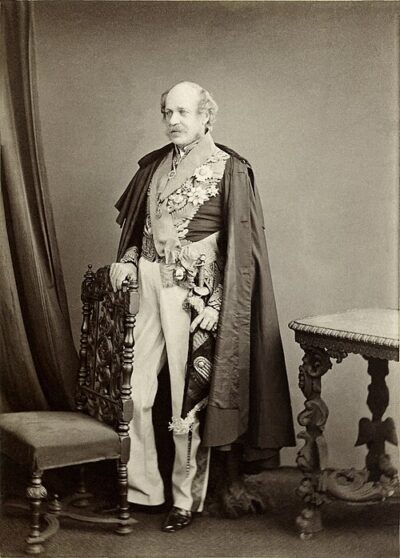
Sir Henry Rawlinson, 1st Baronet
Sir Henry Rawlinson, 1st Baronet was a British politician. Born April 5, 1810, in Chadlington. Died March 5, 1895, in London. Positions held include member of the 19th Parliament of the United Kingdom (1865–1868), member of the 17th Parliament of the United Kingdom (1858) and ambassador of the United Kingdom to Persia (1859–1860). Educated at Middlesex University and Great Ealing School. Awards include Fellow of the Royal Society, Knight Grand Cross of the Order of the Bath and Pour le Mérite for Sciences and Arts order.
Facts
47 facts · 2 confirmed by two sources · 18 cited · 27 from one source
Where this comes from
Papalocal keeps its own record. It started from these sources; what each one said is kept here as it was copied, so a change on their side never changes this page by itself. Tap one to read its version.
What Wikidata says · copied November 16, 2026 · revision 2557919089
- Described as
- British politician (1810-1895)
- Other names
- Henry Rawlinson, Sir Henry Rawlinson, Henry Creswicke Rawlinson, Sir Henry Creswicke Rawlinson, 1st Bt., Maj.-Gen. Sir Henry Creswicke Rawlinson, 1st Bt., Sir Henry Creswicke Rawlinson
- Born
- April 5, 1810 · 3 references
- Died
- March 5, 1895 · 8 references
- Born in
- Chadlington · 1 reference
- Died in
- London · 2 references
- Buried in
- Brookwood Cemetery · 1 reference
- Cause of death
- influenza
- Citizen of
- United Kingdom of Great Britain and Ireland
- Occupation
- linguist; archaeologist · 1 reference; anthropologist; politician · 1 reference; army officer; diplomat; assyriologist; writer · 1 reference
- Positions held
- member of the 19th Parliament of the United Kingdom (1865–1868) · 1 reference; member of the 17th Parliament of the United Kingdom (1858) · 1 reference; ambassador of the United Kingdom to Persia (1859–1860) · 1 reference; member of the Council of India (1858–) · 1 reference; President of the Royal Geographical Society (1871–1876)
- Political party
- Liberal Party
- Worked for
- Foreign Office · 1 reference; East India Company
- Education
- Middlesex University; Great Ealing School
- Member of
- Royal Society of London (1850–); Bavarian Academy of Sciences and Humanities; Royal Geographical Society; American Academy of Arts and Sciences; Hungarian Academy of Sciences; Royal Prussian Academy of Sciences; Royal Netherlands Academy of Arts and Sciences · 1 reference; Académie des Inscriptions et Belles-Lettres (1887–1895) · 1 reference; Göttingen Academy of Sciences and Humanities in Lower Saxony; Accademia Nazionale dei Lincei (1877–) · 1 reference
- Awards
- Fellow of the Royal Society; Knight Grand Cross of the Order of the Bath; Pour le Mérite for Sciences and Arts order; Founder’s Medal (1840) · 2 references
- Field
- archaeology · 1 reference
- Spouse
- Louisa Caroline Harcourt Seymour (1862–) · 1 reference
- Children
- Henry Rawlinson, 1st Baron Rawlinson · 1 reference; Sir Alfred Rawlinson, 3rd Baronet · 1 reference
- Father
- Abram Tyzack Rawlinson · 1 reference
- Mother
- Eliza Eudocia Albinia Creswicke · 1 reference
- Siblings
- George Rawlinson
- Military rank
- major-general · 1 reference
- Wikipedias with a page
- 39
Wikidata item Q309602 (wikidata.org/wiki/Q309602), public domain (CC0). Copied November 16, 2026.
What Wikipedia says · copied November 16, 2026 · revision 1382964265
Sir Henry Creswicke Rawlinson, 1st Baronet (5 April 1810 – 5 March 1895) was a British East India Company army officer, politician, and Orientalist, sometimes described as the Father of Assyriology. His son, also Henry, was to become a senior commander in the British Army during the First World War.
- Born, in its opening lines
- April 5, 1810
- Died, in its opening lines
- March 5, 1895
From the Wikipedia article “Sir Henry Rawlinson, 1st Baronet” (en.wikipedia.org/wiki/Sir_Henry_Rawlinson,_1st_Baronet), by its contributors, under CC BY-SA 4.0 (creativecommons.org/licenses/by-sa/4.0/). Copied November 16, 2026; not changed.
Confirmed Two sources agree. Cited One source, and it names where it got it. One source One source, without a reference of its own. Sources disagree The sources disagree. We show the best-supported value and keep theirs below.
