
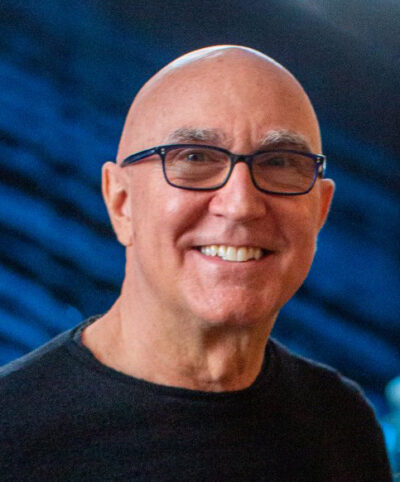
Stuart Schreiber is an American chemist. Born February 6, 1956, in Virginia. Educated at Harvard University and University of Virginia. Awards include ACS Award in Pure Chemistry, ACS Award for Creative Work in Synthetic Organic Chemistry, and Wolf Prize in Chemistry.
Facts
27 facts · 1 confirmed by two sources · 12 cited · 14 from one source
Where this comes from
Papalocal keeps its own record. It started from these sources; what each one said is kept here as it was copied, so a change on their side never changes this page by itself. Tap one to read its version.
What Wikidata says · copied November 19, 2026 · revision 2570371262
- Described as
- American chemist
- Other names
- Stuart L. Schreiber, Stuart L Schreiber, S. Schreiber
- Born
- February 6, 1956
- Born in
- Virginia
- Citizen of
- United States · 3 references
- Occupation
- biochemist · 1 reference; chemist
- Worked for
- Harvard University · 1 reference; Massachusetts Institute of Technology; Yale University; Broad Institute (2004–) · 1 reference; Howard Hughes Medical Institute (1994–) · 1 reference
- Education
- Harvard University; University of Virginia
- Member of
- National Academy of Sciences; American Academy of Arts and Sciences; New York Academy of Medicine · 1 reference
- Awards
- ACS Award in Pure Chemistry (1989) · 1 reference; ACS Award for Creative Work in Synthetic Organic Chemistry, (1994); Wolf Prize in Chemistry (2016) · 1 reference; Arthur C. Cope Award (2014); Novartis-Drew Award (1992); Fellow of the New York Academy of Medicine · 1 reference; William H. Nichols Medal (2001) · 1 reference; Tetrahedron Prize (1997) · 1 reference; Clarivate Citation Laureates (2 times) (2006, 2016) · 1 reference; Camille Dreyfus Teacher-Scholar Awards; Alfred Bader Award in Bioinorganic or Bioorganic Chemistry
- Field
- biochemistry
- Wikipedias with a page
- 13
Wikidata item Q906562 (wikidata.org/wiki/Q906562), public domain (CC0). Copied November 19, 2026.
What Wikipedia says · copied November 19, 2026 · revision 1383333108
Stuart Schreiber (born February 6, 1956) is an American chemist who is the Morris Loeb Research Professor at Harvard University, a co-founder of the Broad Institute, Howard Hughes Medical Institute Investigator, Emeritus, and a member of the National Academy of Sciences and National Academy of Medicine. From 2024 to 2025 he led Arena BioWorks.
His work integrates chemical biology and human biology to advance the science of therapeutics. Key advances include the discovery that small molecules can function as “molecular glues” that promote protein–protein interactions, the co-discovery of mTOR and its role in nutrient-response signaling, the discovery of histone deacetylases and (with Michael Grunstein and David Allis) the demonstration that chromatin marks regulate gene expression, the development and application of diversity-oriented synthesis to microbial therapeutics, and the discovery of vulnerabilities of cancer cells linked to genetic, lineage and cell-state features, including ferroptotic vulnerabilities. His awards include the Wolf Prize in Chemistry and the Arthur Cope Award. His approach to discovering new therapeutics guided many biotechnology companies that he founded, including Vertex Pharmaceuticals and Ariad Pharmaceuticals. He has founded or co-founded 14 biotechnology companies, which have developed 16 first-in-human approved drugs or advanced clinical candidates.
- Born, in its opening lines
- February 6, 1956
From the Wikipedia article “Stuart Schreiber” (en.wikipedia.org/wiki/Stuart_Schreiber), by its contributors, under CC BY-SA 4.0 (creativecommons.org/licenses/by-sa/4.0/). Copied November 19, 2026; not changed.
Confirmed Two sources agree. Cited One source, and it names where it got it. One source One source, without a reference of its own. Sources disagree The sources disagree. We show the best-supported value and keep theirs below.
