
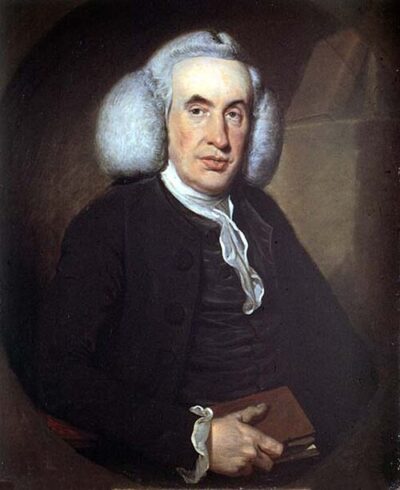
William Cullen
William Cullen was a Scottish physician, chemist and agriculturalist;. Born April 15, 1710, in Hamilton. Died February 5, 1790, in Edinburgh. Educated at University of Edinburgh and University of Glasgow. Awards include Fellow of the Royal Society.
Facts
32 facts · 2 confirmed by two sources · 8 cited · 22 from one source
Where this comes from
Papalocal keeps its own record. It started from these sources; what each one said is kept here as it was copied, so a change on their side never changes this page by itself. Tap one to read its version.
What Wikidata says · copied November 16, 2026 · revision 2568789777
- Described as
- Scottish physician, chemist and agriculturalist; (1710-1790)
- Born
- April 15, 1710 · 4 references
- Died
- February 5, 1790 · 4 references
- Born in
- Hamilton
- Died in
- Edinburgh
- Buried in
- Kirknewton
- Citizen of
- Kingdom of Great Britain · 1 reference
- Occupation
- physician · 1 reference; chemist · 2 references; farmer; university teacher; writer; psychiatrist; surgeon
- Worked for
- University of Edinburgh
- Education
- University of Edinburgh; University of Glasgow; Hamilton Academy
- Member of
- Royal Society of London; Royal College of Physicians of Edinburgh; Royal Society of Edinburgh; Göttingen Academy of Sciences and Humanities in Lower Saxony; American Philosophical Society
- Awards
- Fellow of the Royal Society
- Field
- chemistry · 1 reference; medicine
- Spouse
- Anna Johnstone · 1 reference
- Children
- Henry Cullen · 2 references; Robert Cullen · 2 references; Margaret Cullen
- Father
- William Cullen · 1 reference
- Mother
- Elizabeth Robertson · 1 reference
- Siblings
- Elizabeth Cullen · 1 reference
- Wikipedias with a page
- 29
Wikidata item Q462762 (wikidata.org/wiki/Q462762), public domain (CC0). Copied November 16, 2026.
What Wikipedia says · copied November 16, 2026 · revision 1381390904
William Cullen (; 15 April 1710 – 5 February 1790) was a Scottish physician, chemist and agriculturalist from Hamilton, Scotland, who also served as a professor at the Edinburgh Medical School. Cullen was a central figure in the Scottish Enlightenment: He was David Hume's physician, and was friends with Joseph Black, Henry Home, Adam Ferguson, John Millar, and Adam Smith, among others.
He was president of the Royal College of Physicians and Surgeons of Glasgow (1746–47), president of the Royal College of Physicians of Edinburgh (1773–1775) and first physician to the king in Scotland (1773–1790). He also assisted in obtaining a royal charter for the Philosophical Society of Edinburgh, resulting in the formation of the Royal Society of Edinburgh in 1783.
Cullen was a beloved teacher, and many of his students became influential figures. He kept in contact with many of his students, including Benjamin Rush, a central figure in the founding of the United States of America; John Morgan, who founded the first medical school in the American colonies, the Medical School at the College of Philadelphia; William Withering, the discoverer of digitalis; Sir Gilbert Blane, medical reformer of the Royal Navy; and John Coakley Lettsom, the philanthropist and founder of the Medical Society of London.
Cullen's student and later rival John Brown developed the medical system known as Brunonianism, which conflicted with Cullen's. The competition between the two systems had knock-on effects in how patients were treated worldwide, especially in Italy and Germany, during the end of the eighteenth and beginning of the nineteenth century.
Cullen was also an author. He published a number of medical textbooks, mostly for the use of his students, though they were popular in Europe and the American colonies. His best known work was First Lines of the Practice of Physic, which was published in a series of editions between 1777 and 1784, and inventing the basis of modern refrigeration.
- Born, in its opening lines
- April 15, 1710
- Died, in its opening lines
- February 5, 1790
From the Wikipedia article “William Cullen” (en.wikipedia.org/wiki/William_Cullen), by its contributors, under CC BY-SA 4.0 (creativecommons.org/licenses/by-sa/4.0/). Copied November 16, 2026; not changed.
Confirmed Two sources agree. Cited One source, and it names where it got it. One source One source, without a reference of its own. Sources disagree The sources disagree. We show the best-supported value and keep theirs below.
