
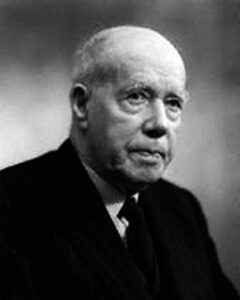
William David Ross
William David Ross was a Scottish philosopher and translator. Born April 15, 1877, in Thurso. Died May 5, 1971, in Oxford. Positions held include Vice-Chancellor of the University of Oxford (1941–1944). Educated at Balliol College and University of Edinburgh. Awards include Knight Commander of the Order of the British Empire, Fellow of the British Academy and doctor honoris causa from the University of Paris.
Facts
19 facts · 2 confirmed by two sources · 2 cited · 15 from one source
Where this comes from
Papalocal keeps its own record. It started from these sources; what each one said is kept here as it was copied, so a change on their side never changes this page by itself. Tap one to read its version.
What Wikidata says · copied November 18, 2026 · revision 2558282341
- Described as
- Scottish philosopher and translator (1877–1971)
- Other names
- W. D. Ross, Sir William David Ross, William Ross, Sir William Ross, David Ross
- Born
- April 15, 1877 · 7 references
- Died
- May 5, 1971 · 7 references
- Born in
- Thurso
- Died in
- Oxford
- Citizen of
- United Kingdom
- Occupation
- philosopher · 1 reference; translator
- Positions held
- Vice-Chancellor of the University of Oxford (1941–1944)
- Education
- Balliol College; University of Edinburgh; Royal High School
- Member of
- British Academy; American Academy of Arts and Sciences; American Philosophical Society (1947–)
- Awards
- Knight Commander of the Order of the British Empire; Fellow of the British Academy; doctor honoris causa from the University of Paris (1950) · 2 references
- Field
- philosophy
- Military branch
- British Army
- Wikipedias with a page
- 21
Wikidata item Q1364954 (wikidata.org/wiki/Q1364954), public domain (CC0). Copied November 18, 2026.
What Wikipedia says · copied November 18, 2026 · revision 1379805134
Sir William David Ross (15 April 1877 – 5 May 1971), known as David Ross but usually cited as W. D. Ross, was a Scottish Aristotelian philosopher, translator, WWI veteran, civil servant, and university administrator. His best-known work is The Right and the Good (1930), in which he developed a pluralist, deontological form of intuitionist ethics in response to G. E. Moore's consequentialist form of intuitionism. Ross also critically edited and translated a number of Aristotle's works, such as his 12-volume translation of Aristotle together with John Alexander Smith, and wrote on other Greek philosophy.
- Born, in its opening lines
- April 15, 1877
- Died, in its opening lines
- May 5, 1971
From the Wikipedia article “W. D. Ross” (en.wikipedia.org/wiki/W._D._Ross), by its contributors, under CC BY-SA 4.0 (creativecommons.org/licenses/by-sa/4.0/). Copied November 18, 2026; not changed.
Confirmed Two sources agree. Cited One source, and it names where it got it. One source One source, without a reference of its own. Sources disagree The sources disagree. We show the best-supported value and keep theirs below.
