
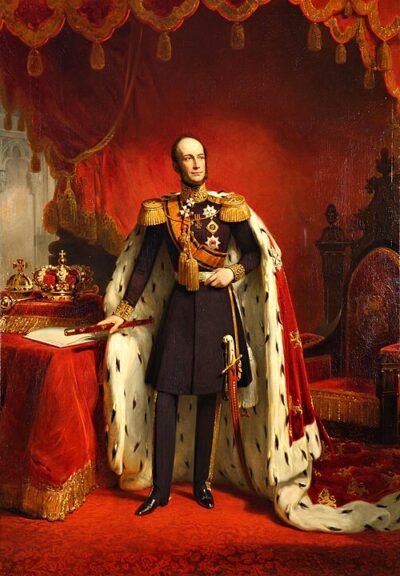
William II of the Netherlands
William II of the Netherlands was a King of the Netherlands and Grand Duke of Luxembourg from 1840 to 1849. Born December 6, 1792, in The Hague. Died March 17, 1849, in Tilburg. Positions held include Monarch of Luxembourg (1840–1849) and King of the Netherlands (1840–1849). Educated at Christ Church. Awards include Knight of the Order of the Golden Fleece, Knight Grand Cross of the Order of the Bath and Order of Saint Alexander Nevsky.
Facts
39 facts · 2 confirmed by two sources · 7 cited · 30 from one source
Where this comes from
Papalocal keeps its own record. It started from these sources; what each one said is kept here as it was copied, so a change on their side never changes this page by itself. Tap one to read its version.
What Wikidata says · copied November 16, 2026 · revision 2558273165
- Described as
- King of the Netherlands and Grand Duke of Luxembourg from 1840 to 1849 (1792-1849)
- Other names
- King William II of the Netherlands, Prince William of Orange, Prince William of Orange-Nassau, William II, Willem Frederik George Lodewijk, Willem II of the Netherlands
- Born
- December 6, 1792 · 8 references
- Died
- March 17, 1849 · 8 references
- Born in
- The Hague · 1 reference
- Died in
- Tilburg · 1 reference
- Buried in
- Nieuwe Kerk Delft
- Cause of death
- pneumonia
- Citizen of
- Kingdom of the Netherlands
- Occupation
- politician; judge; military personnel; art collector · 1 reference; painting collector · 1 reference
- Positions held
- Monarch of Luxembourg (1840–1849); King of the Netherlands (1840–1849)
- Education
- Christ Church
- Awards
- Knight of the Order of the Golden Fleece; Knight Grand Cross of the Order of the Bath; Order of Saint Alexander Nevsky; Order of St. Andrew; Knight Grand Cross of the Military Order of William (1815); Order of St. George, 2nd class; Hasselt Cross 1830-1831; Waterloo Medal · 1 reference
- Field
- politics · 1 reference; military affairs · 1 reference
- Spouse
- Anna Pavlovna of Russia (1816–1849) · 2 references
- Children
- William III of the Netherlands; Prince Alexander of the Netherlands; Prince Hendrik of the Netherlands; Prince Ernest Casimir of the Netherlands · 1 reference; Princess Sophie of the Netherlands
- Father
- William I of the Netherlands
- Mother
- Wilhelmine of Prussia, Queen of the Netherlands
- Siblings
- Prince Frederik of the Netherlands; Princess Pauline of Orange-Nassau; Princess Marianne of the Netherlands
- Military branch
- British Army
- Military rank
- field marshal
- Lived in
- Academy Palace (1828–1830) · 1 reference
- Wikipedias with a page
- 58
Wikidata item Q154287 (wikidata.org/wiki/Q154287), public domain (CC0). Copied November 16, 2026.
What Wikipedia says · copied November 16, 2026 · revision 1382824163
William II (Dutch: Willem II, French: Guillaume II; 6 December 1792 – 17 March 1849) was King of the Netherlands, Grand Duke of Luxembourg, and Duke of Limburg from 1840 until his death.
William II was the son of William I and Wilhelmine of Prussia. During the Napoleonic Wars, he fought in the Peninsular War on the British side. He was wounded in action as a commander in the Battle of Waterloo. When his father, who up to that time ruled as sovereign prince, proclaimed himself king in 1815, he became Prince of Orange as heir apparent of the United Kingdom of the Netherlands. During the Belgian Revolution, William tried to broker peace with the rebels and served as commander during the Ten Days Campaign. With the abdication of his father on 7 October 1840, William II became king. During his reign, the Netherlands became a parliamentary democracy with the new constitution of 1848. He reigned for just under nine years, making him the shortest-reigning monarch in Dutch history. William II was married to Anna Pavlovna of Russia, with whom he had five children. William II was succeeded by his son William III.
- Born, in its opening lines
- December 6, 1792
- Died, in its opening lines
- March 17, 1849
From the Wikipedia article “William II of the Netherlands” (en.wikipedia.org/wiki/William_II_of_the_Netherlands), by its contributors, under CC BY-SA 4.0 (creativecommons.org/licenses/by-sa/4.0/). Copied November 16, 2026; not changed.
Confirmed Two sources agree. Cited One source, and it names where it got it. One source One source, without a reference of its own. Sources disagree The sources disagree. We show the best-supported value and keep theirs below.
