
African National Congress
The African National Congress is a left-wing nationalist political party in South Africa. It was founded in 1912 by John Langalibalele Dube. Its headquarters are in Luthuli House. It stands for African nationalism and social democracy.
- Country
- South Africa
- Founded
- January 8, 1912
- Ideology
- African nationalism
All 9 facts, and where they come from
Facts
9 facts · 0 confirmed by two sources · 0 cited · 9 from one source
Where this comes from
Papalocal keeps its own record. It started from these sources; what each one said is kept here as it was copied, so a change on their side never changes this page by itself. Tap one to read its version.
What Wikidata says · copied November 17, 2026 · revision 2566537533
- Described as
- left-wing nationalist political party in South Africa
- Other names
- ANC, SANNC
- What it is
- political party
- Founded
- January 8, 1912
- Founded by
- John Langalibalele Dube
- Headquarters
- Luthuli House
- Country
- South Africa
- Chair
- Cyril Ramaphosa (2017–)
- Ideology
- African nationalism; social democracy
- Official website
- https://www.anc1912.org.za/
- Wikipedias with a page
- 89
Wikidata item Q83162 (wikidata.org/wiki/Q83162), public domain (CC0). Copied 2026-11-17.
What Wikipedia says · copied November 17, 2026 · revision 1384992290
The African National Congress (ANC) is a political party in South Africa. It originated as a liberation movement known for its opposition to apartheid and has governed the country since 1994, when the first post-apartheid election resulted in Nelson Mandela being elected as President of South Africa.
Founded on 8 January 1912 in Bloemfontein as the South African Native National Congress, the organisation was formed to advocate for the rights of black South Africans. When the National Party government came to power in 1948, the ANC's central purpose became to oppose the new government's policy of institutionalised apartheid. To this end, its methods and means of organisation shifted; its adoption of the techniques of mass politics, and the swelling of its membership, culminated in the Defiance Campaign of civil disobedience in 1952–53. The ANC was banned by the South African government between April 1960 – shortly after the Sharpeville massacre – and February 1990. During this period, despite periodic attempts to revive its domestic political underground, the ANC was forced into exile by increasing state repression, which saw many of its leaders imprisoned on Robben Island. Headquartered in Lusaka, Zambia, the exiled ANC dedicated much of its attention to a campaign of sabotage and guerrilla warfare against the apartheid state, carried out under its military wing, uMkhonto weSizwe, which was founded in 1961 in partnership with the South African Communist Party (SACP). The ANC was condemned as a terrorist organisation by the governments of South Africa, the United States, and the United Kingdom. However, it positioned itself as a key player in the negotiations to end apartheid, which began in earnest after the ban was repealed in 1990. For much of that time, the ANC leadership, along with many of its most active members, operated from abroad. After the Soweto Uprising of 1976, the ANC remained committed to achieving its objectives through armed struggle. These circumstances significantly shaped the ANC during its years in exile.
In the post-apartheid era, the ANC continues to identify itself foremost as a liberation movement, although it is also a registered political party. Partly due to its Tripartite Alliance with the South African Communist Party (SACP) and the Congress of South African Trade Unions (COSATU), it had retained a comfortable electoral majority at the national level and in most provinces, and has provided each of South Africa's five presidents since 1994. South Africa is considered a dominant-party state. However, the ANC's electoral majority has declined consistently since 2004, and in the 2021 local elections, its share of the national vote dropped below 50% for the first time ever. Over the last decade, the party has been embroiled in a number of controversies, particularly relating to widespread allegations of political corruption among its members.
Following the 2024 general election, the ANC lost its majority in parliament for the first time in South Africa's democratic history. However, it still remained the largest party, with just over 40% of the vote. The party also lost its majority in Kwa-Zulu Natal, Gauteng and Northern Cape. Despite these setbacks, the ANC retained power at the national level through a grand coalition referred to as the Government of National Unity, including parties which together have 72% of the seats in Parliament. The 2026 municipal elections saw the ANC win just under 31% of the vote, the worst performance by the party on the national level despite still remaining the largest party. Cyril Ramaphosa, the incumbent national president, has served as president of the ANC since 18 December 2017.
From the Wikipedia article “African National Congress” (en.wikipedia.org/wiki/African_National_Congress), by its contributors, under CC BY-SA 4.0 (creativecommons.org/licenses/by-sa/4.0/). Copied 2026-11-17; not changed.
Confirmed Two sources agree. Cited One source, and it names where it got it. One source One source, without a reference of its own. Sources disagree The sources disagree. We show the best-supported value and keep theirs below.
People connected 20
Party members
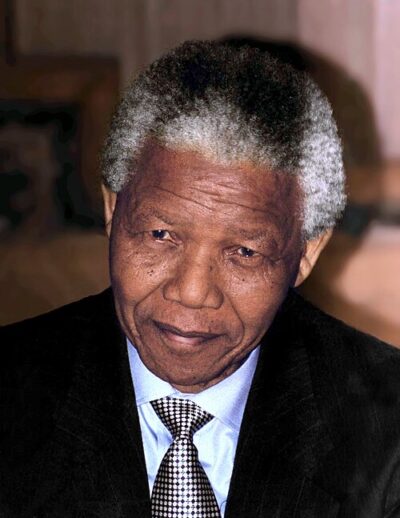 Nelson Mandela (1943–)President of South Africa and anti-apartheid activist (1918–2013)
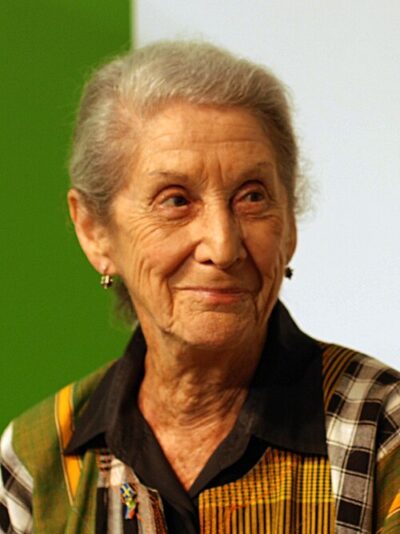 Nadine GordimerSouth African writer (1923–2014)
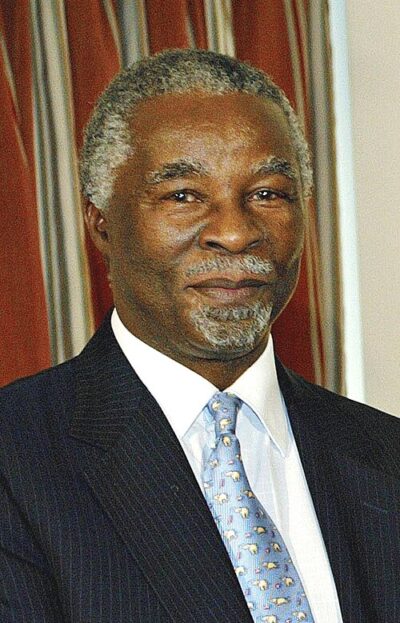 Thabo MbekiPresident of South Africa from 1999 to 2008
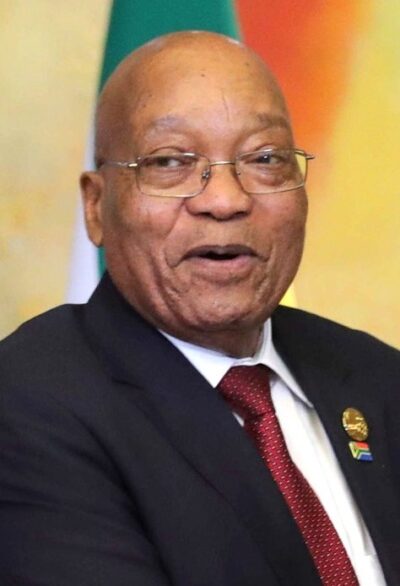 Jacob Zuma (1959–2024)4th President of South Africa (2009–2018)
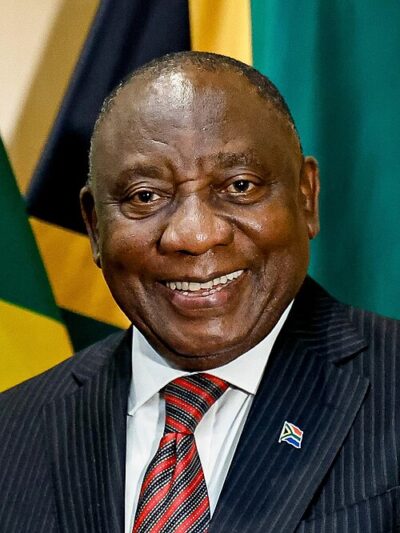 Cyril RamaphosaPresident of South Africa since 2018
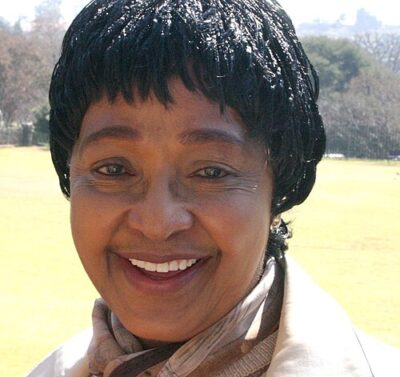 Winnie Madikizela-MandelaSouth African activist and politician (1936-2018)
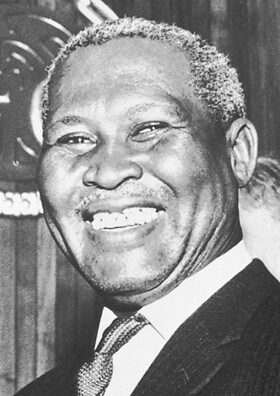 Albert John Mvumbi LuthuliSouth African politician (1898–1967)
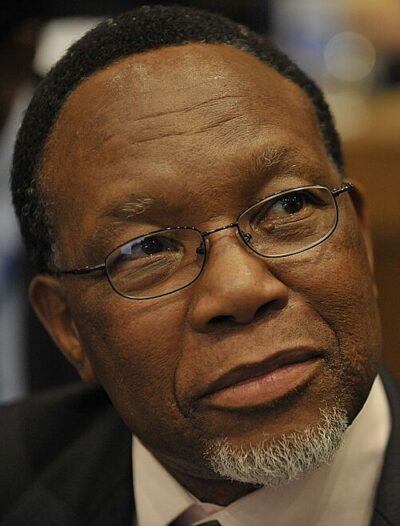 Kgalema MotlanthePresident of South Africa, Deputy President of the ruling African National Congress (ANC) and Secretary-General of the African National Congress
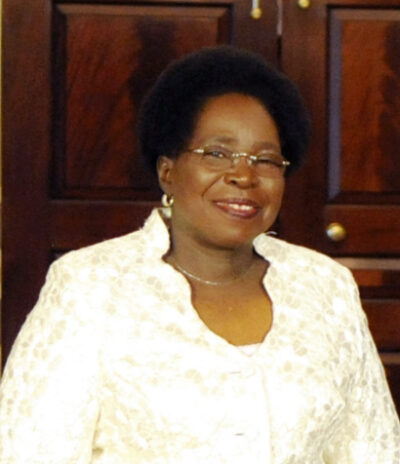 Nkosazana Dlamini-ZumaSouth African politician
 Oliver TamboSouth African anti-apartheid activist and politician (1917–1993)
 Julius Malema (–2012)South African politician and activist
 Phumzile Mlambo-NgcukaSouth African politician
 Ruth FirstSouth African politician (1925-1982)
 Walter SisuluSouth African anti-apartheid activist and member of the African National Congress (1912-2003)
 Chris Hani (1961–1993)South African anti-apartheid activist (1942-1993)
 Albertina Nontsikelelo SisuluSouth African anti–apartheid activist (1918-2011)
 Naledi PandorSouth African politician
 Ahmed KathradaSouth African politician (1929-2017)
 Joe SlovoSouth African politician (1926-1995)
 Pik Botha (2000–)South African politician (1932-2018)
