Armia Krajowa
Armia Krajowa is a Polish resistance movement in World War II German-occupied Poland. It was founded in 1942.
- Founded
- February 14, 1942
- Country
- Poland
All 6 facts, and where they come from
Facts
6 facts · 0 confirmed by two sources · 0 cited · 6 from one source
Where this comes from
Papalocal keeps its own record. It started from these sources; what each one said is kept here as it was copied, so a change on their side never changes this page by itself. Tap one to read its version.
What Wikidata says · copied November 17, 2026 · revision 2566532847
- Described as
- Polish resistance movement in World War II German-occupied Poland
- Other names
- AK, Home Army
- What it is
- armed organization; resistance movement; military branch
- Founded
- February 14, 1942 · 1 reference
- Ended
- 1945 · 1 reference
- Country
- Poland
- Wikipedias with a page
- 52
Wikidata item Q152529 (wikidata.org/wiki/Q152529), public domain (CC0). Copied 2026-11-17.
What Wikipedia says · copied November 17, 2026 · revision 1360675253
The Home Army (Polish: Armia Krajowa, pronounced [ˈarmja kraˈjɔva]; abbreviated AK) was the dominant resistance movement in German-occupied Poland during World War II. The Home Army was formed in February 1942 from the earlier Związek Walki Zbrojnej (Armed Resistance) established in the aftermath of the German and Soviet invasions in September 1939. Over the next two years, the Home Army absorbed most of the other Polish partisans and underground forces. Its allegiance was to the Polish government-in-exile in London, and it constituted the armed wing of what came to be known as the Polish Underground State. Estimates of the Home Army's 1944 strength range between 200,000 and 600,000. The latter number made the Home Army not only Poland's largest underground resistance movement but, along with Soviet and Yugoslav partisans, one of Europe's largest World War II underground movements.
The Home Army sabotaged German transports bound for the Eastern Front in the Soviet Union, destroying German supplies and tying down substantial German forces. It also fought pitched battles against the Germans, particularly in 1943 and in Operation Tempest from January 1944. The Home Army's most widely known operation was the Warsaw Uprising of August–October 1944. The Home Army also defended Polish civilians against atrocities by Germany's Ukrainian and Lithuanian collaborators. Its attitude toward Jews remains a controversial topic.
As Polish–Soviet relations deteriorated, conflict grew between the Home Army and Soviet forces. The Home Army's allegiance to the Polish government-in-exile caused the Soviet government to consider the Home Army to be an impediment to the introduction of a communist-friendly government in Poland, which hindered cooperation and in some cases led to outright conflict. On 19 January 1945, after the Red Army had cleared most Polish territory of German forces, the Home Army was disbanded. After the war, particularly in the 1950s and 1960s, communist government propaganda portrayed the Home Army as an oppressive and reactionary force. Thousands of ex-Home Army personnel were deported to gulags and Soviet prisons, while other ex-members, including a number of senior commanders, were executed. After the fall of communism in Central and Eastern Europe, the portrayal of the Home Army was no longer subject to government censorship and propaganda.
From the Wikipedia article “Home Army” (en.wikipedia.org/wiki/Home_Army), by its contributors, under CC BY-SA 4.0 (creativecommons.org/licenses/by-sa/4.0/). Copied 2026-11-17; not changed.
Confirmed Two sources agree. Cited One source, and it names where it got it. One source One source, without a reference of its own. Sources disagree The sources disagree. We show the best-supported value and keep theirs below.
Picture: Wikimedia Commons: Flaga PPP.svg · See Commons file page
People connected 11
Military branch
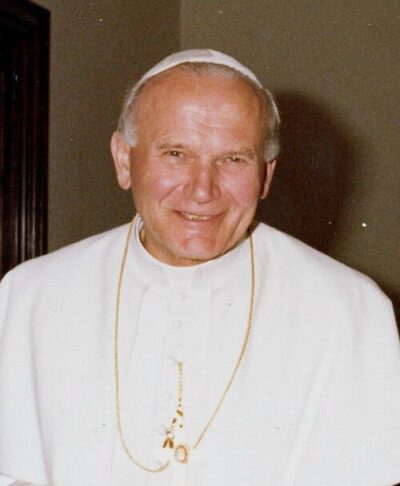 John Paul IIpope, cardinal, bishop, priest, author
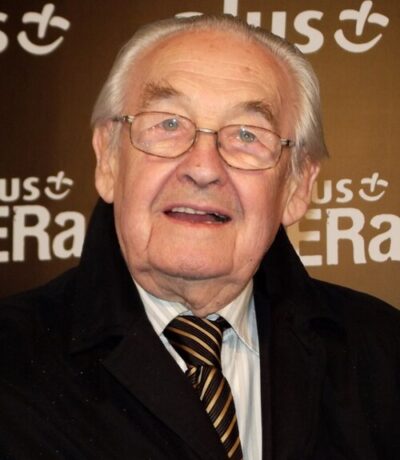 Andrzej WajdaPolish film director (1926–2016)
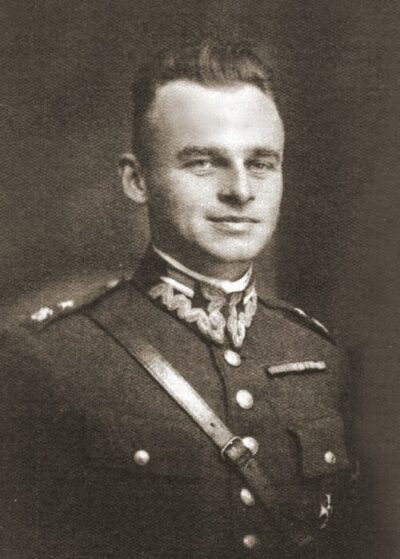 Witold PileckiPolish underground resistance soldier, World War II concentration camp resistance leader (1901-1948)
 Tadeusz RóżewiczPolish poet, dramatist and writer (1921–2014)
 Stefan WyszyńskiPolish Roman Catholic cardinal (1901-1981)
 Tadeusz KonwickiPolish writer and film director (1926–2015)
 Władysław BartoszewskiPolish politician and activist (1922–2015)
 Krzysztof Kamil Baczyński (1942–1944)Polish poet and solider (1921–1944)
 Ryszard SiwiecPolish patriot (1909–1968)
 Alina JanowskaPolish actress (1923-2017)