

artificial intelligence
Artificial intelligence is a field that develops and studies software enabling machines to exhibit intelligent behavior.
All 3 facts, and where they come from
Facts
3 facts · 0 confirmed by two sources · 1 cited · 2 from one source
Where this comes from
Papalocal keeps its own record. It started from these sources; what each one said is kept here as it was copied, so a change on their side never changes this page by itself. Tap one to read its version.
What Wikidata says · copied November 16, 2026 · revision 2569958782
- Described as
- field that develops and studies software enabling machines to exhibit intelligent behavior
- Other names
- AI software, machine intelligence, artificially intelligent, artificial Intelligence, machine understanding, simulated intelligence, computational rationality, intelligent machine, machine thought, artificially intelligent beings, machines that can think, artificial smartness
- What it is
- type of technology; branch of computer science · 1 reference; type of intelligence
- Wikipedias with a page
- 215
Wikidata item Q11660 (wikidata.org/wiki/Q11660), public domain (CC0). Copied 2026-11-16.
What Wikipedia says · copied November 16, 2026 · revision 1385972972
Artificial intelligence (AI) is the capability of computational systems to perform tasks typically associated with human intelligence, such as learning, reasoning, problem-solving, perception, and decision-making. It is also a field of research spanning computer science, engineering, and mathematics that develops and studies methods and software enabling machines to perceive their environment and use learning and intelligence to take actions that maximize their chances of achieving defined goals.
Prominent applications of AI include advanced web search engines, chatbots, virtual assistants, autonomous vehicles, play and analysis in strategy games (e.g., chess and Go), and content generation (e.g., text, images, audio, and videos).
The traditional goals of AI research include learning, reasoning, knowledge representation, planning, natural language processing, and perception, as well as support for robotics. To reach these goals, AI researchers use techniques including state space search and mathematical optimization, formal logic, artificial neural networks, and methods based on statistics, operations research, and economics. AI also draws upon psychology, linguistics, philosophy, neuroscience, and other fields. Some companies, such as OpenAI, Google DeepMind, and Meta, aim to create artificial general intelligence (AGI)—AI that can complete nearly any cognitive task at least as well as a human.
Artificial intelligence was founded as an academic discipline in 1956. The field went through multiple cycles of optimism throughout its history, alternating with periods of disappointment and loss of funding known as AI winters. Funding and interest increased substantially after 2012, when graphics processing units (GPUs) started being used to accelerate neural networks, and deep learning outperformed previous AI techniques. This growth accelerated further after 2017 with transformer architecture. The 2020s AI boom was spurred on largely by advances in generative AI, which can create and modify media. In addition to AI safety and unintended consequences and harms from the use of AI, ethical concerns, AI's long-term effects, environmental effects, and potential existential risks have prompted discussions of AI regulation.
From the Wikipedia article “Artificial intelligence” (en.wikipedia.org/wiki/Artificial_intelligence), by its contributors, under CC BY-SA 4.0 (creativecommons.org/licenses/by-sa/4.0/). Copied 2026-11-16; not changed.
Confirmed Two sources agree. Cited One source, and it names where it got it. One source One source, without a reference of its own. Sources disagree The sources disagree. We show the best-supported value and keep theirs below.
Picture: Wikimedia Commons: Dall-e 3 (jan '24) artificial intelligence icon.png · See Commons file page
People connected 26
Field 26
 Larry EllisonAmerican internet entrepreneur and businessman (born 1944)
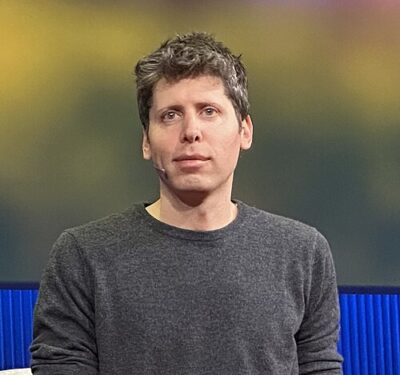 Sam AltmanAmerican entrepreneur and investor (born 1985)
 Geoffrey HintonBritish-Canadian computer scientist and psychologist
 John McCarthyAmerican computer scientist and cognitive scientist (1927-2011)
 Jensen HuangTaiwanese-American entrepreneur and businessman; co-founder and former CEO of Nvidia
 Marvin MinskyAmerican cognitive scientist (1927-2016)
 Demis HassabisBritish artificial intelligence researcher (born 1976)
 John HopfieldAmerican scientist (born 1933)
 Andreas KaplanGerman economist, dean, university rector; higher education expert; edtech; social media; artificial intelligence
 Lotfi A. ZadehAmerican electrical engineer and computer scientist (1921–2017)
 Yann LeCunAmerican-French computer scientist (born 1960)
 Fei-Fei LiAmerican computer scientist
 Mira MuratiAlbanian-American business executive (born 1988)
 Yoshua BengioCanadian computer scientist (born 1964)
 Raj ReddyIndian-American computer scientist
 Dario AmodeiCEO and co-founder of Anthropic
 Edward FeigenbaumAmerican computer scientist (born 1936)
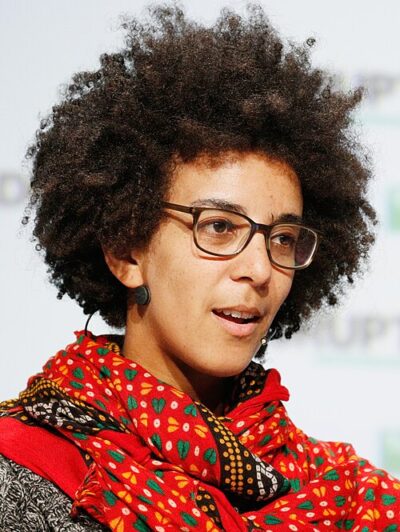 Timnit Gebrucomputer scientist and AI ethics researcher
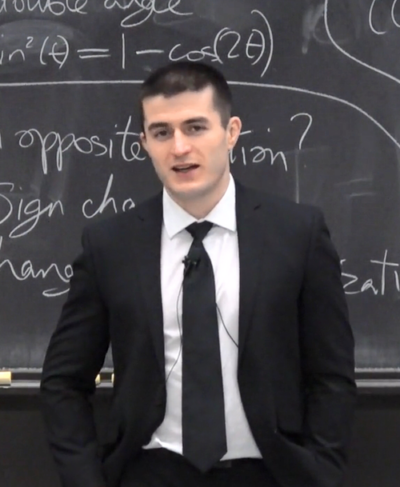 Lex FridmanAmerican computer scientist and podcaster
 Eliezer YudkowskyAmerican AI researcher and writer (born 1979)
 Kai-Fu LeeTaiwanese businessman
 Hubert DreyfusAmerican philosopher (1929–2017)
- JJohn Henry HollandUS university professor ,American scientist (1929–2015)
- AArthur SamuelAmerican computer scientist (1901–1990)
and 2 more
