

Conservative Party of Canada
Conservative Party of Canada is a political party in Canada (1867-1942). It stands for conservatism.
- Country
- Canada
- Founded
- 1867
- Ideology
- conservatism
All 7 facts, and where they come from
Facts
7 facts · 0 confirmed by two sources · 0 cited · 7 from one source
Where this comes from
Papalocal keeps its own record. It started from these sources; what each one said is kept here as it was copied, so a change on their side never changes this page by itself. Tap one to read its version.
What Wikidata says · copied November 16, 2026 · revision 2515888013
- Described as
- political party in Canada (1867-1942)
- Other names
- Liberal-Conservative Party
- What it is
- political party
- Founded
- 1867
- Ended
- December 10, 1942
- Country
- Canada
- Chair
- John A. Macdonald (1867–1891); John Abbott (1891–1892)
- Ideology
- conservatism
- Wikipedias with a page
- 11
Wikidata item Q909827 (wikidata.org/wiki/Q909827), public domain (CC0). Copied 2026-11-16.
What Wikipedia says · copied November 16, 2026 · revision 1385859447
The Conservative Party of Canada (French: Parti conservateur du Canada) was a major federal political party in Canada that existed under that name from 1867 before being renamed the Progressive Conservative Party in 1942. The party adhered to traditionalist conservatism and its main policies included strengthening relations with Great Britain, nationalizing industries, and promoting high tariffs.
The party was founded in the aftermath of Canadian Confederation and was known as the "Liberal-Conservative Party" until it dropped "Liberal" from its name in 1873. Primarily under the leadership of John A. Macdonald, the Conservatives governed Canada from 1867 to 1873 and from 1878 to 1896. During these two periods of governance, the party strengthened ties with Great Britain, oversaw the construction of the Canadian Pacific Railway, significantly expanded Canada's territorial boundaries, and introduced the National Policy of high tariffs to protect domestic industries.
During its third period of governance from 1911 to 1921, the Conservative Party introduced the income tax and women's suffrage for federal elections, and most notably oversaw Canada's involvement in World War I. In 1917, the party introduced conscription, triggering a national divide known as the Conscription Crisis. As a result of the crisis, the party joined with pro-conscription Liberals to become the "Unionist Party", which existed until 1920. The Conservatives were defeated in the 1921 election.
The Conservatives briefly formed government in 1926 and from 1930 to 1935. During the latter period, the Conservatives were faced with the Great Depression, although the party was widely unpopular for its handling of it, leading to their defeat in 1935. In 1942, the Conservatives attempted to broaden their base by electing Manitoba Progressive Premier John Bracken as their new leader at that year's leadership convention. Bracken agreed to become the party's leader on the condition that it change its name to the "Progressive Conservative Party of Canada".
From the Wikipedia article “Conservative Party of Canada (1867)” (en.wikipedia.org/wiki/Conservative_Party_of_Canada_(1867)), by its contributors, under CC BY-SA 4.0 (creativecommons.org/licenses/by-sa/4.0/). Copied 2026-11-16; not changed.
Confirmed Two sources agree. Cited One source, and it names where it got it. One source One source, without a reference of its own. Sources disagree The sources disagree. We show the best-supported value and keep theirs below.
Picture: Wikimedia Commons: John A Macdonald election poster 1891.jpg · See Commons file page
People connected 8
Party members
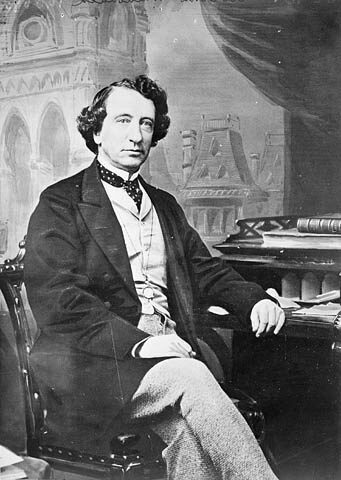 John A. Macdonald (1873–1891)1st prime minister of Canada from 1867 to 1873 and 1878 to 1891
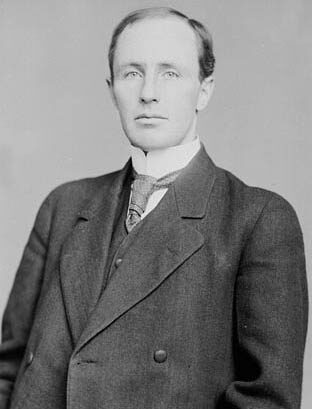 Arthur Meighen9th Prime Minister of Canada (1874-1960)
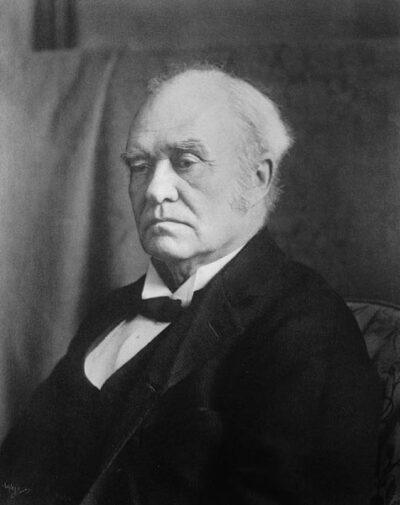 John Abbott3rd Prime Minister of Canada (1821-1893)
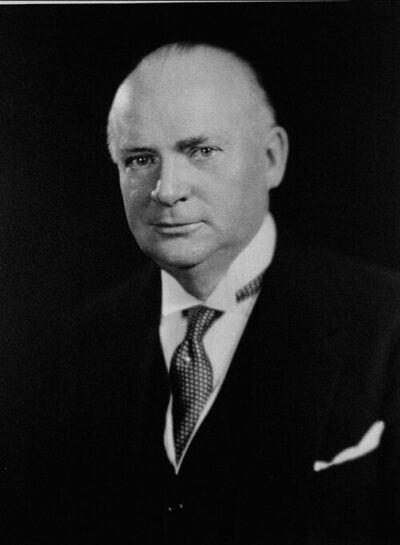 Richard Bedford Bennett11th Prime Minister of Canada (1870-1947)
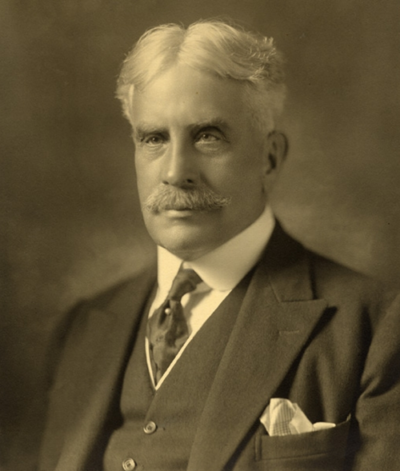 Robert Borden (1891–1937)8th prime minister of Canada (1854–1937)
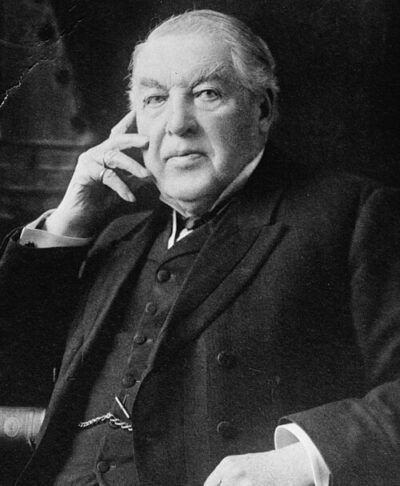 Charles Tupper6th Prime Minister of Canada (1821-1915)
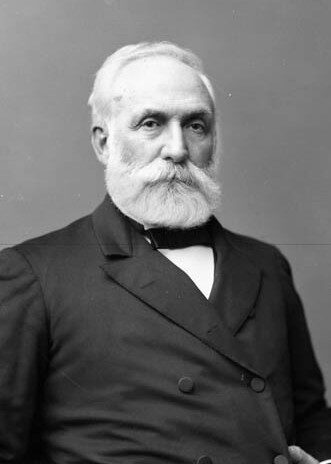 Mackenzie Bowell5th Prime Minister of Canada (1823-1917)
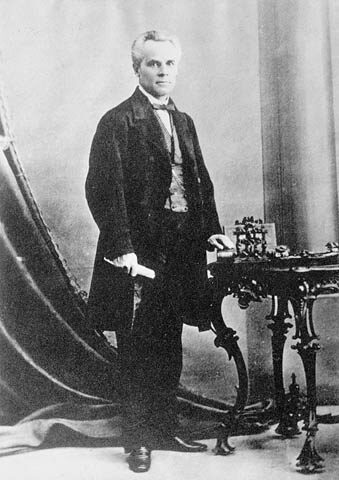 George-Étienne CartierCanadian politician and lawyer (1814-1873)
