Imperial Russian Navy
The Imperial Russian Navy is a navy of the Russian Empire. It was founded in 1696 by Peter the Great.
- Founded
- 1696
- Founded by
- Peter the Great
- Country
- Russian Empire
All 6 facts, and where they come from
Facts
6 facts · 0 confirmed by two sources · 0 cited · 6 from one source
Where this comes from
Papalocal keeps its own record. It started from these sources; what each one said is kept here as it was copied, so a change on their side never changes this page by itself. Tap one to read its version.
What Wikidata says · copied November 17, 2026 · revision 2555262539
- Described as
- navy of the Russian Empire
- What it is
- navy
- Founded
- 1696
- Ended
- 1917
- Founded by
- Peter the Great · 1 reference
- Country
- Russian Empire; Tsardom of Russia
- Wikipedias with a page
- 35
Wikidata item Q583941 (wikidata.org/wiki/Q583941), public domain (CC0). Copied 2026-11-17.
What Wikipedia says · copied November 17, 2026 · revision 1385288643
The Imperial Russian Navy (Russian: Российский императорский флот) operated as the navy of the Russian Tsardom and later the Russian Empire from 1696 to 1917. Formally established in 1696, it lasted until being dissolved in the wake of the February Revolution and the declaration of the Russian Republic in 1917. It developed from a smaller force that had existed prior to Tsar Peter the Great's founding of the modern Russian navy during the Second Azov campaign in 1696, and expanded in the second half of the 18th century (before the era of the Empress Elizabeth) reaching its peak strength by the early part of the 19th century, behind only the British and French fleets in terms of size.
The Imperial Navy drew its officers from the aristocracy of the Empire, who belonged to the state Russian Orthodox Church. Young aristocrats began to be trained for leadership at a national naval boarding school, the Naval Cadet Corps. From 1818 on, only officers of the Imperial Russian Navy were appointed to the position of Chief Manager of the Russian-American Company, based in Russian America (present-day Alaska) for colonization and fur-trade development. Although the early Imperial Navy initially employed paid foreign sailors, the government began to recruit native-born sailors as conscripts, drafted (as were men to serve in the army). Service in the navy was lifelong before the 1874 decree on conscription limited the service term to six years at most. Many naval commanders and recruits came from Imperial Russia's non-Russian lands with maritime traditions—Finland and (especially) the Baltic governorates.
The Russian Navy went into a period of decline due to the Empire's slow technical and economic development in the first half of the 19th century. It had a revival in the latter part of the century during the reign of Emperor Nicholas II (r. 1894–1917), but most of its Pacific Fleet (along with the Baltic Fleet sent to the Far East) was destroyed in the disastrous Russo-Japanese War of 1904–1905. Nicholas II, who was a naval enthusiast, had a major role in both the build up of the navy before the war with Japan and the rebuilding of it in the decade after.
The navy had mixed experiences during the First World War, with the Germans generally gaining the upper hand in the Baltic Sea, while the Russians took control of the Black Sea. The Russian Baltic Fleet mostly stayed on the defensive, but the Black Sea Fleet's attacks on Ottoman merchant shipping nearly cut off the coal supply to Constantinople and threatened the Ottoman Empire's ability to stay in the war. The Russian Revolution marked the end of the Imperial Navy; the Russian Provisional Government carried out reforms to the navy and its command structure, including the removal of imperial references from its rank insignia. Its officers had mostly aligned with the emperor, and the sailors split to fight on either side during the Russian Civil War of 1917–1922. The Soviet Navy, established as the Red Fleet in 1918 after the Revolution, took over the available surviving ships that did not evacuate from Crimea.
Strategically, the Imperial Russian Navy faced two overarching issues: the use of ice-free ports and open access to the high seas. Saint Petersburg and the other Baltic ports, as well as Vladivostok, could not operate in winter, hence the push for Russia to establish naval facilities on the Black Sea coast and (eventually) at Murmansk. And even substantial naval forces in the Baltic Sea remained confined by the lack of free access to the Atlantic via the Øresund, just as the Black Sea Fleet could not always rely on passage through the Bosphorus and the Dardanelles. As a result, separate naval groupings developed in relative isolation in the Baltic, the Black Sea, the Russian Far East and the Arctic.
From the Wikipedia article “Imperial Russian Navy” (en.wikipedia.org/wiki/Imperial_Russian_Navy), by its contributors, under CC BY-SA 4.0 (creativecommons.org/licenses/by-sa/4.0/). Copied 2026-11-17; not changed.
Confirmed Two sources agree. Cited One source, and it names where it got it. One source One source, without a reference of its own. Sources disagree The sources disagree. We show the best-supported value and keep theirs below.
Picture: Wikimedia Commons: Russian fleet in the Bosphorus Strait.jpg · See Commons file page
People connected 19
Military branch
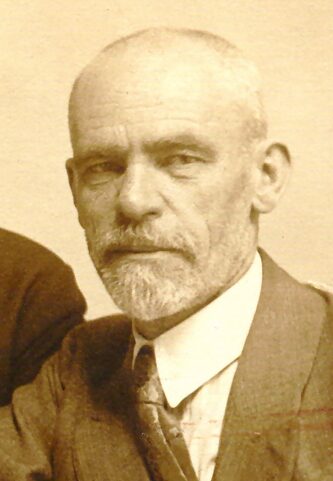 Edgar de Wahl (–1894)Estonian teacher and linguist (1867–1948)
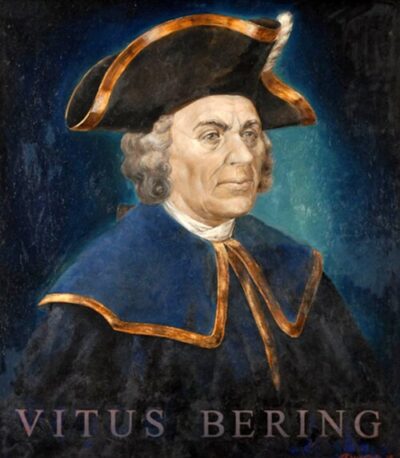 Vitus BeringDanish-born Russian explorer (1681-1741)
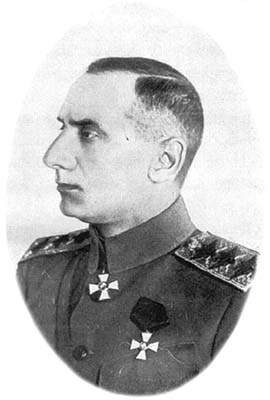 Alexander KolchakRussian admiral and military leader of the White movement (1874-1920)
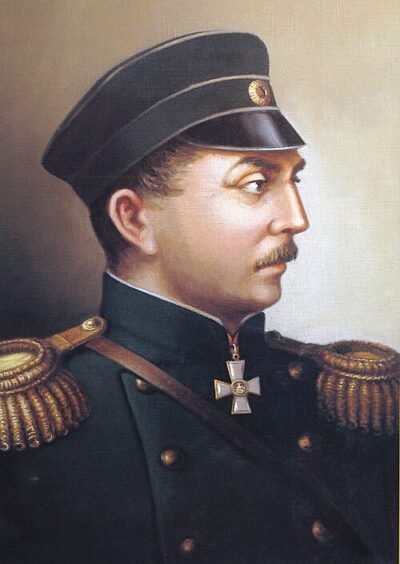 Pavel NakhimovRussian fleet commander
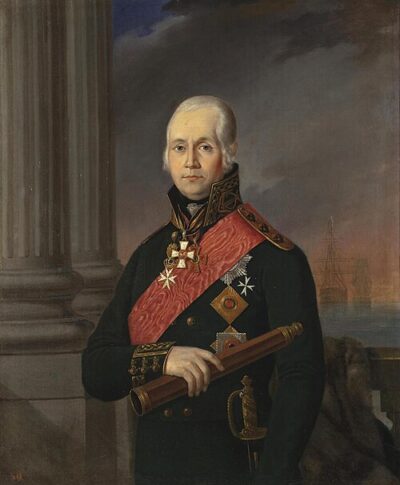 Fyodor UshakovRussian Saint and Admiral (1745-1817)
 Mikhail LazarevRussian fleet commander and explorer (1788-1851)
 Adam Johann von KrusensternBaltic German admiral and explorer in Russian service, who led the first Russian circumnavigation of the globe (1770–1846)
 Theodoros KolokotronisGreek general (1770–1843)
 Grand Duke Konstantin Nikolayevich of RussiaRussian grand duke (1827-1892)
 Stepan MakarovRussian admiral
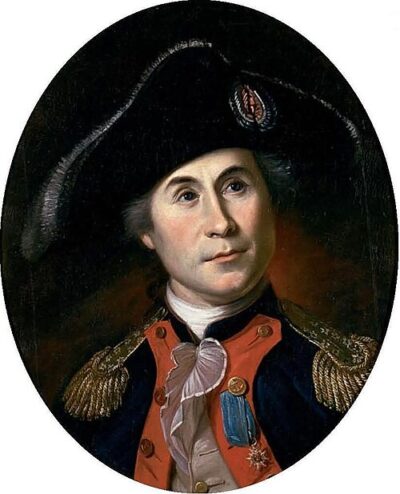 John Paul Jones (1788–)American naval officer (1747–1792)
 Grand Duke Kirill Vladimirovich of RussiaHead of the House of Romanov (1924-1938)
 Grand Duke Alexander Mikhailovich of RussiaRussian grand duke and naval officer (1866-1933); fifth son of Grand Duke Michael Nikolaevich of Russia and Princess Cecilie of Baden; brother-in-law of Tsar Nicholas II
 Fyodor ApraksinRussian Governor, Military commander and first Admiral (1661-1728)
 Vasily GolovninRussian explorer
 Zinovy RozhestvenskyRussian admiral (1848-1909)
 Grand Duke Alexei Alexandrovich of RussiaRussian grand duke (1850-1908); fifth child and fourth son of Alexander II of Russia and Maria Alexandrovna (Marie of Hesse)
 Yuri Lisyanskyexplorer