

Islamic Revolutionary Guard Corps
The Islamic Revolutionary Guard Corps is a military organization to protect the political system of the Islamic Republic in Iran. It was founded in 1979 by Ruhollah Khomeini and Mohsen Sazegara. Its headquarters are in Tehran. It has 125,000 employees. It stands for Guardianship of the Islamic Jurists.
- Founded
- May 5, 1979
- Founded by
- Ruhollah Khomeini
- Headquarters
- Tehran
- Employees
- 125,000
- Country
- Iran
All 11 facts, and where they come from
Facts
11 facts · 0 confirmed by two sources · 1 cited · 10 from one source
Where this comes from
Papalocal keeps its own record. It started from these sources; what each one said is kept here as it was copied, so a change on their side never changes this page by itself. Tap one to read its version.
What Wikidata says · copied November 19, 2026 · revision 2558829706
- Described as
- military organization to protect the political system of the Islamic Republic in Iran
- Other names
- Revolutionary Guards of Iran, Sepah, Sepah e Pasdaran, Pasdaran e Enqelab, Pasdaran, Islamic Revolution Guards Corps, Islamic Revolution Guard Corps, Sipah, Army of the Guardians of the Islamic Revolution, Iranian Revolutionary Guards, IRGC, Iranian Revolutionary Guard Corps
- What it is
- paramilitary organization · 1 reference; intelligence agency; armed forces
- Founded
- May 5, 1979
- Founded by
- Ruhollah Khomeini; Mohsen Sazegara
- Headquarters
- Tehran
- Country
- Iran
- Employees
- 125,000
- Ideology
- Guardianship of the Islamic Jurists
- Official website
- http://www.sepahnews.com
- Wikipedias with a page
- 80
Wikidata item Q271110 (wikidata.org/wiki/Q271110), public domain (CC0). Copied 2026-11-19.
What Wikipedia says · copied November 19, 2026 · revision 1385492331
The Islamic Revolutionary Guard Corps (IRGC), also known as Sepah, Pasdaran, and Iranian Revolutionary Guards, is a multi-service military force of Iran and one of Iran's two military forces, the other being the Islamic Republic of Iran Army. It consists of five service branches: Ground Forces, Aerospace Force, Navy, Quds Force, and Basij. It is led by a commander-in-chief, who is appointed by and reports to the supreme leader of Iran.
The IRGC was officially established by Ruhollah Khomeini as a military branch in May 1979 in the aftermath of the Iranian Revolution. Whereas the Iranian Army (the Artesh) protects the country's sovereignty in a traditional capacity, the IRGC's constitutional mandate is to ensure the integrity of the Islamic Republic. Most interpretations of this mandate assert that it entrusts the IRGC with preventing foreign interference in Iran, thwarting coups by the traditional military, and crushing "deviant movements" that harm the ideological legacy of the Islamic Revolution.
The IRGC has approximately 125,000 personnel, as of 2024. The main body is the IRGC Ground Forces, which focus on maintaining internal order, but have recently moved towards expeditionary warfare also, projecting power for the Islamic Republic. The IRGC Navy is now Iran's primary force exercising operational control over the Persian Gulf, serving as a de facto coast guard. The IRGC Aerospace Force is responsible for the Iranian ballistic missile program and act as the country's space force. The Basij, a paramilitary volunteer militia that serves as the IRGC's auxiliaries, has a further approximately 90,000 active personnel. Lastly, the Quds Force is a unit specialized in unconventional warfare, military intelligence and clandestine operations, responsible for arming, training, advising and, in some cases, commanding pro-Iranian non-state actors abroad—such as Hezbollah and the Houthis. It operates a media arm, known as "Sepah News" within Iran. Currently, the IRGC is designated as a terrorist organization by Albania, Argentina, Australia, Bahrain, Bosnia and Herzegovina, Canada, Colombia, Costa Rica, the Dominican Republic, Ecuador, the European Union, Honduras, Iceland, Israel, Liechtenstein, Moldova, Montenegro, North Macedonia, Paraguay, Saudi Arabia, Serbia, Sweden, Trinidad and Tobago, Ukraine, and the United States.
Originating as a radical ideological militia, the IRGC has taken on a growing role in nearly every aspect of Iranian politics, economics (including energy and food industries) and society. In 2010, BBC News described the organization as a "business empire". In 2019, Reuters described it as "an industrial empire with political clout". IRGC's expanded social, political, military, and economic role under Mahmoud Ahmadinejad—especially during the 2009 presidential election and the suppression of post-election protests—has led many Western analysts to argue that it has surpassed even the country's ruling clerical class in terms of political power. In 2026, Reuters described the IRGC as a "state-within-a-state".
From the Wikipedia article “Islamic Revolutionary Guard Corps” (en.wikipedia.org/wiki/Islamic_Revolutionary_Guard_Corps), by its contributors, under CC BY-SA 4.0 (creativecommons.org/licenses/by-sa/4.0/). Copied 2026-11-19; not changed.
Confirmed Two sources agree. Cited One source, and it names where it got it. One source One source, without a reference of its own. Sources disagree The sources disagree. We show the best-supported value and keep theirs below.
Picture: Wikimedia Commons: Seal of the Army of the Guardians of the Islamic Revolution.svg · See Commons file page
People connected 21
Military branch
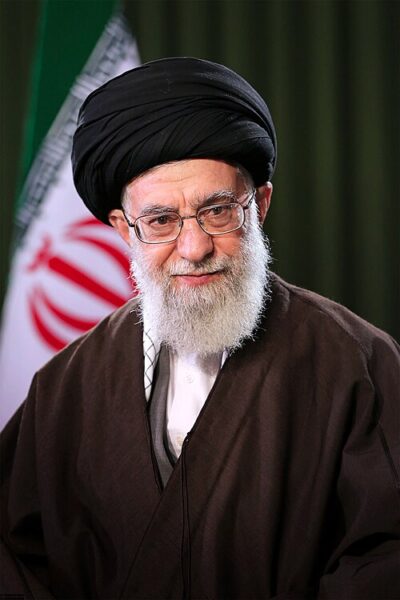 Ali KhameneiSupreme Leader of Iran from 1989 to 2026
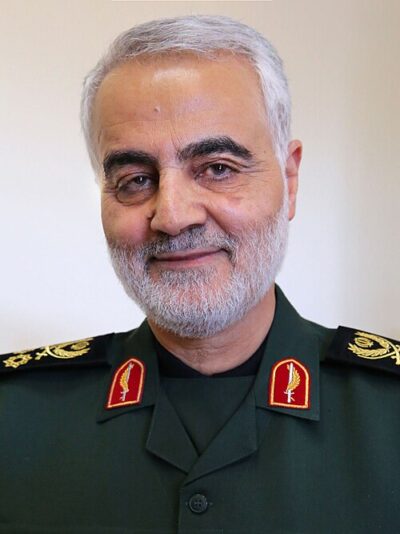 Qasem SoleimaniIranian military officer (1957–2020)
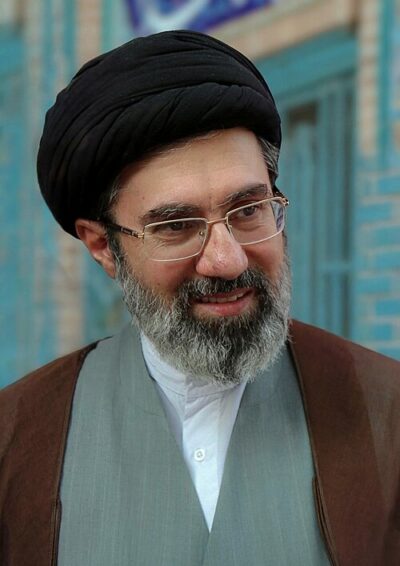 Mojtaba Khamenei3rd Supreme Leader of Iran since 2026
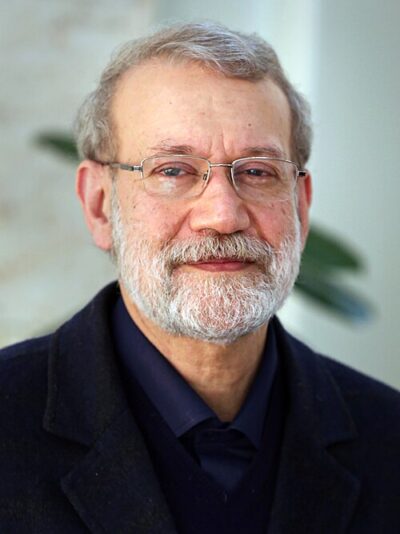 Ali LarijaniIranian politician and military officer (1958–2026)
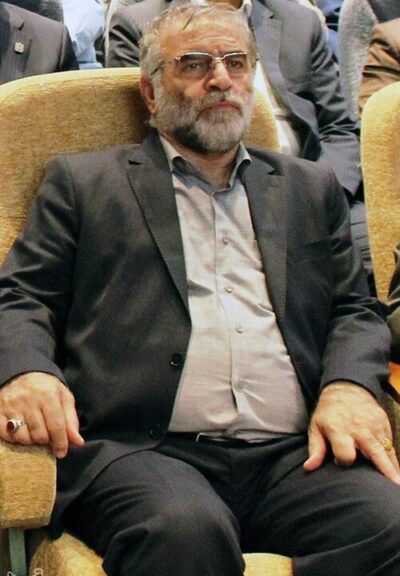 Mohsen Fakhrizadeh (1980–2020)Iranian general and physicist (1961–2020)
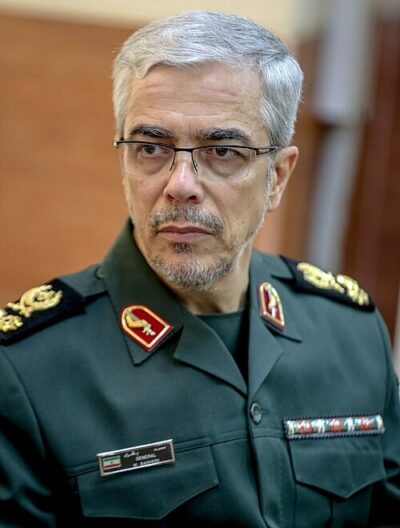 Mohammad BagheriIranian senior military leader
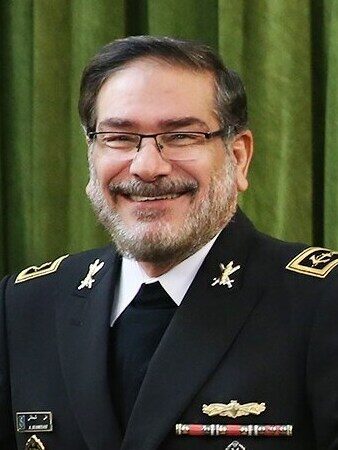 Ali ShamkhaniIranian naval officer and politician (1955–2026)
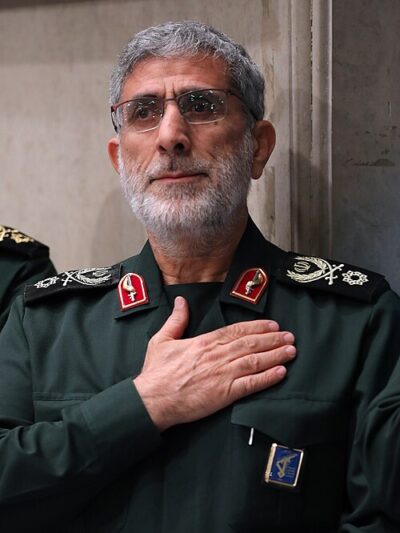 Esmail GhaaniIranian general in the Quds Force
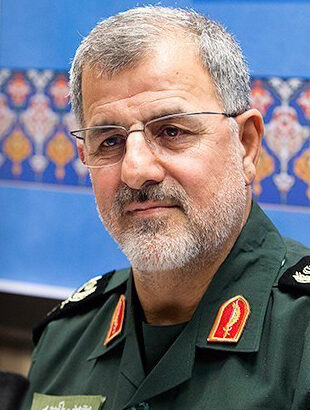 Mohammad PakpourIranian military officer and ex-commander of the IRGC (1961–2026)
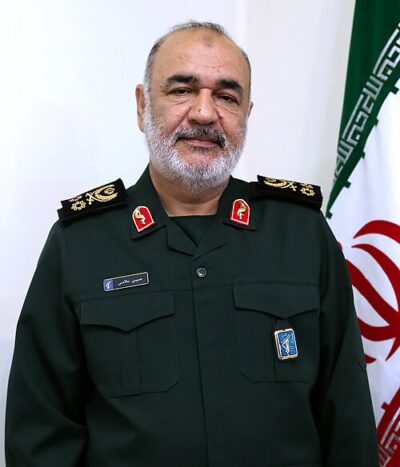 Hossein SalamiIranian military officer (1960–2025)
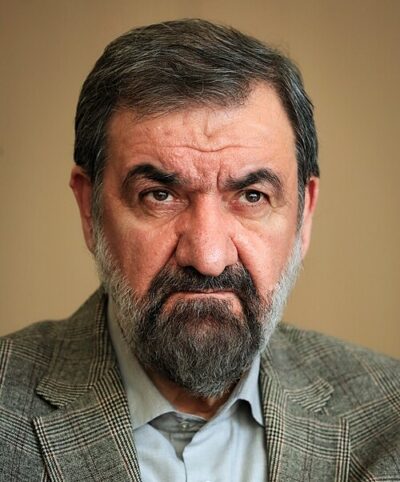 Mohsen RezaeeIranian politician and senior military officer
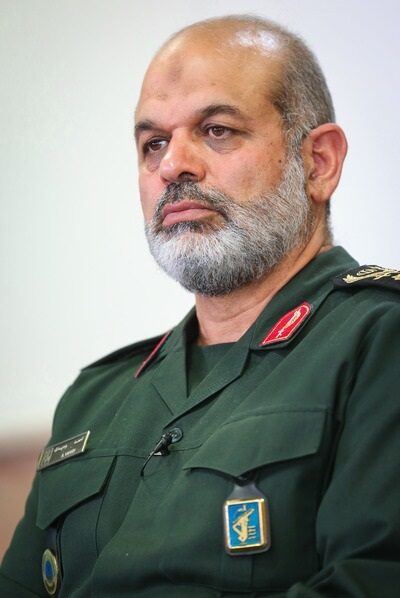 Ahmad VahidiIranian politician
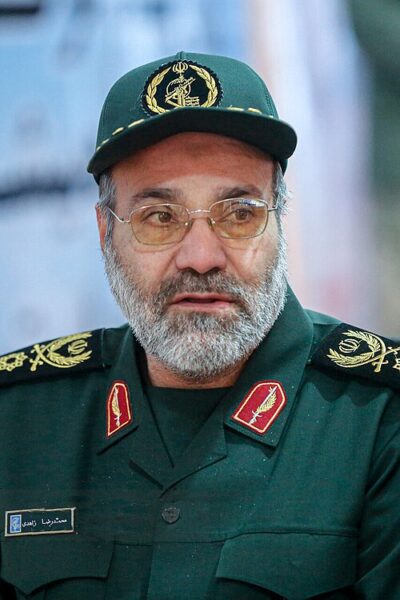 Mohammad-Reza ZahediIranian brigadier general (1961-2024)
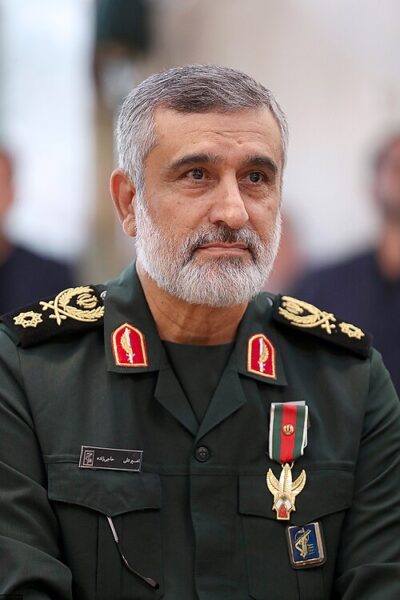 Amir Ali HajizadehIranian military officer
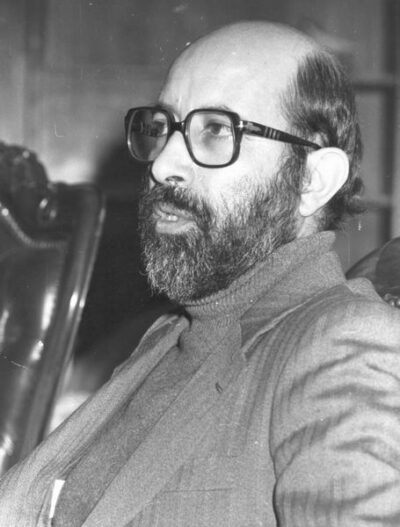 Mostafa ChamranIranian politician (1932-1981)
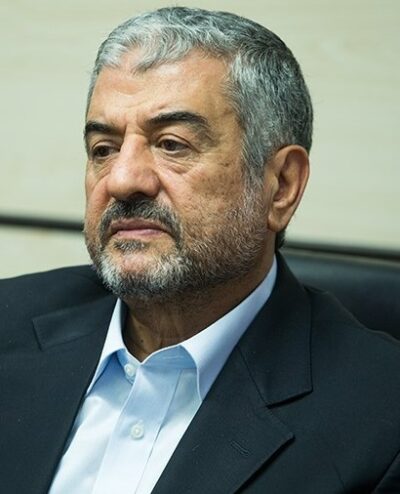 Mohammad Ali JafariIranian general
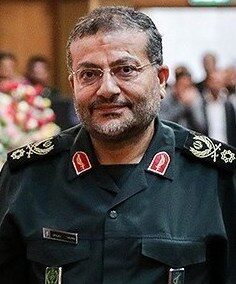 Gholamreza SoleimaniIranian military commander (1964-2026)
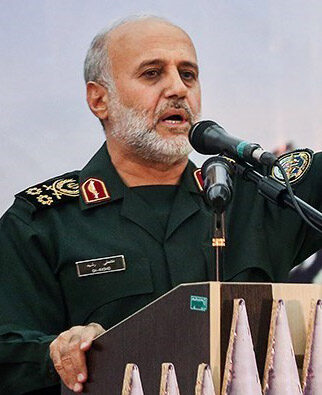 Gholam Ali RasheedIranian military officer (1953–2025)
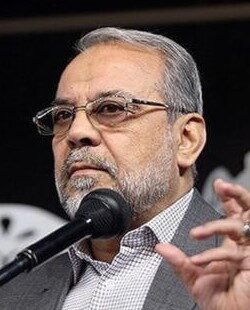 Mohammad Bagher ZolghadrIranian military commander
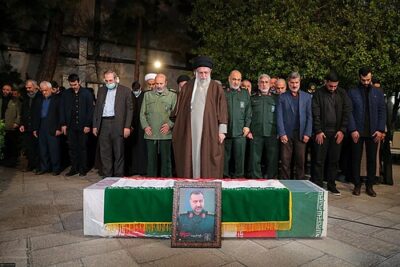 Razi MousaviIranian general (1962–2023)
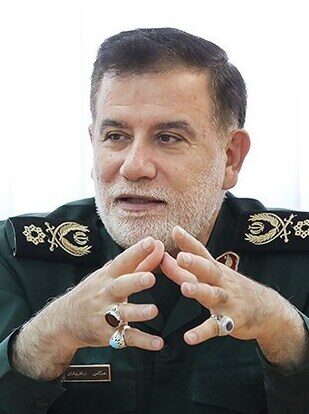 Abbas NilforoushanIranian general (1966–2024)
