
Justicialist Party
The Justicialist Party is a political party in Argentina. It was founded in 1946 by Juan Perón. Its headquarters are in Buenos Aires. It stands for Peronism, populism and labourism.
- Country
- Argentina
- Founded
- November 21, 1946
- Ideology
- Peronism
All 10 facts, and where they come from
Facts
10 facts · 0 confirmed by two sources · 0 cited · 10 from one source
Where this comes from
Papalocal keeps its own record. It started from these sources; what each one said is kept here as it was copied, so a change on their side never changes this page by itself. Tap one to read its version.
What Wikidata says · copied November 17, 2026 · revision 2559372469
- Described as
- political party in Argentina
- Other names
- Partido Justicialista, PJ
- What it is
- political party
- Founded
- November 21, 1946
- Founded by
- Juan Perón
- Headquarters
- Buenos Aires
- Country
- Argentina
- Ideology
- Peronism; populism; labourism; nationalism
- Official website
- https://pj.org.ar
- Wikipedias with a page
- 38
Wikidata item Q1053668 (wikidata.org/wiki/Q1053668), public domain (CC0). Copied 2026-11-17.
What Wikipedia says · copied November 17, 2026 · revision 1385496371
The Justicialist Party (Spanish: Partido Justicialista [paɾˈtiðo xustisjaˈlista], PJ), also known as the Peronist Party (Spanish: Partido Peronista), is a major political party in Argentina, and the largest branch within Peronism.
Founded by Juan Perón and his wife, First Lady Eva Perón, the party followed a left-wing agenda based on his policies. It is overall the largest party in Congress. Historically, the party's factual position was undermined by divisions that emerged in the 1990s and lasted until 2020; the PJ was rocked by a conflict between two Peronist tendencies, Kirchnerism, the main, left-wing populist faction, and Federal Peronism, which was located on the centre and centre-right of the political spectrum. The division ended with the failure of Federal Peronism to challenge the dominating Kirchnerist faction in 2019. Federal Peronism no longer constitutes an internal party faction. The resulted from Cristina Kirchner’s election as leader of the party, and the creation of a separate dissident party: the Federal Consensus. Today, the party adheres to an ideology based on economic intervention, welfare-state policies, and economic independence from wealthier countries; it is located on the centre-left and left wing of the political spectrum.
Aside from Juan Perón, who governed Argentina on three occasions from 1946 to 1955 and later from 1973 to 1974, eleven presidents of Argentina have belonged to the Justicialist Party: Héctor Cámpora, Raúl Alberto Lastiri, Isabel Perón, Carlos Menem, Ramón Puerta, Adolfo Rodríguez Saá, Eduardo Camaño, Eduardo Duhalde, Néstor Kirchner, Cristina Fernández de Kirchner and Alberto Fernández. Justicialists have been the largest party in Congress almost consistently since 1987.
From the Wikipedia article “Justicialist Party” (en.wikipedia.org/wiki/Justicialist_Party), by its contributors, under CC BY-SA 4.0 (creativecommons.org/licenses/by-sa/4.0/). Copied 2026-11-17; not changed.
Confirmed Two sources agree. Cited One source, and it names where it got it. One source One source, without a reference of its own. Sources disagree The sources disagree. We show the best-supported value and keep theirs below.
People connected 13
Party members
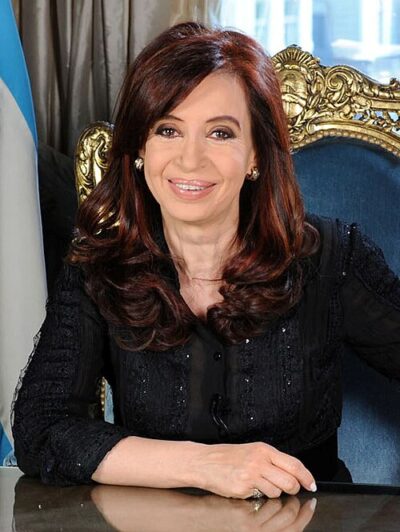 Cristina Fernández de Kirchnerpresident of Argentina from 2007 to 2015
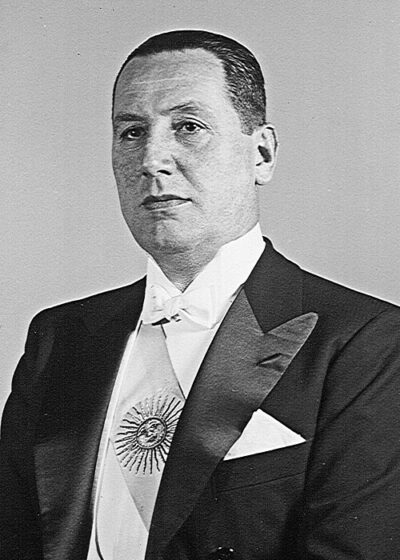 Juan Perónpresident of Argentina (1946–55, 1973–74)
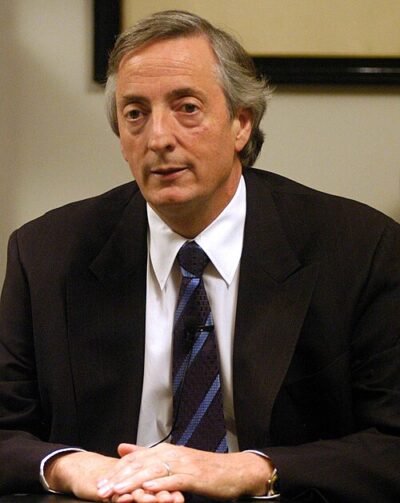 Néstor KirchnerPresident of Argentina from 2003 to 2007
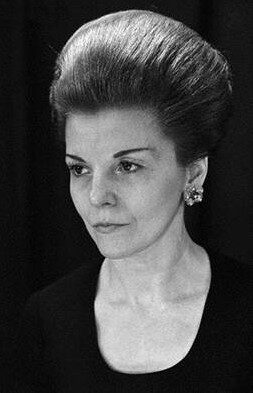 Isabel Martínez de Perónfirst female president of Argentina from 1974 to 1976
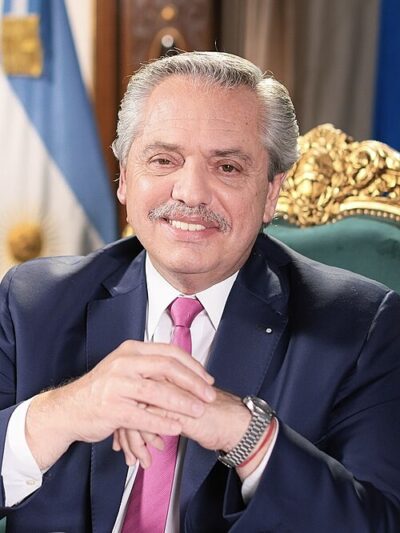 Alberto Fernández (1983–2024)president of Argentina from 2019 to 2023
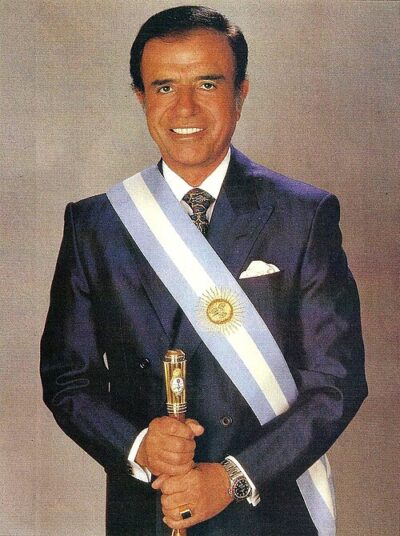 Carlos MenemArgentinean president between 1989 and 1999
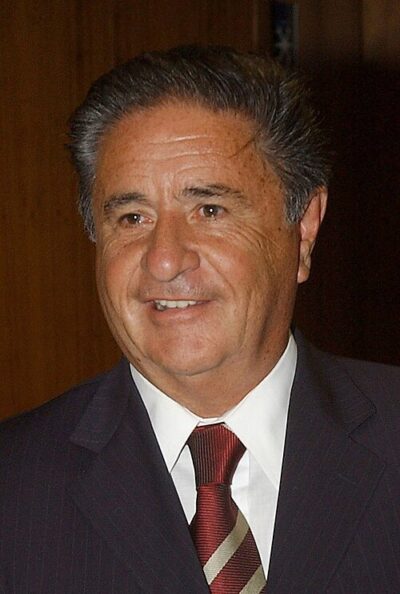 Eduardo DuhaldePresident of Argentina from 2002 to 2003
 Adolfo Rodríguez SaáPresident of Argentina in 2001
 Carlos ReutemannArgentine racing driver and politician
 Héctor José Cámporapresident of Argentina from May to July 1973
 Raúl Alberto LastiriPresident of Argentina (1915-1978)
 Eduardo CamañoArgentine politician
 Daniel ScioliArgentine politician
