Lebedev Physical Institute
Lebedev Physical Institute is a Russian science institute. It was founded in 1934 by Sergey Vavilov. Its headquarters are in Moscow. It has 1,600 employees. It won the Order of Lenin and 1 more.
- Located in
- Saint Petersburg (1934)
- Country
- Russia (1991–)
- Founded
- April 28, 1934
- What it is
- research institute
All 16 facts, and where they come from
Facts
16 facts · 0 confirmed by two sources · 3 cited · 13 from one source
Where this comes from
Papalocal keeps its own record. It started from these sources; what each one said is kept here as it was copied, so a change on their side never changes this page by itself. Tap one to read its version.
What Wikidata says · copied November 17, 2026 · revision 2481804596
- Described as
- Russian science institute
- Other names
- Lebedev Institute of Physics, Lebedev Institute, Federal State Institution of Science Institute of Physics. PN Lebedev, the Russian Academy of Sciences
- What it is
- research institute; Institute of the Russian Academy of Science; architectural landmark · 1 reference
- Founded
- April 28, 1934 · 1 reference
- Founded by
- Sergey Vavilov · 1 reference
- Headquarters
- Moscow
- Located in
- Saint Petersburg (1934) · 1 reference
- Country
- Russia (1991–); Soviet Union (–1991)
- Employees
- 1,600
- Part of
- Russian Academy of Sciences; Academy of Sciences of the USSR (1934–1991)
- Awards
- Order of Lenin; Order of the October Revolution
- Named after
- Pyotr Lebedev
- Official website
- http://www.lebedev.ru/en/
- Wikipedias with a page
- 19
Wikidata item Q1810862 (wikidata.org/wiki/Q1810862), public domain (CC0). Copied 2026-11-17.
What Wikipedia says · copied November 17, 2026 · revision 1384713661
The Lebedev Physical Institute of the Russian Academy of Sciences (Russian: Физи́ческий институ́т имени П. Н. Ле́бедева Российской академии наук) is a Russian research institute in Moscow, specializing in physics. The institute was established in its present shape in 1934 by academician Sergey Vavilov. It moved to Moscow and was named after a Russian physicist Pyotr Lebedev the same year. It is also known as P. N. Lebedev Institute of Physics or just Lebedev Institute. In Russian it is often referred to by the acronym FIAN (ФИАН) standing for "Physical Institute of the Academy of Sciences". The range of the research activities includes: laser technology, dark matter structure, nanostructures, superconductivity, cosmic rays, and gamma-astronomy. The institute developed a technique of crystallizing cubic zirconia (which was called Fianit in Russia, named after FIAN).
From the Wikipedia article “Lebedev Physical Institute” (en.wikipedia.org/wiki/Lebedev_Physical_Institute), by its contributors, under CC BY-SA 4.0 (creativecommons.org/licenses/by-sa/4.0/). Copied 2026-11-17; not changed.
Confirmed Two sources agree. Cited One source, and it names where it got it. One source One source, without a reference of its own. Sources disagree The sources disagree. We show the best-supported value and keep theirs below.
Picture: Wikimedia Commons: Leninsky 41-66 - IMG 3293 (45658210522).jpg · See Commons file page
People connected 11
Worked here
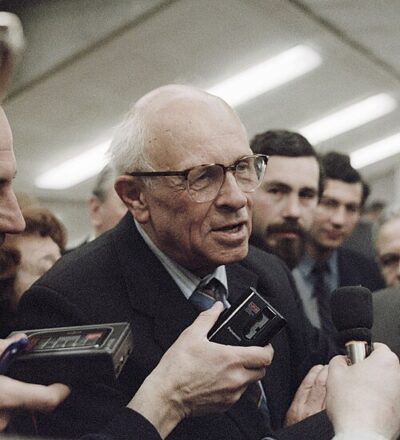 Andrei Sakharov (1947–)Soviet nuclear physicist and human rights activist (1921–1989)
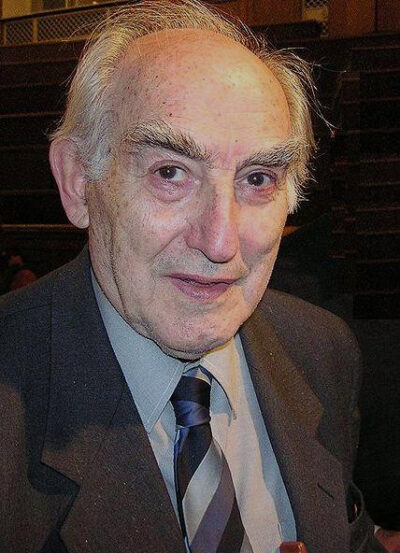 Vitaly GinzburgRussian physicist (1916–2009)
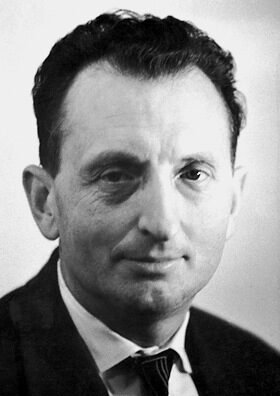 Alexander Prokhorov (1946–1982)Soviet and Russian physicist (1916-2002)
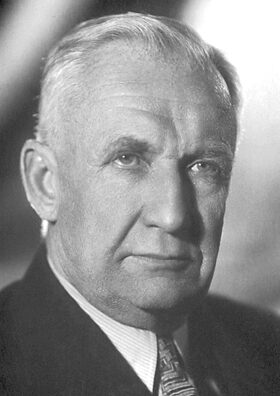 Igor TammSoviet physicist (1895–1971)
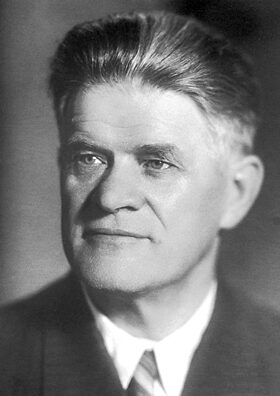 Pavel CherenkovSoviet physicist (1904-1990)
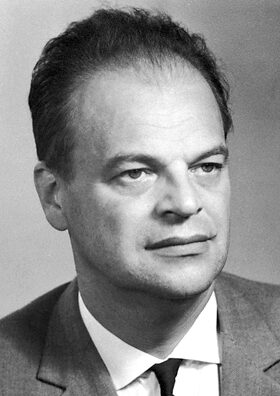 Nikolay Basov (1948–)Soviet physicist (1922-2001)
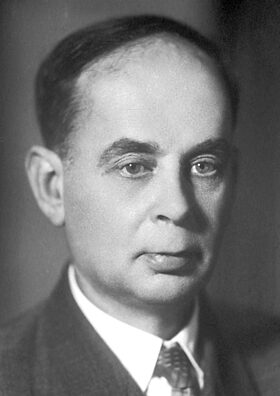 Ilya Frank (1934–1970)Soviet physicist
 Sergey VavilovSoviet physicist
 Vladimir Fock (1934–1953)Russian physicist (1898-1974)
- LLeonid MandelstamSoviet physicist