
Leeuwenhoek Lecture
Leeuwenhoek Lecture is a prize lecture of the Royal Society (1950-). It is given by the Royal Society of London.
- Given by
- Royal Society of London
- Country
- United Kingdom
- Created
- 1950
All 6 facts, and where they come from
Facts
6 facts · 0 confirmed by two sources · 0 cited · 6 from one source
Where this comes from
Papalocal keeps its own record. It started from these sources; what each one said is kept here as it was copied, so a change on their side never changes this page by itself. Tap one to read its version.
What Wikidata says · copied November 16, 2026 · revision 2476765892
- Described as
- prize lecture of the Royal Society (1950-)
- Other names
- Leeuwenhoek Medal and Lecture
- What it is
- science award; named lecture
- Created
- 1950 · 1 reference
- Country
- United Kingdom
- Given by
- Royal Society of London
- Named after
- Antonie van Leeuwenhoek
- Wikipedias with a page
- 3
Wikidata item Q6516542 (wikidata.org/wiki/Q6516542), public domain (CC0). Copied 2026-11-16.
What Wikipedia says · copied November 16, 2026 · revision 1314725574
The Leeuwenhoek Lecture is a prize lecture of the Royal Society to recognize achievement in microbiology. The prize was originally given in 1950 and awarded annually, but from 2006 to 2018 was given triennially. From 2018 it will be awarded biennially.
The prize is named after the Dutch microscopist Antonie van Leeuwenhoek and was instituted in 1948 from a bequest from George Gabb. A gift of £2000 is associated with the lecture.
From the Wikipedia article “Leeuwenhoek Lecture” (en.wikipedia.org/wiki/Leeuwenhoek_Lecture), by its contributors, under CC BY-SA 4.0 (creativecommons.org/licenses/by-sa/4.0/). Copied 2026-11-16; not changed.
Confirmed Two sources agree. Cited One source, and it names where it got it. One source One source, without a reference of its own. Sources disagree The sources disagree. We show the best-supported value and keep theirs below.
People connected 6
Won it
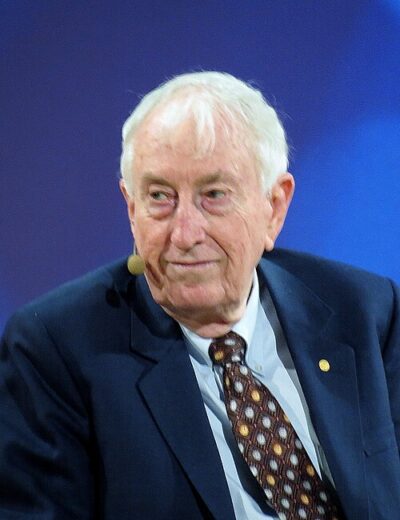 Peter C. Doherty (1999)Australian immunologist
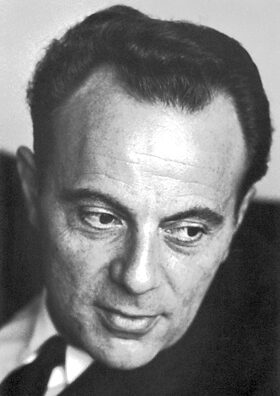 François Jacob (1977)French biologist and geneticist, winner of the Nobel Prize in 1965
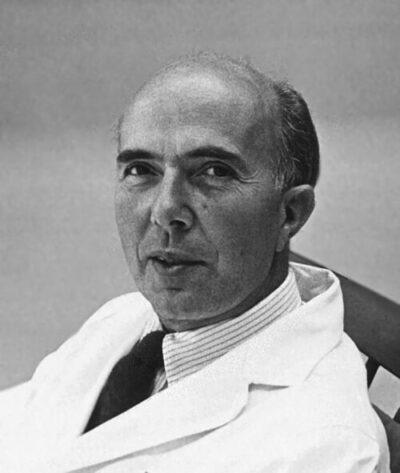 Renato Dulbecco (1974)Italian-born American virologist (1914-2012)
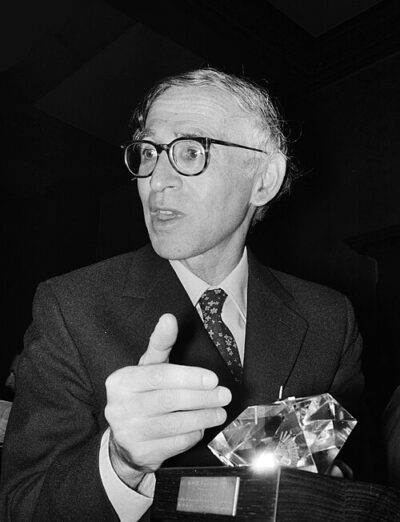 Aaron Klug (1973)British chemist and biophysicist
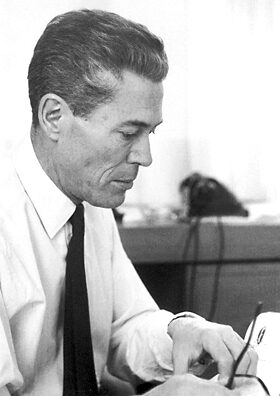 Jacques Monod (1969)French biologist and biochemist, Nobel laureate (1910-1976)
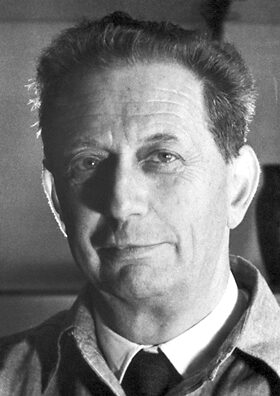 André Lwoff (1960)French microbiologist
