
People’s Democratic Party of Afghanistan
People’s Democratic Party of Afghanistan is a ruling political party in Afghanistan from 1978 to 1992. It was founded in 1965. Its headquarters are in Kabul. It stands for socialism, Marxism–Leninism and left-wing nationalism.
- Country
- Afghanistan
- Founded
- January 1, 1965
- Ideology
- socialism
- Chair
- Mohammad Najibullah
All 11 facts, and where they come from
Facts
11 facts · 0 confirmed by two sources · 0 cited · 11 from one source
Where this comes from
Papalocal keeps its own record. It started from these sources; what each one said is kept here as it was copied, so a change on their side never changes this page by itself. Tap one to read its version.
What Wikidata says · copied November 17, 2026 · revision 2562038772
- Described as
- ruling political party in Afghanistan from 1978 to 1992
- Other names
- PDPA
- What it is
- political party
- Followed by
- Watan Party of Afghanistan
- Founded
- January 1, 1965
- Ended
- March 1992
- Headquarters
- Kabul
- Country
- Afghanistan
- Chair
- Mohammad Najibullah · 1 reference
- Ideology
- socialism; Marxism–Leninism; left-wing nationalism; secularism
- Wikipedias with a page
- 36
Wikidata item Q1186355 (wikidata.org/wiki/Q1186355), public domain (CC0). Copied 2026-11-17.
What Wikipedia says · copied November 17, 2026 · revision 1382732751
The People's Democratic Party of Afghanistan (PDPA), known as the Homeland Party after June 1990, was a Marxist–Leninist political party in Afghanistan established on 1 January 1965. Four members of the party won seats in the 1965 Afghan parliamentary election, reduced to two seats in 1969, albeit both before the party was fully legal. For most of its existence, the party was split between the hardline Khalq and moderate Parcham factions, each of which claimed to represent the "true" PDPA.
The party adhered to Marxist–Leninist ideology and toed a staunch pro-Soviet political line. The PDPA's secret constitution, which was adopted by the party during its founding congress in January 1965 but never publicly released to party cadres, described itself as "the vanguard of the working class and all laborers in Afghanistan" and defined its party ideology as "the practical experience of Marxism–Leninism". While PDPA's internal documents incorporated explicitly Marxist terminology, the party refrained from formally branding itself as "communist" in public, instead using labels such as "national democratic" and "socialist". PDPA's public platform document published in April 1966 asserted that its political objectives involved the creation of a "democratic national government" as well as the long-term goal of establishing a socialist state.
The Khalq-Parcham organizational split erupted within the PDPA in 1967. While the Khalqists adhered to rigid Marxist–Leninist dogma and toed a militant revolutionary line, the Parchamis wanted to establish a "common front" with other left-wing parties. In July 1977, Khalq and Parcham factions re-merged into the PDPA after Soviet mediation, with the objective of preparing a coup against Daoud Khan's regime. During the initial period of Khalqist rule from 1978 to 1979, PDPA portrayed itself as advancing a "socialist revolution" in Afghanistan. After the ouster and killing of Hafizullah Amin in a palace coup launched by Soviet military forces in December 1979, a Parchamite-dominated PDPA claimed that its government was facilitating what it described as the "national-democratic stage" of Marxist transformation. In its final 5 years, the party under Najibullah moved away from Marxism–Leninism and towards Afghan nationalism.
While a minority, the party helped Mohammad Daoud Khan, former Prime Minister of Afghanistan, overthrow King Mohammad Zahir Shah in 1973 and establish the Republic of Afghanistan. Initially, the PDPA was highly represented in the government cabinet, but many PDPA officials were later dismissed as relations between the party and President Khan worsened. In 1978, the PDPA, with help from members of the Afghan National Army, seized power from Daoud Khan in what became known as the Saur Revolution. The PDPA led by Nur Muhammad Taraki established the Democratic Republic of Afghanistan, which would last until 1987. After National Reconciliation talks in 1987, the official name of the country reverted to the Republic of Afghanistan (as it was known before 1978). Under the leadership of Mohammad Najibullah in 1990, the party was renamed the Homeland Party and much of the party's symbols and policies were altered or removed. The republic lasted until 1992, when mujahideen rebels seized the capital Kabul and took over the country's government. The Homeland Party was subsequently banned, with some officials joining the new government, some joining militias, and others deserting.
From the Wikipedia article “People's Democratic Party of Afghanistan” (en.wikipedia.org/wiki/People's_Democratic_Party_of_Afghanistan), by its contributors, under CC BY-SA 4.0 (creativecommons.org/licenses/by-sa/4.0/). Copied 2026-11-17; not changed.
Confirmed Two sources agree. Cited One source, and it names where it got it. One source One source, without a reference of its own. Sources disagree The sources disagree. We show the best-supported value and keep theirs below.
People connected 8
Party members
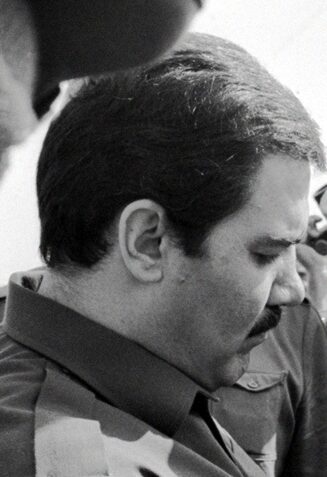 Mohammad Najibullah4th General Secretary of the People's Democratic Party of Afghanistan
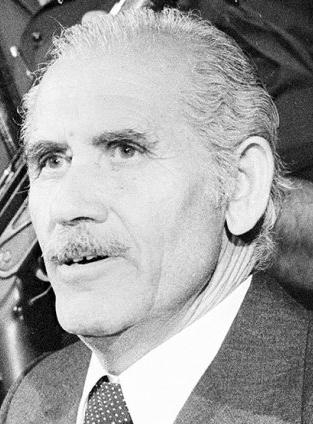 Nur Muhammad Taraki1st General Secretary of the People's Democratic Party of Afghanistan
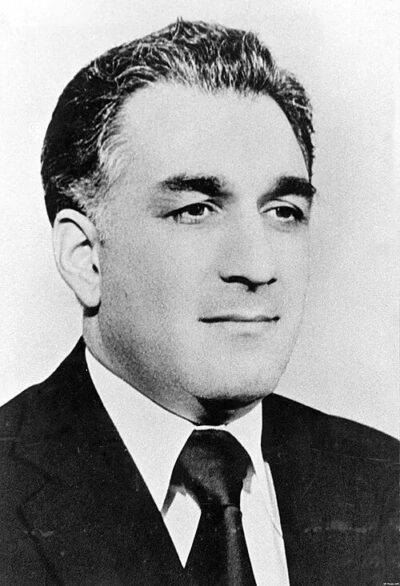 Hafizullah AminAfghan communist revolutionary, politician and teacher (1929–1979)
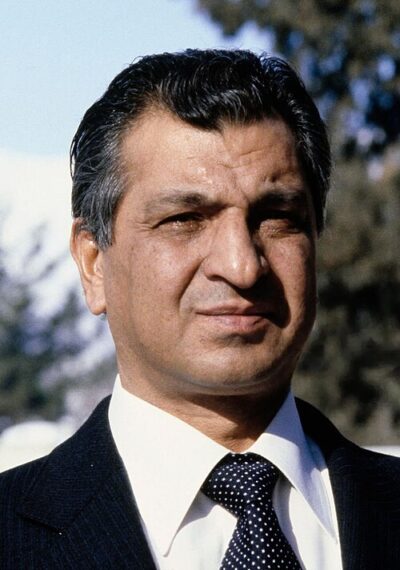 Babrak Karmal3rd General Secretary of the People's Democratic Party of Afghanistan (1929–1996)
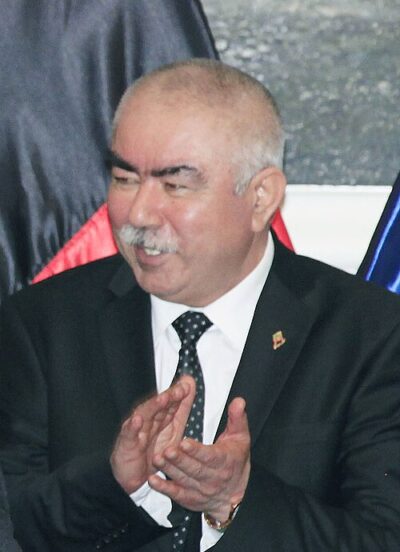 Abdul Rashid DostumAfghan politician
- AAbdul Ahad MohmandAfghan astronaut
- AAnahita RatebzadAfghan Marxist and member of the People's Democratic Party of Afghanistan (1931-2014)
- SSultan Ali KeshtmandAfghan politician (1935~2026)
