
Progressive Conservative Party of Canada
Progressive Conservative Party of Canada is a former Canadian centre-right political party (1942-2003). Its headquarters are in Ottawa.
- Country
- Canada
- Founded
- 1942
All 6 facts, and where they come from
Facts
6 facts · 0 confirmed by two sources · 0 cited · 6 from one source
Where this comes from
Papalocal keeps its own record. It started from these sources; what each one said is kept here as it was copied, so a change on their side never changes this page by itself. Tap one to read its version.
What Wikidata says · copied November 16, 2026 · revision 2550653162
- Described as
- former Canadian centre-right political party (1942-2003)
- Other names
- PC Party
- What it is
- political party
- Founded
- 1942
- Ended
- December 7, 2003
- Headquarters
- Ottawa · 1 reference
- Country
- Canada
- Official website
- http://progressivecanadian.ca/
- Wikipedias with a page
- 19
Wikidata item Q1292617 (wikidata.org/wiki/Q1292617), public domain (CC0). Copied 2026-11-16.
What Wikipedia says · copied November 16, 2026 · revision 1381252598
The Progressive Conservative Party of Canada (PC; French: Parti progressiste-conservateur du Canada, PPC) was a centre-right federal political party in Canada that existed from 1942 to 2003.
From Canadian Confederation in 1867 until 1942, the original Conservative Party of Canada participated in numerous governments and had multiple names. In 1942, its name was changed to the Progressive Conservative Party under the request of newly elected party leader Premier John Bracken of Manitoba, a former member of the Progressive Party of Manitoba.
In the 1957 federal election, John Diefenbaker carried the party to their first victory in 27 years and the following year, led the party to the largest federal electoral landslide in history. During his tenure, human rights initiatives were achieved, most notably the Bill of Rights. In the 1963 federal election, the party lost power and would not regain it until 1979, when Joe Clark led the party to a minority government victory. The party lost power just nine months later.
In 1983, Clark lost his leadership role to Brian Mulroney, who helped the PC Party gain popularity in Quebec. Mulroney won back-to-back majority governments in 1984 and 1988, and during his tenure, major economic reforms such as the North American Free Trade Agreement and the goods and services tax (GST) were introduced.
The GST, the government's failed attempts to revise the Constitution with the Meech Lake and Charlottetown accords, and the early 1990s recession, led to the party's increasing unpopularity and eventual collapse in the 1993 federal election where they won just two seats. In Western Canada the bulk of the party's support transferred to the right-wing populist Reform Party (which later became the Canadian Alliance), while in Quebec support shifted to the sovereigntist Bloc Québécois.
The Progressive Conservatives failed to recover much lost ground in the subsequent 1997 and 2000 federal elections. When it became clear that neither the Progressive Conservatives nor the Canadian Alliance could on their own defeat the incumbent Liberals, an effort to unite the right-of-centre parties emerged. Eventually, in 2003 the party membership voted to dissolve the party and merge with the Canadian Alliance to form the current Conservative Party of Canada.
Like their British counterparts, members and supporters of the Progressive Conservative Party were known as "Tories". Provincial variants of the Progressive Conservative Party continue to exist in a number of provinces.
From the Wikipedia article “Progressive Conservative Party of Canada” (en.wikipedia.org/wiki/Progressive_Conservative_Party_of_Canada), by its contributors, under CC BY-SA 4.0 (creativecommons.org/licenses/by-sa/4.0/). Copied 2026-11-16; not changed.
Confirmed Two sources agree. Cited One source, and it names where it got it. One source One source, without a reference of its own. Sources disagree The sources disagree. We show the best-supported value and keep theirs below.
People connected 8
Party members
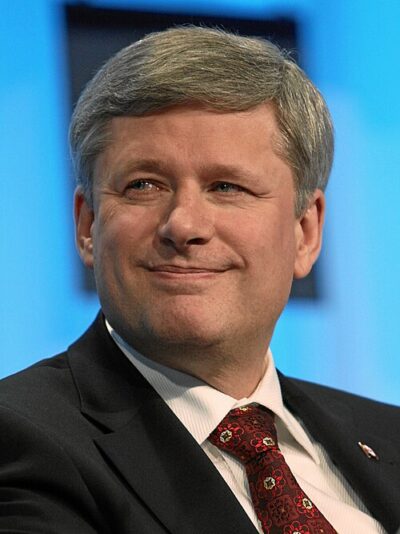 Stephen Harper (1985–1987)22nd prime minister of Canada from 2006 to 2015
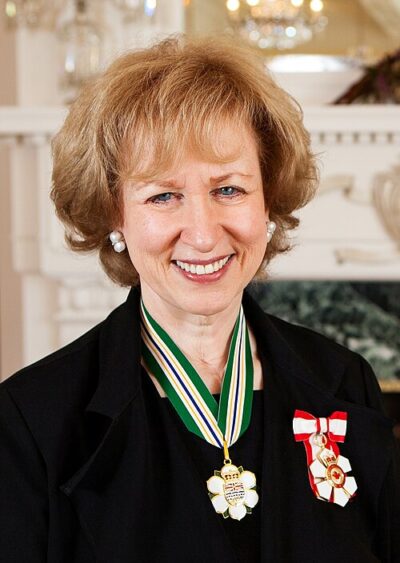 Kim Campbell (1988–1993)19th Prime Minister of Canada in 1993
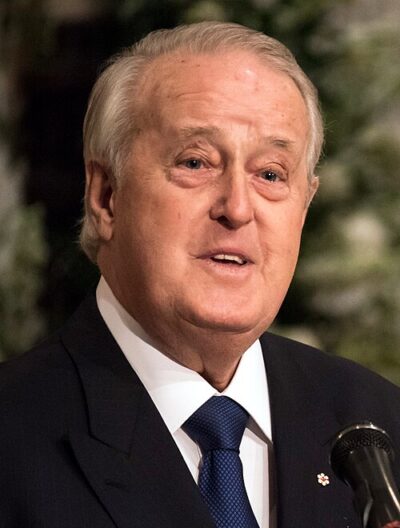 Brian MulroneyPrime Minister of Canada from 1984 to 1993
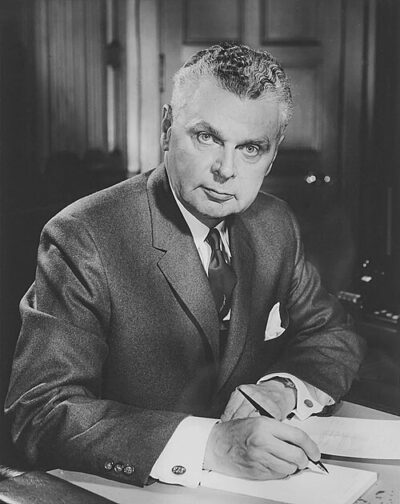 John Diefenbaker13th Prime Minister of Canada (1895-1979)
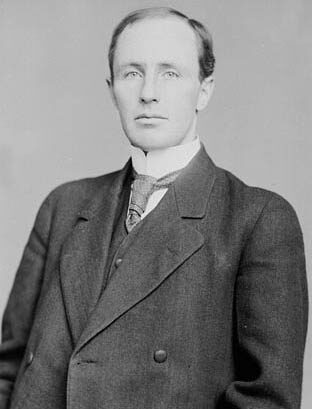 Arthur Meighen9th Prime Minister of Canada (1874-1960)
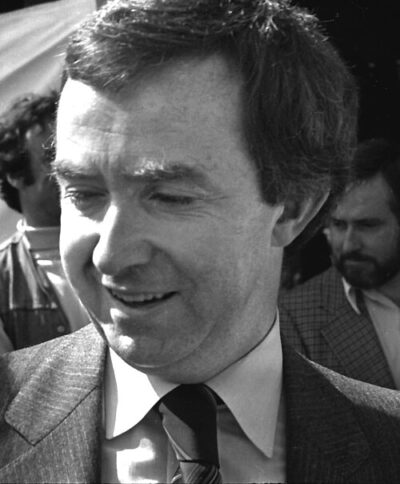 Joe Clark16th Prime Minister of Canada
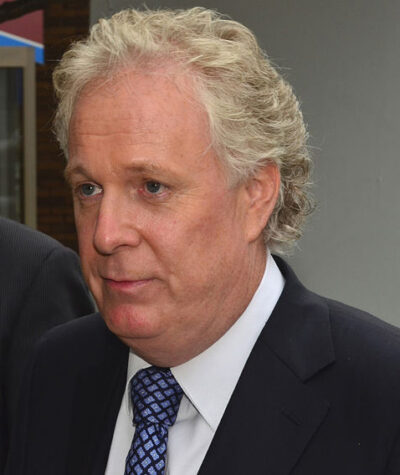 Jean Charest29th Premier of Quebec (2003–2012)
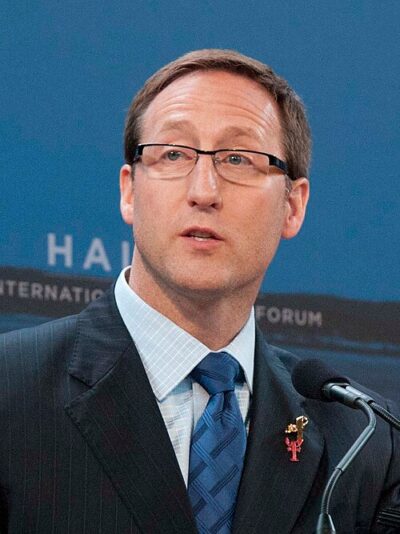 Peter MacKayCanadian politician
