theory of relativity
Theory of relativity is a two interrelated physics theories by Albert Einstein.
All 3 facts, and where they come from
Facts
3 facts · 0 confirmed by two sources · 0 cited · 3 from one source
Where this comes from
Papalocal keeps its own record. It started from these sources; what each one said is kept here as it was copied, so a change on their side never changes this page by itself. Tap one to read its version.
What Wikidata says · copied November 16, 2026 · revision 2567537727
- Described as
- two interrelated physics theories by Albert Einstein
- Other names
- Einstein Theory of Relativity
- What it is
- scientific theory; branch of physics
- Language
- German
- Wikipedias with a page
- 146
Wikidata item Q43514 (wikidata.org/wiki/Q43514), public domain (CC0). Copied 2026-11-16.
What Wikipedia says · copied November 16, 2026 · revision 1371853284
The theory of relativity comprises two physics theories by Albert Einstein: special relativity and general relativity, proposed and published in 1905 and 1915, respectively. Special relativity applies to all physical phenomena in the absence of gravity. General relativity explains the law of gravitation and its relation to the forces of nature. It applies to the cosmological and astrophysical realm, including astronomy.
The theory transformed theoretical physics and astronomy during the 20th century, superseding a 200-year-old theory of mechanics created primarily by Isaac Newton. It introduced concepts including 4-dimensional spacetime as a unified entity of space and time, relativity of simultaneity, kinematic and gravitational time dilation, and length contraction. In the field of physics, relativity improved the science of elementary particles and their fundamental interactions, along with ushering in the nuclear age. With relativity, cosmology and astrophysics predicted extraordinary astronomical phenomena such as neutron stars, black holes, and gravitational waves.
From the Wikipedia article “Theory of relativity” (en.wikipedia.org/wiki/Theory_of_relativity), by its contributors, under CC BY-SA 4.0 (creativecommons.org/licenses/by-sa/4.0/). Copied 2026-11-16; not changed.
Confirmed Two sources agree. Cited One source, and it names where it got it. One source One source, without a reference of its own. Sources disagree The sources disagree. We show the best-supported value and keep theirs below.
Picture: Wikimedia Commons: World line.svg · See Commons file page
People connected 5
Field
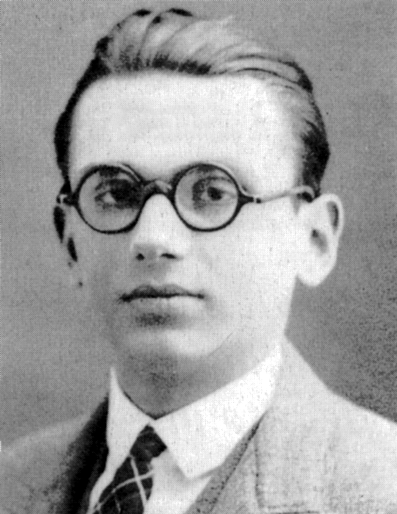 Kurt GödelAustrian-American logician, mathematician, and philosopher of mathematics (1906–1978)
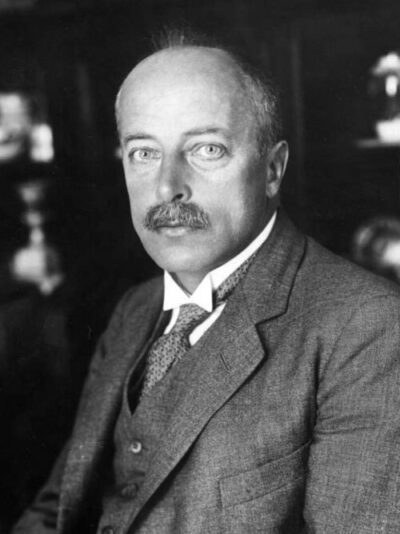 Max von LaueGerman physicist, Nobel laureate and anti-Nazi (1879–1960)
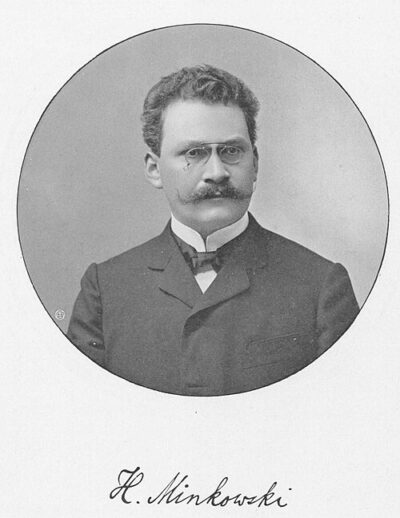 Hermann MinkowskiGerman mathematician and physicist (1864–1909)
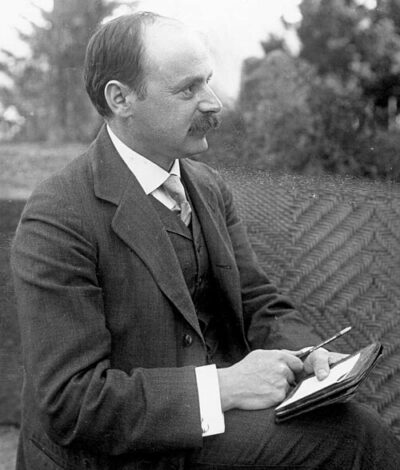 Karl SchwarzschildGerman physicist, astronomer and mathematician (1873–1916)