X-ray crystallography
X-ray crystallography is a technique used for determining the atomic or molecular structure of a crystal, in which the ordered atoms cause a beam of incident X-rays to diffract into specific directions.
All 1 facts, and where they come from
Facts
1 facts · 0 confirmed by two sources · 0 cited · 1 from one source
Where this comes from
Papalocal keeps its own record. It started from these sources; what each one said is kept here as it was copied, so a change on their side never changes this page by itself. Tap one to read its version.
What Wikidata says · copied November 17, 2026 · revision 2546814718
- Described as
- technique used for determining the atomic or molecular structure of a crystal, in which the ordered atoms cause a beam of incident X-rays to diffract into specific directions
- Other names
- X-ray scattering techniques, x-ray crystallography
- What it is
- branch of physics
- Wikipedias with a page
- 54
Wikidata item Q826582 (wikidata.org/wiki/Q826582), public domain (CC0). Copied 2026-11-17.
What Wikipedia says · copied November 17, 2026 · revision 1384536601
X-ray crystallography is the experimental science of determining the atomic and molecular structure of a crystal, in which the structure causes a beam of incident X-rays to diffract in specific directions. By measuring the angles and intensities of the X-ray diffraction, a crystallographer can produce a three-dimensional picture of the density of electrons within the crystal and the positions of the atoms, as well as their chemical bonds, crystallographic disorder, and other information.
X-ray crystallography has been fundamental in the development of many scientific fields. In its first decades of use, this method determined the size of atoms, the lengths and types of chemical bonds, and the atomic-scale differences between various materials, especially minerals and alloys. The method has also revealed the structure and function of many biological molecules, including vitamins, drugs, proteins and nucleic acids such as DNA, as well as viruses. X-ray crystallography is still the primary method for characterizing the atomic structure of materials and in differentiating materials that appear similar in other experiments. X-ray crystal structures can also help explain unusual electronic or elastic properties of a material, shed light on chemical interactions and processes, or serve as the basis for designing pharmaceuticals against diseases.
Modern work involves a number of steps all of which are important. The preliminary steps include preparing good quality samples, careful recording of the diffracted intensities, and processing of the data to remove artifacts. A variety of different methods are then used to obtain an estimate of the atomic structure, generically called direct methods. With an initial estimate further computational techniques such as those involving difference maps are used to complete the structure. The final step is a numerical refinement of the atomic positions against the experimental data, sometimes assisted by ab-initio calculations. In almost all cases new structures are deposited in databases available to the international community.
From the Wikipedia article “X-ray crystallography” (en.wikipedia.org/wiki/X-ray_crystallography), by its contributors, under CC BY-SA 4.0 (creativecommons.org/licenses/by-sa/4.0/). Copied 2026-11-17; not changed.
Confirmed Two sources agree. Cited One source, and it names where it got it. One source One source, without a reference of its own. Sources disagree The sources disagree. We show the best-supported value and keep theirs below.
Picture: Wikimedia Commons: X-ray diffraction pattern 3clpro.jpg · See Commons file page
People connected 5
Field
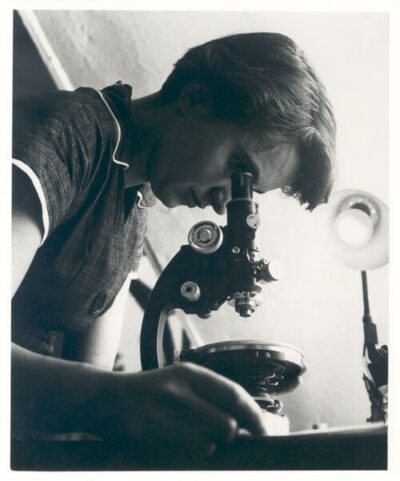 Rosalind FranklinBritish chemist, biophysicist, and X-ray crystallographer (1920–1958)
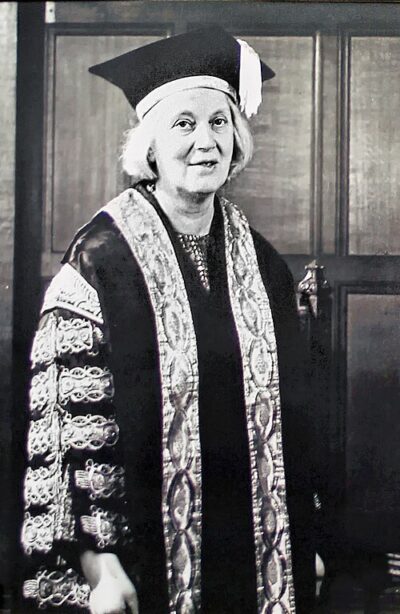 Dorothy HodgkinBritish chemist
 William Lawrence BraggAustralian-born British physicist and X-ray crystallographer
 Maurice WilkinsNew Zealand-born English physicist and biologist