
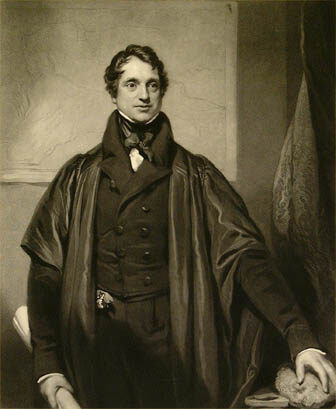
Adam Sedgwick
Adam Sedgwick was an English geologist. Born March 22, 1785, in Dent. Died January 27, 1873, in Cambridge. Positions held include President of the Geological Society of London (1829–1831) and President of the British Science Association (1833–1834). Educated at University of Cambridge and Sedbergh School. Awards include Fellow of the Royal Society, Copley Medal and Fellow of the American Academy of Arts and Sciences.
Facts
26 facts · 2 confirmed by two sources · 6 cited · 18 from one source
Where this comes from
Papalocal keeps its own record. It started from these sources; what each one said is kept here as it was copied, so a change on their side never changes this page by itself. Tap one to read its version.
What Wikidata says · copied November 16, 2026 · revision 2567456005
- Described as
- English geologist (1785–1873)
- Born
- March 22, 1785 · 4 references
- Died
- January 27, 1873 · 4 references
- Born in
- Dent
- Died in
- Cambridge · 1 reference
- Citizen of
- United Kingdom of Great Britain and Ireland; Kingdom of Great Britain (–1801)
- Occupation
- geologist · 1 reference; paleontologist · 1 reference; abolitionist; creationism; Anglican priest
- Positions held
- President of the Geological Society of London (1829–1831) · 1 reference; President of the British Science Association (1833–1834) · 1 reference
- Worked for
- University of Cambridge
- Education
- University of Cambridge; Sedbergh School; Trinity College · 1 reference
- Member of
- Royal Society of London; American Academy of Arts and Sciences
- Awards
- Fellow of the Royal Society; Copley Medal (1863) · 1 reference; Fellow of the American Academy of Arts and Sciences; Wollaston Medal (1851) · 1 reference
- Field
- geology
- Religion
- Anglicanism
- Lived in
- England · 1 reference
- Wikipedias with a page
- 38
Wikidata item Q350891 (wikidata.org/wiki/Q350891), public domain (CC0). Copied November 16, 2026.
What Wikipedia says · copied November 16, 2026 · revision 1371789810
Adam Sedgwick (; 22 March 1785 – 27 January 1873) was a British geologist and Anglican priest, one of the founders of modern geology. He proposed the Cambrian and Devonian period of the geological timescale. Based on work which he did on Welsh rock strata, he proposed the Cambrian period in 1835, in a joint publication in which Roderick Murchison also proposed the Silurian period. Later in 1840, to resolve what later became known as the Great Devonian Controversy about rocks near the boundary between the Silurian and Carboniferous periods, he and Murchison proposed the Devonian period.
Though he had guided the young Charles Darwin in his early study of geology and continued to be on friendly terms, Sedgwick was an opponent of Darwin's theory of evolution by means of natural selection.
He strongly opposed the admission of women to the University of Cambridge, in one conversation describing aspiring female students as "nasty forward minxes."
- Born, in its opening lines
- March 22, 1785
- Died, in its opening lines
- January 27, 1873
From the Wikipedia article “Adam Sedgwick” (en.wikipedia.org/wiki/Adam_Sedgwick), by its contributors, under CC BY-SA 4.0 (creativecommons.org/licenses/by-sa/4.0/). Copied November 16, 2026; not changed.
Confirmed Two sources agree. Cited One source, and it names where it got it. One source One source, without a reference of its own. Sources disagree The sources disagree. We show the best-supported value and keep theirs below.
