
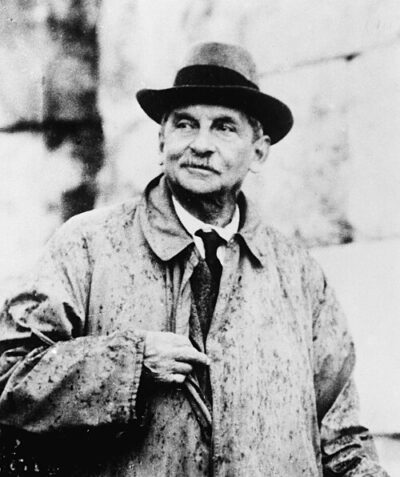
Arthur Evans
Arthur Evans was a British archaeologist and scholar. Born July 8, 1851, in Nash Mills. Died July 11, 1941, in Youlbury House. Positions held include President of the Royal Numismatic Society (1914–1919). Educated at Brasenose College and Harrow School. Awards include Fellow of the Royal Society, Royal Gold Medal and Copley Medal.
Facts
42 facts · 2 confirmed by two sources · 17 cited · 23 from one source
Where this comes from
Papalocal keeps its own record. It started from these sources; what each one said is kept here as it was copied, so a change on their side never changes this page by itself. Tap one to read its version.
What Wikidata says · copied November 16, 2026 · revision 2566066020
- Described as
- British archaeologist and scholar (1851–1941)
- Other names
- Sir Arthur Evans, Arthur John Evans, Sir Arthur John Evans, Sir Arthur, A. J. Evans, Arthur J. Evans
- Born
- July 8, 1851 · 12 references
- Died
- July 11, 1941 · 12 references
- Born in
- Nash Mills · 1 reference
- Died in
- Youlbury House · 1 reference
- Name at birth
- Arthur John Evans
- Citizen of
- United Kingdom · 1 reference; United Kingdom of Great Britain and Ireland
- Occupation
- anthropologist; art historian · 2 references; archaeologist · 2 references; numismatist; prehistorian · 1 reference
- Positions held
- President of the Royal Numismatic Society (1914–1919)
- Education
- Brasenose College (1870–) · 1 reference; Harrow School · 1 reference
- Member of
- Royal Society of London; Serbian Academy of Sciences and Arts; Serbian Learned Society; German Archaeological Institute; Royal Swedish Academy of Sciences; Hellenic Philological Society of Constantinople (1885–); Accademia Nazionale dei Lincei (1906–) · 1 reference; Académie des Inscriptions et Belles-Lettres (1939–1941) · 1 reference; Royal Swedish Academy of Letters, History and Antiquities; Royal Netherlands Academy of Arts and Sciences · 1 reference
- Awards
- Fellow of the Royal Society (1901) · 1 reference; Royal Gold Medal (1909) · 1 reference; Copley Medal (1936) · 1 reference; Knight Bachelor (1911); Medal of the Royal Numismatic Society (1902); Fellow of the Society of Antiquaries; Fellow of the British Academy (1902); Huntington Medal Award (1940); Lyell Medal (1880); Huxley Memorial Medal (1925) · 1 reference; honorary doctor of the University of Bordeaux (1932) · 1 reference
- Field
- archaeology
- Spouse
- Margaret Freeman Evans
- Father
- John Evans · 1 reference
- Mother
- Harriet Ann Dickinson · 1 reference
- Siblings
- Lewis Evans; Joan Evans · 1 reference
- Wikipedias with a page
- 59
Wikidata item Q188929 (wikidata.org/wiki/Q188929), public domain (CC0). Copied November 16, 2026.
What Wikipedia says · copied November 16, 2026 · revision 1383766685
Sir Arthur John Evans (8 July 1851 – 11 July 1941) was a British archaeologist and pioneer in the study of Aegean civilization in the Bronze Age.
The first excavations at the Minoan palace of Knossos on the Greek island of Crete began in 1877. They were led by Cretan Greek Minos Kalokairinos, a native of Heraklion. Three weeks later Ottoman authorities forced him to stop (at the time, Crete was under Ottoman rule). Almost three decades later, Evans heard of Kalokairinos's discovery. With private funding, he bought the surrounding rural area including the palace land. Evans began his own excavations in 1900.
Based on the structures and artefacts found there and throughout the eastern Mediterranean, Evans found that he needed to distinguish the Minoan civilisation from Mycenaean Greece. Evans was also the first to define the Cretan scripts Linear A and Linear B, as well as an earlier pictographic writing.
- Born, in its opening lines
- July 8, 1851
- Died, in its opening lines
- July 11, 1941
From the Wikipedia article “Arthur Evans” (en.wikipedia.org/wiki/Arthur_Evans), by its contributors, under CC BY-SA 4.0 (creativecommons.org/licenses/by-sa/4.0/). Copied November 16, 2026; not changed.
Confirmed Two sources agree. Cited One source, and it names where it got it. One source One source, without a reference of its own. Sources disagree The sources disagree. We show the best-supported value and keep theirs below.
