
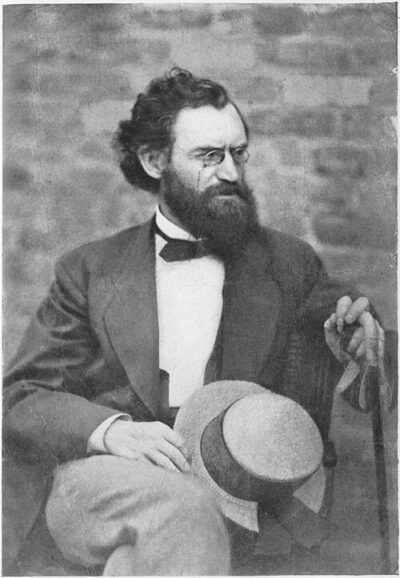
Carl Schurz
Carl Schurz was an Union Army general, politician. Born March 2, 1829, in Liblar. Died May 14, 1906, in New York City. Positions held include United States Secretary of the Interior (1877–1881), United States Ambassador to Spain (1861) and ambassador. Educated at University of Bonn and Dreikönigsgymnasium.
Facts
41 facts · 2 confirmed by two sources · 11 cited · 28 from one source
Where this comes from
Papalocal keeps its own record. It started from these sources; what each one said is kept here as it was copied, so a change on their side never changes this page by itself. Tap one to read its version.
What Wikidata says · copied November 15, 2026 · revision 2569272639
- Described as
- Union Army general, politician (1829-1906)
- Other names
- Carl Christian Schurz
- Born
- March 2, 1829 · 5 references
- Died
- May 14, 1906 · 6 references
- Born in
- Liblar · 1 reference
- Died in
- New York City · 1 reference
- Buried in
- Sleepy Hollow Cemetery · 1 reference
- Name at birth
- Carl Christian Schurz.
- Citizen of
- United States; Kingdom of Prussia
- Occupation
- politician · 1 reference; military officer; diplomat; writer · 1 reference; revolutionary · 1 reference; journalist; editor; ambassador · 1 reference
- Positions held
- United States Secretary of the Interior (1877–1881); United States Ambassador to Spain (1861); ambassador; United States senator (1869–1875) · 1 reference
- Political party
- Republican Party; Liberal Republican Party
- Education
- University of Bonn; Dreikönigsgymnasium
- Member of
- American Academy of Arts and Letters; American Anti-Imperialist League; Bonner Burschenschaft Frankonia · 2 references; American Philosophical Society (1878–)
- Spouse
- Margarethe Schurz · 1 reference
- Children
- Carl Lincoln Schurz; Agathe Schurz; Marianne Schurz; Emma Savannah Schurz; Herbert Schurz
- Father
- Christian Schurz · 1 reference
- Siblings
- Wilhelm Schurz · 1 reference; Antoinette Jüssen
- Religion
- Catholicism
- Military branch
- Union Army; United States Army
- Military rank
- general
- Wikipedias with a page
- 34
Wikidata item Q127437 (wikidata.org/wiki/Q127437), public domain (CC0). Copied November 15, 2026.
What Wikipedia says · copied November 15, 2026 · revision 1385701893
Carl Christian Schurz (German: [ʃʊɐ̯ts]; March 2, 1829 – May 14, 1906) was a German-American revolutionary and an American statesman, journalist, and reformer. He migrated to the United States after the German revolutions of 1848–1849 and became a prominent member of the newly-forming Republican Party. After serving as a Union general in the American Civil War, he helped found the short-lived Liberal Republican Party and became a prominent advocate of civil-service reform. Schurz represented Missouri in the United States Senate and served as the 13th United States Secretary of the Interior.
Born in the Rhine Province of the Kingdom of Prussia, Schurz fought for democratic reforms in the German revolutions of 1848–1849 as a member of the academic fraternity association Deutsche Burschenschaft. After Prussia suppressed the revolutionary movement Schurz fled to France. When police forced him to leave France he migrated to London. Like many other "Forty-Eighters", he then migrated to the United States, settling in Watertown, Wisconsin, in 1852.
After being admitted to the Wisconsin bar, he established a legal practice in Milwaukee, Wisconsin. During his time in Milwaukee, Carl Schurz was actively involved with the Milwaukee Turners, whose emphasis on physical culture and civic engagement helped shape the principles he carried into his later public service. He also became a strong advocate for the anti-slavery movement and joined the newly organized Republican Party, unsuccessfully running for Lieutenant Governor of Wisconsin. After briefly representing the United States as Minister (ambassador) to the Kingdom of Spain in 1861, Schurz served as a general in the American Civil War, fighting in the Battle of Gettysburg and other major battles.
After the war, Schurz established a newspaper in St. Louis, Missouri, and won election to the U.S. Senate, becoming the first German-born American elected to that body. Breaking with Republican President Ulysses S. Grant, Schurz helped establish the Liberal Republican Party. The party advocated civil-service reform, sound money, low tariffs, low taxes, and an end to railroad grants; it opposed Grant's efforts to protect African-American civil rights in the Southern United States during Reconstruction. Schurz chaired the 1872 Liberal Republican convention, which nominated a ticket that unsuccessfully challenged President Grant in the 1872 presidential election. Schurz lost his own 1874 re-election bid and resumed his career as a newspaper editor.
After Republican Rutherford B. Hayes won the 1876 presidential election, he appointed Schurz as his Secretary of the Interior. Schurz sought to make civil service based on merit rather than on political and party connections, and helped prevent the transfer of the Bureau of Indian Affairs to the War Department. He was elected as a member of the American Philosophical Society in 1878.
Schurz moved to New York City after Hayes left office in 1881 and briefly served as the editor of the New York Evening Post and The Nation; he later became the editorial writer for Harper's Weekly. He remained active in politics and led the "Mugwump" movement, which opposed nominating James G. Blaine in the 1884 presidential election. Schurz opposed William Jennings Bryan's bimetallism in the 1896 presidential election but supported Bryan's anti-imperialist campaign in the 1900 presidential election. Schurz died in New York City in 1906.
- Born, in its opening lines
- March 2, 1829
- Died, in its opening lines
- May 14, 1906
From the Wikipedia article “Carl Schurz” (en.wikipedia.org/wiki/Carl_Schurz), by its contributors, under CC BY-SA 4.0 (creativecommons.org/licenses/by-sa/4.0/). Copied November 15, 2026; not changed.
Confirmed Two sources agree. Cited One source, and it names where it got it. One source One source, without a reference of its own. Sources disagree The sources disagree. We show the best-supported value and keep theirs below.
