
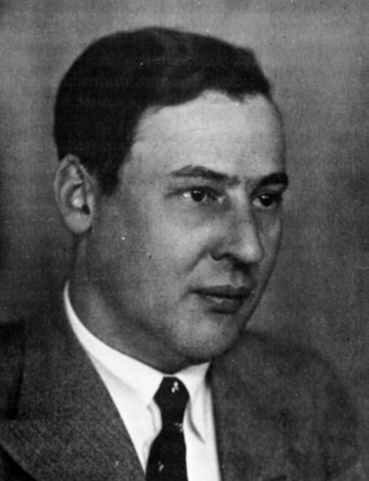
Erich Hückel
Erich Hückel was a German physical chemist known for the Debye-Hückel Theory and the Hückel method. Born August 9, 1896, in Berlin. Died February 16, 1980, in Marburg. Positions held include professor. Educated at University of Göttingen. Awards include Foreign Member of the Royal Society and Otto Hahn Prize for Chemistry and Physics.
Facts
19 facts · 2 confirmed by two sources · 8 cited · 9 from one source
Where this comes from
Papalocal keeps its own record. It started from these sources; what each one said is kept here as it was copied, so a change on their side never changes this page by itself. Tap one to read its version.
What Wikidata says · copied November 17, 2026 · revision 2568735854
- Described as
- German physical chemist known for the Debye-Hückel Theory and the Hückel method
- Born
- August 9, 1896 · 4 references
- Died
- February 16, 1980 · 4 references
- Born in
- Berlin · 1 reference
- Died in
- Marburg · 1 reference
- Citizen of
- Germany
- Occupation
- physicist · 1 reference; chemist · 1 reference; university teacher · 1 reference
- Positions held
- professor
- Worked for
- University of Marburg; University of Stuttgart · 1 reference
- Education
- University of Göttingen
- Member of
- Royal Society of London; German Academy of Sciences Leopoldina · 1 reference; International Academy of Quantum Molecular Science
- Awards
- Foreign Member of the Royal Society (1977) · 1 reference; Otto Hahn Prize for Chemistry and Physics (1965)
- Field
- physics
- Siblings
- Walter Hückel · 1 reference
- Wikipedias with a page
- 26
Wikidata item Q61314 (wikidata.org/wiki/Q61314), public domain (CC0). Copied November 17, 2026.
What Wikipedia says · copied November 17, 2026 · revision 1368641196
Erich Armand Arthur Joseph Hückel (August 9, 1896 – February 16, 1980) was a German physicist and physical chemist. He is mainly known for the Debye–Hückel theory of electrolytic solutions and the Hückel method of approximate molecular orbital (MO) calculations on π electron systems.
Hückel was born in the Charlottenburg suburb of Berlin. He studied physics and mathematics from 1914 to 1921 at the University of Göttingen.
On receiving his doctorate, he became an assistant at Göttingen, but soon became an assistant to Peter Debye at Zürich. It was there that he and Debye developed their theory (the Debye–Hückel theory, in 1923) of electrolytic solutions, elucidating the behavior of strong electrolytes by considering interionic forces, in order to account for their electrical conductivity and their thermodynamic activity coefficients.
After spending 1928 and 1929 in England and Denmark, working briefly with Niels Bohr, Hückel joined the faculty of the Technische Hochschule in Stuttgart. In 1935, he moved to Phillips University in Marburg, where he finally was named Full Professor a year before his retirement 1961. He was a member of the International Academy of Quantum Molecular Science.
- Born, in its opening lines
- August 9, 1896
- Died, in its opening lines
- February 16, 1980
From the Wikipedia article “Erich Hückel” (en.wikipedia.org/wiki/Erich_Hückel), by its contributors, under CC BY-SA 4.0 (creativecommons.org/licenses/by-sa/4.0/). Copied November 17, 2026; not changed.
Confirmed Two sources agree. Cited One source, and it names where it got it. One source One source, without a reference of its own. Sources disagree The sources disagree. We show the best-supported value and keep theirs below.
