
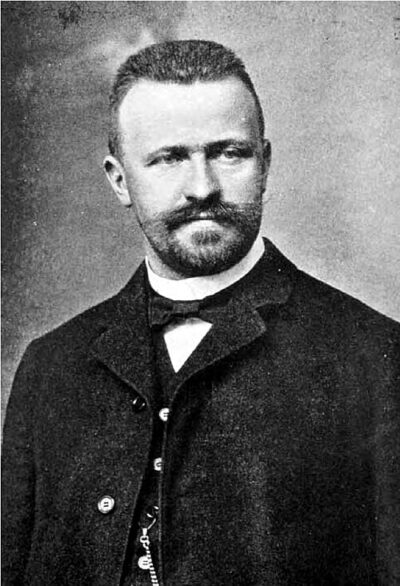
Erich von Drygalski
Erich von Drygalski was a German geographer. Born February 9, 1865, in Königsberg. Died January 10, 1949, in Munich. Educated at University of Bonn and University of Königsberg. Awards include Patron’s Medal, Bavarian Maximilian Order for Science and Art and Carl-Ritter-Medal.
Facts
34 facts · 2 confirmed by two sources · 11 cited · 21 from one source
Where this comes from
Papalocal keeps its own record. It started from these sources; what each one said is kept here as it was copied, so a change on their side never changes this page by itself. Tap one to read its version.
What Wikidata says · copied November 16, 2026 · revision 2569192637
- Described as
- German geographer (1865–1949)
- Other names
- Erich Dagobert von Drygalski, E. von Drygalski, Dryg.
- Born
- February 9, 1865 · 8 references
- Died
- January 10, 1949 · 8 references
- Born in
- Königsberg · 1 reference
- Died in
- Munich · 1 reference
- Name at birth
- Erich Dagobert von Drygalski
- Citizen of
- Kingdom of Prussia; German Reich
- Occupation
- explorer; geographer · 1 reference; geophysicist · 1 reference; oceanographer; university teacher · 1 reference; polar explorer · 1 reference; botanist
- Worked for
- LMU Munich; Humboldt-Universität zu Berlin · 1 reference
- Education
- University of Bonn; University of Königsberg; Humboldt-Universität zu Berlin · 1 reference; Leipzig University · 1 reference; Kneiphof Gymnasium
- Member of
- German Academy of Sciences Leopoldina; Bavarian Academy of Sciences and Humanities; Göttingen Academy of Sciences and Humanities in Lower Saxony
- Awards
- Patron’s Medal (1933) · 1 reference; Bavarian Maximilian Order for Science and Art (1928); Carl-Ritter-Medal (1898); médaille Gustav-Nachtigal (1904); David Livingstone Centenary Medal (1926)
- Field
- geography · 1 reference; geophysics · 1 reference; polar exploration · 2 references
- Spouse
- Klara von Drygalski · 1 reference
- Lived in
- Germany · 1 reference
- Wikipedias with a page
- 32
Wikidata item Q63108 (wikidata.org/wiki/Q63108), public domain (CC0). Copied November 16, 2026.
What Wikipedia says · copied November 16, 2026 · revision 1344611087
Erich Dagobert von Drygalski (German: [ˈeːʁɪç ˈdaːɡobɛʁt fɔn dʁyˈɡalski]; February 9, 1865 – January 10, 1949) was a German geographer, geophysicist and polar scientist, born in Königsberg, East Prussia.
Between 1882 and 1887, Drygalski studied mathematics and natural science at the University of Königsberg, Bonn, Berlin and Leipzig. He graduated with a doctorate thesis about ice shields in Nordic areas. Between 1888 and 1891, he was an assistant at the Geodetic Institute and the Central Office of International Geodetics in Berlin.
Drygalski led two expeditions between 1891 and 1893, which were supplied by the Society for Geoscience of Berlin. One expedition wintered during the winter between 1892 and 1893 in Western Greenland. He habilitated 1889 for geography and geophysics with the collected scientific evidence. In 1898, Drygalski became associate professor and 1899 extraordinary professor for geography and geophysics in Berlin.
- Born, in its opening lines
- February 9, 1865
- Died, in its opening lines
- January 10, 1949
From the Wikipedia article “Erich von Drygalski” (en.wikipedia.org/wiki/Erich_von_Drygalski), by its contributors, under CC BY-SA 4.0 (creativecommons.org/licenses/by-sa/4.0/). Copied November 16, 2026; not changed.
Confirmed Two sources agree. Cited One source, and it names where it got it. One source One source, without a reference of its own. Sources disagree The sources disagree. We show the best-supported value and keep theirs below.
