
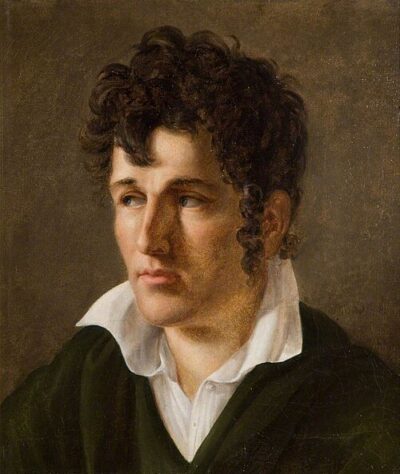
François-Auguste-René de Chateaubriand
François-Auguste-René de Chateaubriand was a French writer, politician and historian. Born September 4, 1768, in Saint-Malo. Died July 4, 1848, in former 10th arrondissement of Paris. Positions held include ambassador of France to Sweden (1814), Pair of France (1815–1830) and Minister of Foreign Affairs (1822–1824). Known for Atala, The Genius of Christianity and René. Awards include Officer of the Legion of Honour, Knight of the Royal and Military Order of Saint Louis and Knight of the Order of the Holy Spirit.
Facts
56 facts · 2 confirmed by two sources · 8 cited · 46 from one source
Where this comes from
Papalocal keeps its own record. It started from these sources; what each one said is kept here as it was copied, so a change on their side never changes this page by itself. Tap one to read its version.
What Wikidata says · copied November 16, 2026 · revision 2565529239
- Described as
- French writer, politician and historian (1768–1848)
- Other names
- François-Auguste-René, vicomte de Chateaubriand, F. A. von Chateaubriand, François-René, vicomte de Chateaubriand, François-René de Châteaubriand, François-René, Vicomte de Chateaubriand, François René de Châteaubriand, vicomte de Chateaubriand François-René
- Born
- September 4, 1768 · 15 references
- Died
- July 4, 1848 · 16 references
- Born in
- Saint-Malo · 1 reference
- Died in
- former 10th arrondissement of Paris · 1 reference
- Buried in
- tomb of Chateaubriand
- Name at birth
- François Auguste René de Chateaubriand · 1 reference
- Citizen of
- France
- Occupation
- translator; politician · 1 reference; diplomat · 1 reference; historian; poet; novelist; journalist; essayist
- Positions held
- ambassador of France to Sweden (1814); Pair of France (1815–1830); Minister of Foreign Affairs (1822–1824); Minister of State (1815–1816); Ambassador of France to the United Kingdom (1822–1823); ambassador of France to the Holy See (1828–1829); Member of the Académie française (1811–1848) · 1 reference
- Political party
- Ultra-royalist
- Member of
- Comité grec de Paris; Académie Française (1811–1848) · 1 reference; German Archaeological Institute; Bavarian Academy of Sciences and Humanities; Warsaw Society of Friends of Learning; American Antiquarian Society; Chevaliers de la Foi; Accademia Tiberina
- Genre
- memoir; autobiography; essay
- Known for
- Atala; The Genius of Christianity; René; Mémoires d'Outre-Tombe
- Awards
- Officer of the Legion of Honour (1823); Knight of the Royal and Military Order of Saint Louis (1814); Knight of the Order of the Holy Spirit (1824); Knight of the Order of Saint Michael (1824); Pour le Mérite for Sciences and Arts order; Knight of the Order of the Golden Fleece; Order of the Black Eagle; Knight in the Order of the Holy Sepulchre; Order of Saint Alexander Nevsky; Order of St. Andrew (1821); Grand Cross of the Order of Christ; Grand Cross of the Order of Charles III
- Spouse
- Céleste de Chateaubriand (1792–)
- Father
- René-Auguste de Chateaubriand · 1 reference
- Mother
- Apolline Jeanne Suzanne de Bédée
- Siblings
- Lucile de Chateaubriand; Jean Baptiste Auguste de Chateaubriand
- Religion
- Catholicism
- Wikipedias with a page
- 94
Wikidata item Q49767 (wikidata.org/wiki/Q49767), public domain (CC0). Copied November 16, 2026.
What Wikipedia says · copied November 16, 2026 · revision 1378015795
François-René, vicomte de Chateaubriand (4 September 1768 – 4 July 1848) was a French writer, politician, diplomat and historian who influenced French literature of the 19th century. Descended from an old aristocratic family from Brittany, Chateaubriand was a royalist. He served as Minister of Foreign Affairs from 1822 to 1824 and as the French ambassador to Sweden, Prussia, the United Kingdom, and the Papal States.
In an age when large numbers of intellectuals turned against the Church, Chateaubriand authored Génie du christianisme (The Genius of Christianity) in defense of the Catholic faith. His works include the autobiography Mémoires d'Outre-Tombe (Memoirs from Beyond the Grave), published posthumously in 1849–1850, now widely regarded as one of the most important works in French literature. In 1811 he was made a member of the Académie Française. Historian Peter Gay said that Chateaubriand saw himself as the greatest lover, the greatest writer, and the greatest philosopher of his age. Gay states that Chateaubriand "dominated the literary scene in France in the first half of the nineteenth century".
- Born, in its opening lines
- September 4, 1768
- Died, in its opening lines
- July 4, 1848
From the Wikipedia article “François-René de Chateaubriand” (en.wikipedia.org/wiki/François-René_de_Chateaubriand), by its contributors, under CC BY-SA 4.0 (creativecommons.org/licenses/by-sa/4.0/). Copied November 16, 2026; not changed.
Confirmed Two sources agree. Cited One source, and it names where it got it. One source One source, without a reference of its own. Sources disagree The sources disagree. We show the best-supported value and keep theirs below.
