
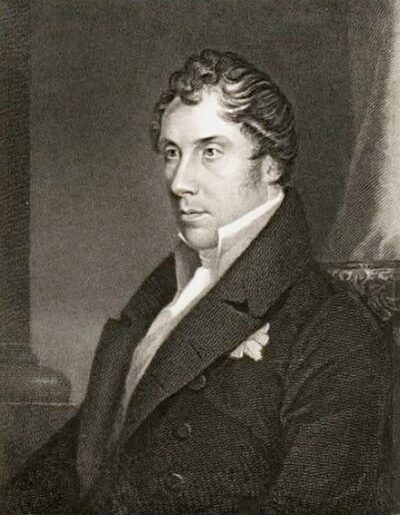
George Hamilton-Gordon, 4th Earl of Aberdeen
George Hamilton-Gordon, 4th Earl of Aberdeen was a British politician. Born January 28, 1784, in Edinburgh. Died December 14, 1860, in London. Positions held include Prime Minister of the United Kingdom (1852–1855), Secretary of State for War and the Colonies (1834–1835) and Chancellor of the Duchy of Lancaster (1828). Educated at St John's College and Harrow School. Awards include Fellow of the Royal Society, Fellow of the Royal Society of Edinburgh and Fellow of the Society of Antiquaries of Scotland.
Facts
47 facts · 2 confirmed by two sources · 18 cited · 27 from one source
Where this comes from
Papalocal keeps its own record. It started from these sources; what each one said is kept here as it was copied, so a change on their side never changes this page by itself. Tap one to read its version.
What Wikidata says · copied November 16, 2026 · revision 2567118449
- Described as
- British politician (1784-1860)
- Other names
- 4th Earl of Aberdeen, George Hamilton Gordon, Aberdeen, George Hamilton-Gordon, 4th Earl of, George Hamilton Gordon, 4th Earl of Aberdeen, George Hamilton Gordon Aberdeen, George Gordon, George Aberdeen, George Hamilton-Gordon, 4th Earl Of, Viscount Gordon of Aberdeen, Viscount of Formartine, Lord Haddo, Methlick, Tarves, Earl of Aberdeen
- Born
- January 28, 1784 · 10 references
- Died
- December 14, 1860 · 10 references
- Born in
- Edinburgh · 1 reference
- Died in
- London · 1 reference
- Buried in
- St John the Evangelist, Great Stanmore
- Citizen of
- United Kingdom of Great Britain and Ireland
- Occupation
- politician · 2 references; diplomat
- Positions held
- Prime Minister of the United Kingdom (1852–1855); Secretary of State for War and the Colonies (1834–1835); Chancellor of the Duchy of Lancaster (1828); Secretary of State for Foreign and Commonwealth Affairs (1841–1846); Member of the Privy Council of the United Kingdom; ambassador of the United Kingdom to Austria (1813–1814) · 1 reference; member of the House of Lords (1814–1860) · 1 reference; Leader of the House of Lords (1852–1855) · 1 reference
- Political party
- Peelite
- Worked for
- Foreign Office · 1 reference
- Education
- St John's College · 1 reference; Harrow School
- Member of
- Royal Society of London (1808–); Royal Society of Edinburgh; American Antiquarian Society; Society of Antiquaries of Scotland; Travellers Club; Bannatyne Club
- Awards
- Fellow of the Royal Society; Fellow of the Royal Society of Edinburgh; Fellow of the Society of Antiquaries of Scotland; Knight of the Garter (1855) · 1 reference
- Spouse
- Harriet Hamilton Gordon, Countess of Aberdeen (1815–1833) · 3 references; Catherine Hamilton (1805–1812) · 3 references
- Children
- George Hamilton-Gordon, 5th Earl of Aberdeen · 1 reference; Arthur Hamilton-Gordon, 1st Baron Stanmore; Lady Jane Hamilton-Gordon · 1 reference; Lady Charlotte Hamilton-Gordon · 1 reference; Lady Alice Hamilton-Gordon · 1 reference; unnamed Gordon, Lord Haddo · 1 reference; Alexander Hamilton-Gordon · 1 reference; Frances Hamilton-Gordon · 1 reference; Douglas Hamilton-Gordon · 1 reference
- Father
- George Gordon, Lord Haddo · 1 reference
- Mother
- Charlotte Baird · 2 references
- Siblings
- Robert Gordon; William Gordon; Alexander Gordon
- Religion
- Protestantism
- Wikipedias with a page
- 57
Wikidata item Q24631 (wikidata.org/wiki/Q24631), public domain (CC0). Copied November 16, 2026.
What Wikipedia says · copied November 16, 2026 · revision 1385699426
George Hamilton-Gordon, 4th Earl of Aberdeen (28 January 1784 – 14 December 1860), styled Lord Haddo from 1791 to 1801, was a British statesman, diplomat and landowner, successively a Tory, Conservative and Peelite politician and specialist in foreign affairs. He served as Prime Minister from 1852 until 1855 in a coalition between the Whigs and Peelites, with Radical and Irish support. The Aberdeen ministry was filled with powerful and talented politicians, whom Aberdeen was largely unable to control and direct. Despite his efforts to avoid this happening, his ministry took Britain into the Crimean War, and fell when the war's conduct became unpopular. Subsequently, Aberdeen retired from politics.
Born into a wealthy family with the largest estates in Scotland, his personal life was marked by the loss of both parents by the time he was eleven, and of his first wife after only seven years of a happy marriage. His daughters died young, and his relations with his sons were difficult. He travelled extensively in Europe, including Greece, and he had a serious interest in the classical civilisations and their archaeology. Aberdeen inherited and subsequently modernized his father's Scottish estates.
After 1812 he became a diplomat, and in 1813, at age 29, was given the critically important embassy to Vienna, where he organised and financed the sixth coalition that defeated Napoleon. His rise in politics was equally rapid and lucky, and "two accidents — Canning's death and Wellington's impulsive acceptance of the Canningite resignations" led to his becoming Foreign Secretary for Prime Minister Wellington in 1828 despite "an almost ludicrous lack of official experience"; he had been a minister for less than six months. After holding the position for two years, followed by another cabinet role, by 1841 his experience led to his appointment as Foreign Secretary again under Robert Peel for a longer term. His diplomatic successes include organizing the coalition against Napoleon in 1812–1814, normalizing relations with post-Napoleonic France, settling the Oregon Boundary Dispute between
British North America and the United States, and ending the First Opium War with China in 1842, whereby Hong Kong was obtained. Aberdeen was a poor speaker, but this scarcely mattered in the House of Lords. He exhibited a "dour, awkward, occasionally sarcastic exterior". His friend William Ewart Gladstone, said of him that he was "the man in public life of all others whom I have loved. I say emphatically loved. I have loved others, but never like him".
- Born, in its opening lines
- January 28, 1784
- Died, in its opening lines
- December 14, 1860
From the Wikipedia article “George Hamilton-Gordon, 4th Earl of Aberdeen” (en.wikipedia.org/wiki/George_Hamilton-Gordon,_4th_Earl_of_Aberdeen), by its contributors, under CC BY-SA 4.0 (creativecommons.org/licenses/by-sa/4.0/). Copied November 16, 2026; not changed.
Confirmed Two sources agree. Cited One source, and it names where it got it. One source One source, without a reference of its own. Sources disagree The sources disagree. We show the best-supported value and keep theirs below.
