
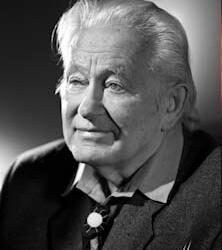
Georges Charpak
Georges Charpak was a French physicist. Born August 1, 1924, in Dubrovytsia. Died September 29, 2010, in 5th arrondissement of Paris. Known for Devenez sorciers, devenez savants. Educated at Lycée Saint-Louis and Mines ParisTech. Awards include Officer of the Legion of Honour, Officer of the National Order of Merit and Nobel Prize in Physics.
Facts
37 facts · 2 confirmed by two sources · 13 cited · 22 from one source
Where this comes from
Papalocal keeps its own record. It started from these sources; what each one said is kept here as it was copied, so a change on their side never changes this page by itself. Tap one to read its version.
What Wikidata says · copied November 16, 2026 · revision 2563200355
- Described as
- French physicist (1924-2010)
- Born
- August 1, 1924 · 9 references
- Died
- September 29, 2010 · 13 references
- Born in
- Dubrovytsia · 1 reference
- Died in
- 5th arrondissement of Paris · 1 reference
- Citizen of
- France (1946–) · 1 reference; Poland · 1 reference
- Occupation
- physicist · 2 references; French resistance fighter; researcher
- Worked for
- CERN (1959–1991) · 2 references; National Center for Scientific Research (1948–1959)
- Education
- Lycée Saint-Louis; Mines ParisTech; Les Houches School of Physics; University of Paris
- Member of
- French Academy of Sciences (1985–) · 1 reference; National Academy of Sciences (1986–) · 1 reference; Austrian Academy of Sciences; Russian Academy of Sciences; Académie Nationale de Médecine
- Known for
- Devenez sorciers, devenez savants
- Awards
- Officer of the Legion of Honour (2007); Officer of the National Order of Merit (1997) · 1 reference; Nobel Prize in Physics (1992) · 2 references; Jean-Ricard Prize (1973) · 1 reference; High Energy and Particle Physics Prize (1989) · 1 reference; Nessim-Habif Award (2013); CNRS silver medal (1971) · 1 reference; honorary doctor of the Aristotle University of Thessaloniki (1993); honorary doctor of the Université libre de Bruxelles (1994) · 1 reference; Honorary doctorate from the University of Geneva (1977); honorary doctorate of the University of Coimbra (1994); Honorary doctor of the University of Ottawa (1995)
- Field
- particle physics
- Spouse
- Dominique Vidal
- Children
- Nathalie Charpak
- Siblings
- André Charpak
- Wikipedias with a page
- 81
Wikidata item Q153178 (wikidata.org/wiki/Q153178), public domain (CC0). Copied November 16, 2026.
What Wikipedia says · copied November 16, 2026 · revision 1378949036
Hersz Georges Charpak (French: [ʒɔʁʒ ʃaʁpak]; 1 August 1924 – 29 September 2010) was a Polish-born French physicist who received the Nobel Prize in Physics in 1992 for his invention of the multiwire proportional chamber.
- Born, in its opening lines
- August 1, 1924
- Died, in its opening lines
- September 29, 2010
From the Wikipedia article “Georges Charpak” (en.wikipedia.org/wiki/Georges_Charpak), by its contributors, under CC BY-SA 4.0 (creativecommons.org/licenses/by-sa/4.0/). Copied November 16, 2026; not changed.
Confirmed Two sources agree. Cited One source, and it names where it got it. One source One source, without a reference of its own. Sources disagree The sources disagree. We show the best-supported value and keep theirs below.
