
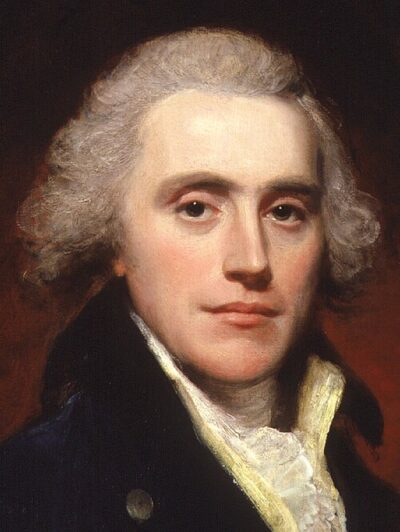
Henry Addington, 1st Viscount Sidmouth
Henry Addington, 1st Viscount Sidmouth was a Prime Minister of the United Kingdom, 1801 to 1804. Born May 30, 1757, in London Borough of Camden. Died February 15, 1844, in White Lodge. Positions held include Prime Minister of the United Kingdom (1801–1804), Chancellor of the Exchequer (1801–1804) and Lord President of the Council (1805). Educated at Brasenose College and Winchester College.
Facts
38 facts · 2 confirmed by two sources · 13 cited · 23 from one source
Where this comes from
Papalocal keeps its own record. It started from these sources; what each one said is kept here as it was copied, so a change on their side never changes this page by itself. Tap one to read its version.
What Wikidata says · copied November 16, 2026 · revision 2567520234
- Described as
- Prime Minister of the United Kingdom, 1801 to 1804
- Other names
- Henry Addington, Henry Addington, Viscount Sidmouth
- Born
- May 30, 1757 · 9 references
- Died
- February 15, 1844 · 9 references
- Born in
- London Borough of Camden
- Died in
- White Lodge
- Buried in
- St Mary the Virgin, Mortlake · 1 reference
- Citizen of
- Kingdom of Great Britain
- Occupation
- politician · 1 reference
- Positions held
- Prime Minister of the United Kingdom (1801–1804); Chancellor of the Exchequer (1801–1804); Lord President of the Council (1805); Home Secretary (1812–1822); member of the House of Lords; Lord Privy Seal (1806); member of the 2nd Parliament of the United Kingdom; member of the 1st Parliament of the United Kingdom; member of the 15th Parliament of Great Britain; member of the 17th Parliament of Great Britain; member of the 18th Parliament of Great Britain; member of the 16th Parliament of Great Britain; Leader of the House of Commons (1801–1804) · 1 reference
- Political party
- Tories
- Education
- Brasenose College; Winchester College; Reading School; Cheam School
- Spouse
- Marianne Scott (1823–) · 3 references; Ursula Mary Hammond (1781–) · 2 references
- Children
- Mary Anne Ursula Addington · 1 reference; Henry Addington · 1 reference; Charles Anthony Addington · 1 reference; Frances Addington · 2 references; William Leonard Addington, 2nd Viscount Sidmouth · 1 reference; Charlotte Addington · 1 reference; unknown Addington · 1 reference; Henrietta Addington · 1 reference
- Father
- Anthony Addington · 2 references
- Mother
- Mary Hiley · 2 references
- Religion
- Anglicanism
- Wikipedias with a page
- 49
Wikidata item Q312577 (wikidata.org/wiki/Q312577), public domain (CC0). Copied November 16, 2026.
What Wikipedia says · copied November 16, 2026 · revision 1379621206
Henry Addington, 1st Viscount Sidmouth (30 May 1757 – 15 February 1844) was a British Tory statesman who served as prime minister of the United Kingdom from 1801 to 1804 and as Speaker of the House of Commons from 1789 to 1801.
Addington is best known for obtaining the Treaty of Amiens in 1802, an unfavourable peace with Napoleonic France which marked the end of the Second Coalition during the French Revolutionary Wars. When that treaty broke down, Addington resumed the war without allies. He conducted relatively weak defensive hostilities, ahead of what would become the War of the Third Coalition. Alongside the Napoleonic wars, his administration also saw the first Kandyan war and subsequent defeat. He was forced from office in favour of William Pitt the Younger, who had preceded Addington as prime minister. Addington is also known for his reactionary crackdown on advocates of democratic reforms during a ten-year spell as Home Secretary from 1812 to 1822. He is the longest continuously serving holder of that office since it was created in 1782.
- Born, in its opening lines
- May 30, 1757
- Died, in its opening lines
- February 15, 1844
From the Wikipedia article “Henry Addington” (en.wikipedia.org/wiki/Henry_Addington), by its contributors, under CC BY-SA 4.0 (creativecommons.org/licenses/by-sa/4.0/). Copied November 16, 2026; not changed.
Confirmed Two sources agree. Cited One source, and it names where it got it. One source One source, without a reference of its own. Sources disagree The sources disagree. We show the best-supported value and keep theirs below.
