
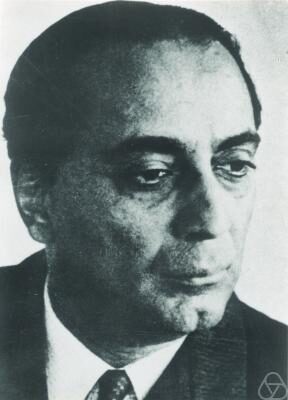
Homi Jehangir Bhabha
Homi Jehangir Bhabha was an Indian nuclear physicist. Born October 30, 1909, in Mumbai. Died January 24, 1966, in Bossons Glacier. Positions held include director (1945–) and professor (1942–). Educated at University of Mumbai and University of Cambridge. Awards include Fellow of the Royal Society, Padma Bhushan in Science & Engineering and Adams Prize.
Facts
28 facts · 2 confirmed by two sources · 2 cited · 24 from one source
Where this comes from
Papalocal keeps its own record. It started from these sources; what each one said is kept here as it was copied, so a change on their side never changes this page by itself. Tap one to read its version.
What Wikidata says · copied November 16, 2026 · revision 2563964628
- Described as
- Indian nuclear physicist (1909–1966)
- Other names
- Homi Bhabha
- Born
- October 30, 1909 · 6 references
- Died
- January 24, 1966 · 6 references
- Born in
- Mumbai
- Died in
- Bossons Glacier
- Cause of death
- aviation accident · 1 reference
- Citizen of
- India (1950–); British Raj (–1947); Dominion of India (1947–1950)
- Occupation
- nuclear physicist; physicist · 1 reference
- Positions held
- director (1945–); professor (1942–)
- Worked for
- Indian Institute of Science, Bengaluru (1940–1945); Tata Institute of Fundamental Research (1945–)
- Education
- University of Mumbai; University of Cambridge (–1930); Cathedral and John Connon School; Elphinstone College
- Member of
- Royal Society of London (1941–); American Academy of Arts and Sciences; Indian National Science Academy; National Academy of Sciences (1963–)
- Awards
- Fellow of the Royal Society; Padma Bhushan in Science & Engineering (1954); Adams Prize (1942); Fellow of the American Academy of Arts and Sciences; Melchett Medal
- Field
- nuclear physics
- Wikipedias with a page
- 52
Wikidata item Q325611 (wikidata.org/wiki/Q325611), public domain (CC0). Copied November 16, 2026.
What Wikipedia says · copied November 16, 2026 · revision 1384255899
Homi Jehangir Bhabha (30 October 1909 – 24 January 1966) was an Indian nuclear theoretical physicist who is widely credited as the "father of the Indian nuclear programme". He was the founding director and professor of physics at the Tata Institute of Fundamental Research (TIFR), as well as the founding director of the Atomic Energy Establishment, Trombay (AEET) which was renamed the Bhabha Atomic Research Centre in his honour. TIFR and AEET served as the cornerstone to the Indian nuclear energy and weapons programme. He was the first chairman of the Indian Atomic Energy Commission (AEC) and secretary of the Department of Atomic Energy (DAE). By supporting space science projects which initially derived their funding from the AEC, he played an important role in the birth of the Indian space programme.
Bhabha was awarded the Adams Prize (1942) and Padma Bhushan (1954), and nominated for the Nobel Prize for Physics in 1951 and 1953–1956. He died in the crash of Air India Flight 101 in 1966, at the age of 56.
- Born, in its opening lines
- October 30, 1909
- Died, in its opening lines
- January 24, 1966
From the Wikipedia article “Homi J. Bhabha” (en.wikipedia.org/wiki/Homi_J._Bhabha), by its contributors, under CC BY-SA 4.0 (creativecommons.org/licenses/by-sa/4.0/). Copied November 16, 2026; not changed.
Confirmed Two sources agree. Cited One source, and it names where it got it. One source One source, without a reference of its own. Sources disagree The sources disagree. We show the best-supported value and keep theirs below.
