
Adams Prize
Adams Prize is a British award for mathematical research. It was created in 1848. It is given by the University of Cambridge.
- Given by
- University of Cambridge
- Country
- United Kingdom
- Created
- 1848
All 5 facts, and where they come from
Facts
5 facts · 0 confirmed by two sources · 0 cited · 5 from one source
Where this comes from
Papalocal keeps its own record. It started from these sources; what each one said is kept here as it was copied, so a change on their side never changes this page by itself. Tap one to read its version.
What Wikidata says · copied November 17, 2026 · revision 2516988703
- Described as
- British award for mathematical research
- What it is
- mathematics award
- Created
- 1848
- Country
- United Kingdom
- Given by
- University of Cambridge
- Named after
- John Couch Adams
- Wikipedias with a page
- 11
Wikidata item Q351723 (wikidata.org/wiki/Q351723), public domain (CC0). Copied 2026-11-17.
What Wikipedia says · copied November 17, 2026 · revision 1383672730
The Adams Prize is a prize awarded each year by the Faculty of Mathematics at St John's College to a UK-based mathematician for distinguished research in mathematical sciences.
The prize is named after the mathematician John Couch Adams and was endowed by members of St John's College and approved by the senate of the university in 1848, to commemorate Adams' role in the discovery of the planet Neptune. Originally open only to Cambridge graduates, the current stipulation is that the mathematician must reside in the UK and be under forty years of age.
The Adams Prize is awarded in three parts: the first is paid directly to the candidate; another third is paid to the candidate's institution to fund research expenses; and the final third is paid on publication of a survey paper in the winner's field in a major mathematics journal.
The prize has been awarded to many well-known mathematicians, including
James Clerk Maxwell and Sir William Hodge. The first female recipient, in 2002, was Susan Howson, then a lecturer at the University of Nottingham, for her work on number theory and elliptic curves.
From the Wikipedia article “Adams Prize” (en.wikipedia.org/wiki/Adams_Prize), by its contributors, under CC BY-SA 4.0 (creativecommons.org/licenses/by-sa/4.0/). Copied 2026-11-17; not changed.
Confirmed Two sources agree. Cited One source, and it names where it got it. One source One source, without a reference of its own. Sources disagree The sources disagree. We show the best-supported value and keep theirs below.
People connected 13
Won it
 Alan Baker (1972)English mathematician (1939-2018)
 Jayant Narlikar (1967)Indian astrophysicist and writer (1938–2025)
 Roger Penrose (1966)English mathematical physicist, recreational mathematician and philosopher
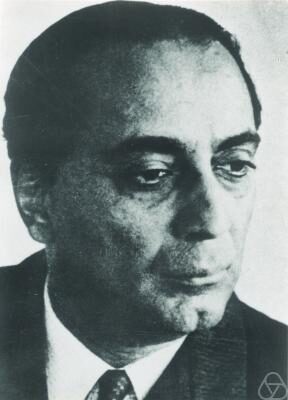 Homi Jehangir Bhabha (1942)Indian nuclear physicist (1909–1966)
 Sydney Chapman (1928)British mathematician and geophysicist (1888–1970)
- HHarold Jeffreys (1927)British geophysicist and statistician (1891–1989)
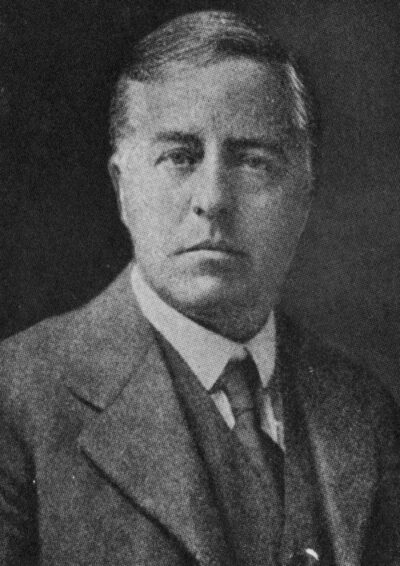 James Hopwood Jeans (1917)British mathematician and astronomer (1877 – 1946)
- GGeoffrey Ingram Taylor (1915)British mathematician and physicist (1886-1975)
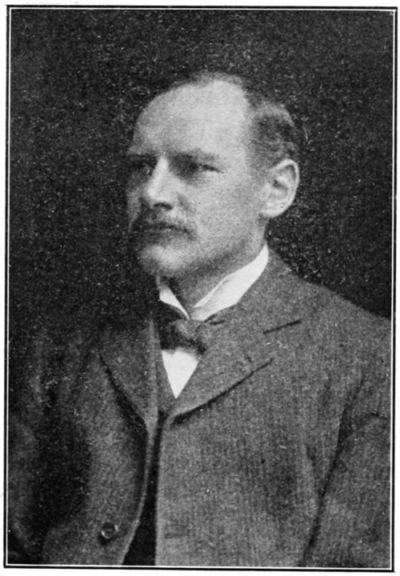 Ernest William Brown (1907)English-American astronomer and mathematician
 Joseph Larmor (1899)Irish physicist and mathematician (1857-1942)
 John Henry Poynting (1893)British physicist (1852-1914)
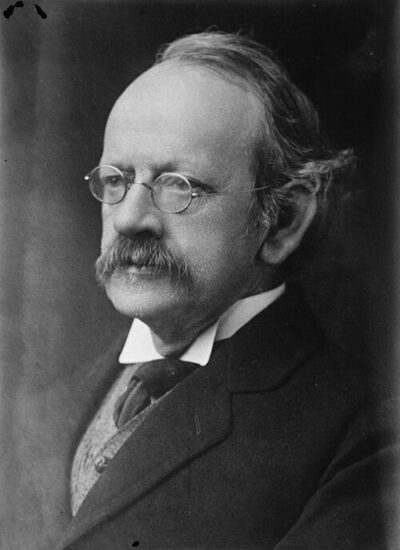 Joseph John Thomson (1882)British physicist (1856-1940)
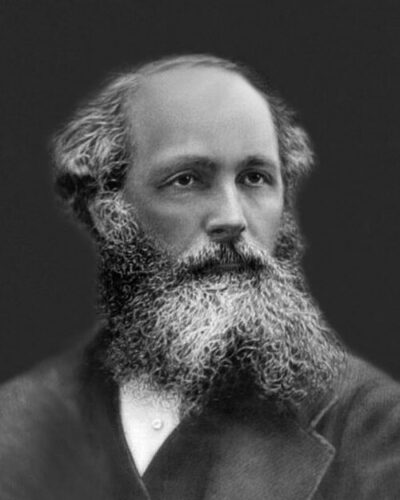 James Clerk Maxwell (1857)Scottish physicist (1831–1879)
