
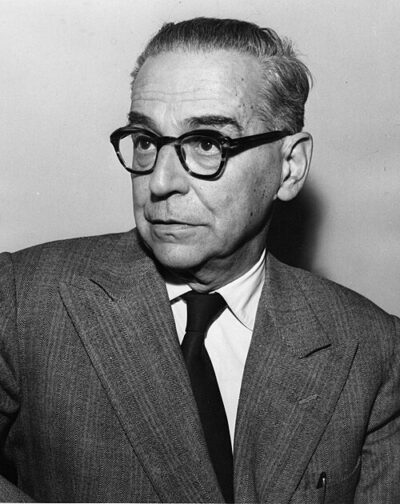
Ivo Andrić
Ivo Andrić was a Yugoslav novelist. Born October 10, 1892, in Dolac. Died March 13, 1975, in Belgrade. Positions held include ambassador. Known for The Bridge on the Drina, Omerpaša Latas and Ex Ponto. Educated at University of Graz and Faculty of Humanities and Social Sciences, University of Zagreb. Awards include Nobel Prize in Literature, Order of the Hero of Socialist Labour and Order of the German Eagle.
Facts
39 facts · 1 confirmed by two sources · 11 cited · 26 from one source · 1 where the sources disagree
What’s different
- Born: we show October 10, 1892 (Sources disagree). Wikipedia says October 9, 1892
Where this comes from
Papalocal keeps its own record. It started from these sources; what each one said is kept here as it was copied, so a change on their side never changes this page by itself. Tap one to read its version.
What Wikidata says · copied November 16, 2026 · revision 2567683648
- Described as
- Yugoslav novelist (1892–1975)
- Other names
- Ivo Andric, ivo andric, Иво Андрић
- Born
- October 10, 1892 · 1 reference
- Died
- March 13, 1975 · 10 references
- Born in
- Dolac · 1 reference
- Died in
- Belgrade · 3 references
- Buried in
- Belgrade New Cemetery · 1 reference
- Citizen of
- Socialist Federal Republic of Yugoslavia; Cisleithania (1892–1918); Kingdom of Serbs, Croats and Slovenes; Kingdom of Yugoslavia
- Occupation
- writer · 2 references; novelist · 1 reference; diplomat · 1 reference; poet · 1 reference; essayist · 1 reference; short story writer · 1 reference
- Positions held
- ambassador
- Political party
- League of Communists of Yugoslavia
- Education
- University of Graz (1924–); Faculty of Humanities and Social Sciences, University of Zagreb (1912–); University of Vienna (1913–); Faculty of Philosophy of the Jagiellonian University (1914–)
- Member of
- Academy of Sciences and Arts of Bosnia and Herzegovina (1969–) · 1 reference; Serbian Academy of Sciences and Arts (1926–1975) · 1 reference; Young Bosnia; Slovenian Academy of Sciences and Arts; Association of Writers of Serbia
- Known for
- The Bridge on the Drina; Omerpaša Latas; Ex Ponto; Bosnian Chronicle; Devil's Yard; O priči i pričanju; Jelena, the Woman Who Is Not; Most na Žepi
- Awards
- Nobel Prize in Literature (1961) · 2 references; Order of the Hero of Socialist Labour (1972); Order of the German Eagle (1937)
- Field
- literature · 1 reference
- Spouse
- Milica Babić-Jovanović (1958–1968)
- Wikipedias with a page
- 120
Wikidata item Q47561 (wikidata.org/wiki/Q47561), public domain (CC0). Copied November 16, 2026.
What Wikipedia says · copied November 16, 2026 · revision 1385304554
Ivo Andrić (Serbian Cyrillic: Иво Андрић, pronounced [ǐːʋo ǎːndritɕ]; born Ivan Andrić; 9 October 1892 – 13 March 1975) was a Yugoslav novelist, poet and short story writer who won the Nobel Prize in Literature in 1961. His writings dealt mainly with life in his native Bosnia under Ottoman rule.
Born in Travnik in Austria-Hungary, modern-day Bosnia and Herzegovina, Andrić attended high school in Sarajevo, where he became an active member of several South Slav national youth organizations. Following the assassination of Archduke Franz Ferdinand in June 1914, Andrić was arrested and imprisoned by the Austro-Hungarian police, who suspected his involvement in the plot. As the authorities were unable to build a strong case against him, he spent much of the war under house arrest, only being released following a general amnesty for such cases in July 1917. After the war, he studied South Slavic history and literature at universities in Zagreb and Graz, eventually attaining his PhD. in Graz in 1924. He worked in the diplomatic service of the Kingdom of Yugoslavia from 1920 to 1923 and again from 1924 to 1941. In 1939, he became Yugoslavia's ambassador to Germany, but his tenure ended in April 1941 with the German-led invasion of his country. Shortly after the invasion, Andrić returned to German-occupied Belgrade. He lived quietly in a friend's apartment for the duration of World War II, in conditions likened by some biographers to house arrest, and wrote some of his most important works, including Na Drini ćuprija (The Bridge on the Drina).
Following the war, Andrić was named to a number of ceremonial posts in Yugoslavia, which had since come under communist rule. In 1961, the Nobel Committee awarded him the Nobel Prize in Literature, selecting him over writers such as J. R. R. Tolkien, Robert Frost, John Steinbeck and E. M. Forster. The Committee cited "the epic force with which he ... traced themes and depicted human destinies drawn from his country's history". Afterwards, Andrić's works found an international audience and were translated into a number of languages. In subsequent years, he received a number of awards in his native country. Andrić's health declined substantially in late 1974 and he died in Belgrade the following March.
In the years following Andrić's death, the Belgrade apartment where he spent much of World War II was converted into a museum and a nearby street corner was named in his honour. A number of other cities in the former Yugoslavia also have streets bearing his name. In 2012, filmmaker Emir Kusturica began construction of an ethno-town in eastern Bosnia that is named after Andrić. As Yugoslavia's only Nobel Prize-winning writer, Andrić was well known and respected in his native country during his lifetime. In Bosnia and Herzegovina, beginning in the 1950s and continuing past the breakup of Yugoslavia, his works have been disparaged by Bosniak literary critics for their supposed anti-Muslim bias. In Croatia, his works had occasionally been blacklisted following Yugoslavia's dissolution in the 1990s, but were rehabilitated by the literary community. He is highly regarded in Serbia for his contributions to Serbian literature.
- Born, in its opening lines
- October 9, 1892
- Died, in its opening lines
- March 13, 1975
From the Wikipedia article “Ivo Andrić” (en.wikipedia.org/wiki/Ivo_Andrić), by its contributors, under CC BY-SA 4.0 (creativecommons.org/licenses/by-sa/4.0/). Copied November 16, 2026; not changed.
Confirmed Two sources agree. Cited One source, and it names where it got it. One source One source, without a reference of its own. Sources disagree The sources disagree. We show the best-supported value and keep theirs below.
