
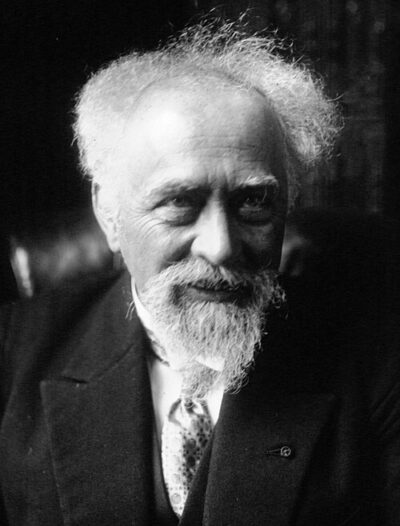
Jean-Baptiste Perrin
Jean-Baptiste Perrin was a French physicist. Born September 30, 1870, in Lille. Died April 17, 1942, in New York City. Positions held include president of the French Academy of Sciences (1936) and president (1929). Known for Les Atomes and Œuvres scientifiques de Jean Perrin. Educated at University of Paris and École Normale Supérieure. Awards include Nobel Prize in Physics, Matteucci Medal and Commander of the Legion of Honour.
Facts
38 facts · 2 confirmed by two sources · 10 cited · 26 from one source
Where this comes from
Papalocal keeps its own record. It started from these sources; what each one said is kept here as it was copied, so a change on their side never changes this page by itself. Tap one to read its version.
What Wikidata says · copied November 16, 2026 · revision 2568763689
- Described as
- French physicist (1870–1942)
- Other names
- Jean Perrin
- Born
- September 30, 1870 · 12 references
- Died
- April 17, 1942 · 13 references
- Born in
- Lille · 3 references
- Died in
- New York City · 4 references
- Buried in
- Panthéon (1948–) · 1 reference
- Citizen of
- France · 1 reference
- Occupation
- physicist · 1 reference; university teacher; chemist; theoretical physicist
- Positions held
- president of the French Academy of Sciences (1936) · 1 reference; president (1929)
- Worked for
- École Normale Supérieure; University of Paris
- Education
- University of Paris; École Normale Supérieure; Lycée Janson-de-Sailly
- Member of
- Royal Society of London (1918–); French Academy of Sciences; Royal Swedish Academy of Sciences; Russian Academy of Sciences (1924–) · 1 reference; Academy of Sciences of Turin (1922–) · 1 reference
- Known for
- Les Atomes; Œuvres scientifiques de Jean Perrin
- Awards
- Nobel Prize in Physics (1926) · 2 references; Matteucci Medal (1911); Commander of the Legion of Honour (1926); Great Gold medal of the Société d'Encouragement au Progrès (1938); Commander of the Order of Leopold II (1926); La Caze Prize of the Academy of Sciences (1914); Foreign Member of the Royal Society (1918) · 1 reference; Vallauri Prize (1907) · 1 reference; Jean Reynaud Prize (1946)
- Field
- physics · 1 reference; physical science · 1 reference
- Spouse
- Henriette Perrin-Duportal
- Children
- Francis Perrin; Aline Lapicque
- Wikipedias with a page
- 87
Wikidata item Q134085 (wikidata.org/wiki/Q134085), public domain (CC0). Copied November 16, 2026.
What Wikipedia says · copied November 16, 2026 · revision 1385607416
Jean Baptiste Perrin (French: [ʒɑ̃ batist pɛʁɛ̃]; 30 September 1870 – 17 April 1942) was a French physicist who, in his studies of the Brownian motion of minute particles suspended in liquids (sedimentation equilibrium), verified Albert Einstein's explanation of this phenomenon and thereby confirmed the atomic nature of matter. For this work, he was awarded the Nobel Prize in Physics in 1926.
- Born, in its opening lines
- September 30, 1870
- Died, in its opening lines
- April 17, 1942
From the Wikipedia article “Jean Perrin” (en.wikipedia.org/wiki/Jean_Perrin), by its contributors, under CC BY-SA 4.0 (creativecommons.org/licenses/by-sa/4.0/). Copied November 16, 2026; not changed.
Confirmed Two sources agree. Cited One source, and it names where it got it. One source One source, without a reference of its own. Sources disagree The sources disagree. We show the best-supported value and keep theirs below.
