
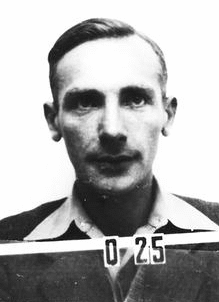
Joseph Rotblat
Joseph Rotblat was a physicist born in Poland who later became a naturalized British citizen. He was involved in the early stages of atomic weapons development during World War II, working on projects like Tube Alloys and the Manhattan Project. Rotblat departed the Los Alamos Laboratory in 1944 due to his ethical convictions. This decision was prompted by his realization that Germany had stopped its own atomic bomb research, leading him to question the necessity of the Allied project. He lived from 1908 to 2005.
Facts
29 facts · 2 confirmed by two sources · 15 cited · 12 from one source
Where this comes from
Papalocal keeps its own record. It started from these sources; what each one said is kept here as it was copied, so a change on their side never changes this page by itself. Tap one to read its version.
What Wikidata says · copied November 13, 2026 · revision 2568220809
- Described as
- Polish-born British-naturalised physicist
- Other names
- Sir Joseph Rotblat
- Born
- November 4, 1908 · 10 references
- Died
- August 31, 2005 · 9 references
- Born in
- Warsaw · 2 references
- Died in
- London · 1 reference
- Buried in
- Hampstead Cemetery · 1 reference
- Citizen of
- United Kingdom (1946–) · 1 reference; Poland
- Occupation
- physicist · 1 reference
- Worked for
- University of Edinburgh; Conservatoire national des Arts et Métiers
- Education
- University of Warsaw (–1938); University of Liverpool (–1950); University of London (–1953)
- Member of
- Royal Society of London (1995–) · 1 reference; National Academy of Sciences of Ukraine (1994–) · 2 references; Polish Academy of Sciences (1966–) · 1 reference; Polish Society of Arts and Sciences Abroad (1950–) · 1 reference; American Academy of Arts and Sciences (1972–) · 1 reference
- Awards
- Nobel Peace Prize (1995) · 2 references; Fellow of the Royal Society (1995) · 1 reference; Knight Commander of the Order of St Michael and St George; Jamnalal Bajaj Award (1999) · 1 reference; Fellow of the American Physical Society (1995) · 1 reference; Albert Einstein Peace Prize (1992) · 1 reference; Commander of the Order of the British Empire; Commander with Star of the Order of Polonia Restituta · 1 reference
- Field
- high energy nuclear physics; nuclear physics
- Father
- Zygmunt Rotblat · 1 reference
- Wikipedias with a page
- 61
Wikidata item Q219982 (wikidata.org/wiki/Q219982), public domain (CC0). Copied November 13, 2026.
What Wikipedia says · copied November 13, 2026 · revision 1383375487
Sir Joseph Rotblat (Polish: Józef Rotblat; 4 November 1908 – 31 August 2005) was a Polish and British physicist. During World War II he worked on Tube Alloys and the Manhattan Project, but left the Los Alamos Laboratory on grounds of conscience after it became clear to him in 1944 that Germany had ceased development of an atomic bomb.
His work on nuclear fallout was a major contribution toward the ratification of the 1963 Partial Nuclear Test Ban Treaty. A signatory of the 1955 Russell–Einstein Manifesto, he was secretary-general of the Pugwash Conferences on Science and World Affairs from their founding until 1973 and shared, with the Pugwash Conferences, the 1995 Nobel Peace Prize "for efforts to diminish the part played by nuclear arms in international affairs and, in the longer run, to eliminate such arms."
- Born, in its opening lines
- November 4, 1908
- Died, in its opening lines
- August 31, 2005
From the Wikipedia article “Joseph Rotblat” (en.wikipedia.org/wiki/Joseph_Rotblat), by its contributors, under CC BY-SA 4.0 (creativecommons.org/licenses/by-sa/4.0/). Copied November 13, 2026; not changed.
Confirmed Two sources agree. Cited One source, and it names where it got it. One source One source, without a reference of its own. Sources disagree The sources disagree. We show the best-supported value and keep theirs below.
