
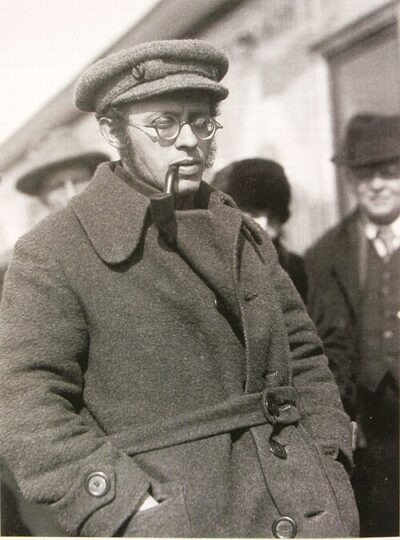
Karl Radek
Karl Radek was a Russian revolutionary. Born October 31, 1885, in Lviv. Died May 19, 1939, in Verkhneuralsk. Educated at Jagiellonian University.
Facts
26 facts · 2 confirmed by two sources · 9 cited · 15 from one source
Where this comes from
Papalocal keeps its own record. It started from these sources; what each one said is kept here as it was copied, so a change on their side never changes this page by itself. Tap one to read its version.
What Wikidata says · copied November 16, 2026 · revision 2568956628
- Described as
- Russian revolutionary (1885-1939)
- Other names
- Karl Berngardovich Radek
- Born
- October 31, 1885 · 8 references
- Died
- May 19, 1939 · 6 references
- Born in
- Lviv · 1 reference
- Died in
- Verkhneuralsk
- Name at birth
- Karol Sobelsohn
- Citizen of
- Poland; Soviet Union
- Occupation
- politician · 2 references; university teacher; journalist · 1 reference; revolutionary · 2 references; political prisoner · 1 reference; communist · 1 reference
- Political party
- Communist Party of Germany; Social Democratic Party of Germany (1908–1913); Communist Party of the Soviet Union; Social Democracy of the Kingdom of Poland and Lithuania (1904–1912)
- Worked for
- Moscow Sun Yat-sen University (1925–1927); Communist International
- Education
- Jagiellonian University
- Member of
- Central Committee of the Communist Party of the Soviet Union
- Field
- politics · 1 reference; journalism · 1 reference; communism · 1 reference; revolution · 1 reference
- Spouse
- Larisa Reisner
- Wikipedias with a page
- 45
Wikidata item Q84266 (wikidata.org/wiki/Q84266), public domain (CC0). Copied November 16, 2026.
What Wikipedia says · copied November 16, 2026 · revision 1378228176
Karl Berngardovich Radek (Russian: Карл Бернгардович Радек; Polish: Karol Radek; 31 October 1885 – 19 May 1939) was a revolutionary and writer active in the Polish and German social democratic movements before World War I and a Communist International leader in the Soviet Union after the Russian Revolution.
Radek was born to a Jewish family in Lemberg, Austria-Hungary. He joined the Social Democracy of the Kingdom of Poland and Lithuania and took part in the 1905 Russian Revolution in Congress Poland. Two years later he was forced to flee to Germany, where he worked as a journalist for the Social Democratic Party of Germany. After the outbreak of World War I, Radek relocated to Switzerland and became an associate of Vladimir Lenin. Following the February Revolution, Radek helped organize the return of Lenin and other Russian revolutionaries to Russia, though he himself was denied entry until after the October Revolution. As Vice-Commissar for Foreign Affairs, he took part in the negotiations of the Treaty of Brest-Litovsk. He helped establish the Communist Party of Germany after the revolution began, and spent a year in prison for his role in the Spartacist uprising.
After returning to Russia, Radek became a member of the Comintern Executive Committee. The failure of the revolution in Germany, as well as his support for Leon Trotsky against Joseph Stalin, ultimately led to his fall from power and expulsion from the Party. He later recanted his views and was re-admitted to the Party. Nevertheless, during the Great Purge Radek was accused of treason and arrested. He was found guilty as a chief defendant at the Second Moscow Trial in 1937 and sentenced to 10 years of penal labour. He died in Verkhneuralsk Political Isolator labour camp in the Urals two years later.
- Born, in its opening lines
- October 31, 1885
- Died, in its opening lines
- May 19, 1939
From the Wikipedia article “Karl Radek” (en.wikipedia.org/wiki/Karl_Radek), by its contributors, under CC BY-SA 4.0 (creativecommons.org/licenses/by-sa/4.0/). Copied November 16, 2026; not changed.
Confirmed Two sources agree. Cited One source, and it names where it got it. One source One source, without a reference of its own. Sources disagree The sources disagree. We show the best-supported value and keep theirs below.
