
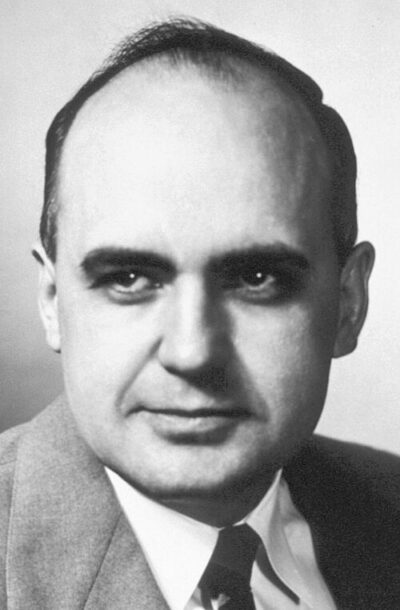
Maurice Hilleman
Maurice Hilleman was an American vaccinologist. Born August 30, 1919, in Miles City. Died April 11, 2005, in Philadelphia. Educated at University of Chicago and Montana State University. Awards include Robert Koch Gold Medal, AMA Scientific Achievement Award and Howard Taylor Ricketts Prize.
Facts
25 facts · 2 confirmed by two sources · 5 cited · 18 from one source
Where this comes from
Papalocal keeps its own record. It started from these sources; what each one said is kept here as it was copied, so a change on their side never changes this page by itself. Tap one to read its version.
What Wikidata says · copied November 15, 2026 · revision 2523269805
- Described as
- American vaccinologist (1919–2005)
- Other names
- Maurice Ralph Hilleman, Maurice R. Hilleman, Maurice R Hilleman, M. R. Hilleman, M R Hilleman, M. Hilleman, M Hilleman, Hilleman, Hilleman M, Hilleman M., Hilleman M. R., Hilleman MR
- Born
- August 30, 1919
- Died
- April 11, 2005
- Born in
- Miles City
- Died in
- Philadelphia
- Citizen of
- United States
- Occupation
- microbiologist
- Worked for
- University of Pennsylvania
- Education
- University of Chicago; Montana State University; Custer County District High School · 1 reference
- Member of
- National Academy of Sciences; American Academy of Arts and Sciences; National Academy of Medicine; American Philosophical Society (1997–)
- Awards
- Robert Koch Gold Medal (1989) · 2 references; AMA Scientific Achievement Award (1983); Howard Taylor Ricketts Prize (1983) · 1 reference; National Medal of Science (1988); National Inventors Hall of Fame (2007) · 1 reference; Maxwell Finland Award (1998) · 1 reference; IRI Achievement Award (1976); Lasker-Bloomberg Public Service Award (1983) · 1 reference; Prince Mahidol Award (2002); Albert B. Sabin Gold Medal (1997)
- Field
- microbiology
- Wikipedias with a page
- 36
Wikidata item Q983898 (wikidata.org/wiki/Q983898), public domain (CC0). Copied November 15, 2026.
What Wikipedia says · copied November 15, 2026 · revision 1380371106
Maurice Ralph Hilleman (August 30, 1919 – April 11, 2005) was a leading American microbiologist who specialized in vaccinology and developed over 40 vaccines, an unparalleled record of productivity. According to one estimate, his vaccines save nearly eight million lives each year. He has been described as one of the most influential vaccinologists ever. He has been called the "father of modern vaccines". Robert Gallo called Hilleman "the most successful vaccinologist in history". He has been described by some researchers as having saved more lives than any other scientist in the 20th century.
Of the 14 vaccines routinely recommended in American vaccine schedules, Hilleman and his team developed eight: those for measles, mumps, hepatitis A, hepatitis B, chickenpox, Neisseria meningitidis, Streptococcus pneumoniae and Haemophilus influenzae bacteria. During the influenza pandemic in Southern China, his vaccine is believed to have saved hundreds of thousands of lives. He also played a key role in developing the vaccine for the Hong Kong flu, as well as roles in the discovery of antigenic shift and drift, the cold-producing adenoviruses, the hepatitis viruses, and the potentially cancer-causing virus SV40.
- Born, in its opening lines
- August 30, 1919
- Died, in its opening lines
- April 11, 2005
From the Wikipedia article “Maurice Hilleman” (en.wikipedia.org/wiki/Maurice_Hilleman), by its contributors, under CC BY-SA 4.0 (creativecommons.org/licenses/by-sa/4.0/). Copied November 15, 2026; not changed.
Confirmed Two sources agree. Cited One source, and it names where it got it. One source One source, without a reference of its own. Sources disagree The sources disagree. We show the best-supported value and keep theirs below.
