
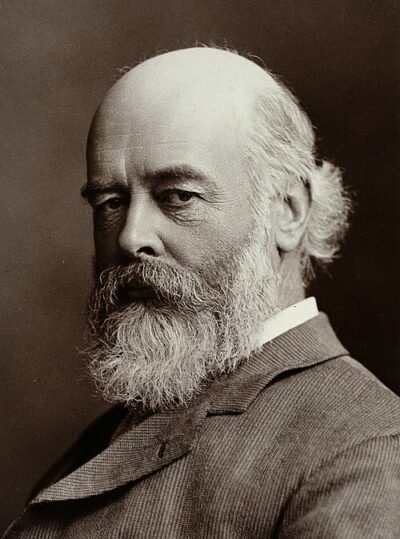
Oliver Lodge
Oliver Lodge was an English physicist. Born June 12, 1851, in Stoke-on-Trent. Died August 22, 1940, in Wilsford. Positions held include college head (1900–1919) and chairperson (2 times) (1899–1913). Known for Maxwell-Lodge effect. Educated at University College London. Awards include Fellow of the Royal Society, Rumford Medal and Faraday Medal.
Facts
44 facts · 2 confirmed by two sources · 28 cited · 14 from one source
Where this comes from
Papalocal keeps its own record. It started from these sources; what each one said is kept here as it was copied, so a change on their side never changes this page by itself. Tap one to read its version.
What Wikidata says · copied November 16, 2026 · revision 2562680460
- Described as
- English physicist (1851-1940)
- Other names
- Sir Oliver Joseph Lodge, Sir Oliver Lodge, Oliver Joseph Lodge, Oliver, Sir Lodge
- Born
- June 12, 1851 · 7 references
- Died
- August 22, 1940 · 7 references
- Born in
- Stoke-on-Trent
- Died in
- Wilsford
- Buried in
- Church of St Michael, Wilsford · 1 reference
- Name at birth
- Oliver Joseph Lodge · 1 reference
- Citizen of
- United Kingdom; United Kingdom of Great Britain and Ireland (–1927)
- Occupation
- physicist · 1 reference; inventor · 1 reference; naturalist · 1 reference; writer · 1 reference
- Positions held
- college head (1900–1919) · 1 reference; chairperson (2 times) (1899–1913) · 1 reference
- Worked for
- University of Liverpool (1881–1900) · 1 reference; University College London (1877–1881) · 1 reference; University of Birmingham (1900–1919) · 1 reference
- Education
- University College London (1873–1877) · 2 references
- Member of
- Royal Society of London · 1 reference; Maxwellians · 1 reference; American Philosophical Society
- Known for
- Maxwell-Lodge effect
- Awards
- Fellow of the Royal Society (1887) · 1 reference; Rumford Medal (1898) · 1 reference; Faraday Medal (1932) · 1 reference; National Inventors Hall of Fame (2007) · 1 reference; Albert Medal (1919) · 1 reference; Knight Bachelor (1902)
- Spouse
- Mary Fanny Alexander Marshall · 1 reference
- Children
- Oliver W. F. Lodge · 1 reference; Francis Brodie Lodge · 1 reference; Alec Lodge · 1 reference; Lionel Lodge · 1 reference; Noel Lodge · 1 reference; Violet Lodge · 1 reference; Raymond Lodge · 1 reference; Honor Lodge · 1 reference; Lorna Lodge · 1 reference; Norah Lodge · 1 reference; Rosalynde Lodge · 1 reference; Barbara Lodge · 1 reference
- Siblings
- Richard Lodge; Eleanor Constance Lodge; Alfred Lodge
- Wikipedias with a page
- 37
Wikidata item Q379816 (wikidata.org/wiki/Q379816), public domain (CC0). Copied November 16, 2026.
What Wikipedia says · copied November 16, 2026 · revision 1383373919
Sir Oliver Joseph Lodge (12 June 1851 – 22 August 1940) was an English physicist and electrical engineer whose investigations into electromagnetic radiation (EMR) contributed to the development of radio. He identified EMR independent of Heinrich Hertz's proof. In his 1894 Royal Institution lecture, The Work of Hertz and Some of His Successors, Lodge's demonstrations on methods to transmit and detect radio waves included an improved early radio receiver he named the coherer. His work led to his holding key patents in early radio communication, his "syntonic" (or tuning) patents.
Lodge was a pioneer of spiritualism; his pseudoscientific research into life after death was a topic on which he wrote many books, including the best-selling Raymond; or, Life and Death (1916), which detailed messages he received from a medium, which he believed came from his son who was killed in the First World War.
- Born, in its opening lines
- June 12, 1851
- Died, in its opening lines
- August 22, 1940
From the Wikipedia article “Oliver Lodge” (en.wikipedia.org/wiki/Oliver_Lodge), by its contributors, under CC BY-SA 4.0 (creativecommons.org/licenses/by-sa/4.0/). Copied November 16, 2026; not changed.
Confirmed Two sources agree. Cited One source, and it names where it got it. One source One source, without a reference of its own. Sources disagree The sources disagree. We show the best-supported value and keep theirs below.
