
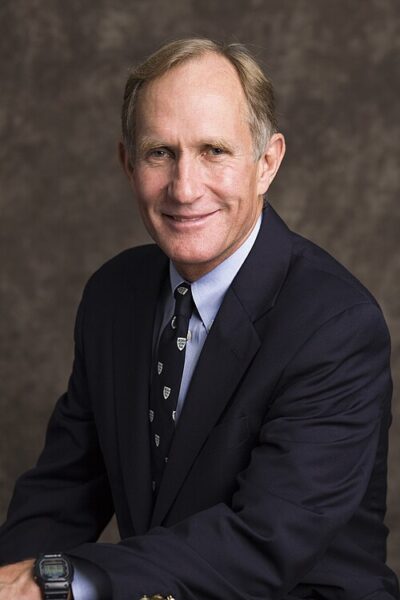
Peter Agre
Peter Agre is an American chemist, recipient of Nobel Prize in Chemistry. Born January 30, 1949, in Northfield. Educated at Augsburg University and Johns Hopkins School of Medicine. Awards include Nobel Prize in Chemistry, Fellow of the Pakistan Academy of Sciences and doctor honoris causa of Keiō University.
Facts
36 facts · 1 confirmed by two sources · 19 cited · 16 from one source
Where this comes from
Papalocal keeps its own record. It started from these sources; what each one said is kept here as it was copied, so a change on their side never changes this page by itself. Tap one to read its version.
What Wikidata says · copied November 13, 2026 · revision 2563198891
- Described as
- American chemist, recipient of Nobel Prize in Chemistry
- Other names
- Peter Courtland Agre, Peter C. Agre
- Born
- January 30, 1949 · 5 references
- Born in
- Northfield · 2 references
- Citizen of
- United States
- Occupation
- chemist · 1 reference; molecular biologist; university teacher; physician · 1 reference; microbiologist · 1 reference; researcher
- Worked for
- Johns Hopkins University; Duke University · 1 reference; Johns Hopkins School of Medicine · 2 references
- Education
- Augsburg University; Johns Hopkins School of Medicine; Roosevelt High School · 1 reference; Johns Hopkins University
- Member of
- National Academy of Sciences (2000–) · 1 reference; American Academy of Arts and Sciences (2003–) · 1 reference; Russian Academy of Sciences (2011–) · 1 reference; Royal Danish Academy of Sciences and Letters (2012–) · 1 reference; American Philosophical Society · 1 reference; American Association for the Advancement of Science (2005–) · 1 reference; Royal Irish Academy (2011–) · 1 reference; European Academy of Sciences (2004–) · 1 reference
- Awards
- Nobel Prize in Chemistry (2003) · 2 references; Fellow of the Pakistan Academy of Sciences; doctor honoris causa of Keiō University; honorary doctorate of the National University of San Marcos; Fellow of the American Academy of Arts and Sciences · 1 reference; Distinguished Eagle Scout Award · 1 reference; George M. Kober Medal (2016) · 1 reference; Karl Landsteiner Memorial Award (2005) · 1 reference; honorary doctorate from University of Bordeaux-II (2009) · 1 reference; Fellow of the American Association for the Advancement of Science (2005) · 1 reference
- Field
- molecular biology
- Religion
- Lutheranism
- Wikipedias with a page
- 64
Wikidata item Q102250 (wikidata.org/wiki/Q102250), public domain (CC0). Copied November 13, 2026.
What Wikipedia says · copied November 13, 2026 · revision 1381620899
Peter Courtland Agre (; born January 30, 1949) is a Nobel Laureate American physician, molecular biologist, Bloomberg Distinguished Professor at the Johns Hopkins Bloomberg School of Public Health and Johns Hopkins School of Medicine, and director emeritus of the Johns Hopkins Malaria Research Institute. In 2003, Agre and Roderick MacKinnon shared the 2003 Nobel Prize in Chemistry for "discoveries concerning channels in cell membranes." Agre was recognized for his discovery of aquaporin water channels. Aquaporins are water-channel proteins that move water molecules through the cell membrane. In 2009, Agre was elected president of the American Association for the Advancement of Science (AAAS) and became active in science diplomacy.
- Born, in its opening lines
- January 30, 1949
From the Wikipedia article “Peter Agre” (en.wikipedia.org/wiki/Peter_Agre), by its contributors, under CC BY-SA 4.0 (creativecommons.org/licenses/by-sa/4.0/). Copied November 13, 2026; not changed.
Confirmed Two sources agree. Cited One source, and it names where it got it. One source One source, without a reference of its own. Sources disagree The sources disagree. We show the best-supported value and keep theirs below.
