
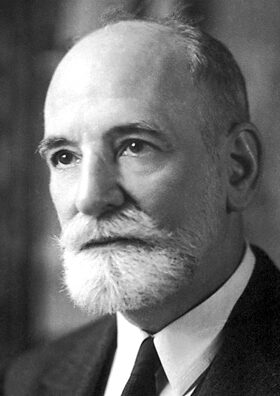
René Cassin
René Cassin was a French jurist. Born October 5, 1887, in Bayonne. Died February 20, 1976, in 13th arrondissement of Paris. Positions held include Vice President of the State Council of France (1944–1960), member of the Consitutional council (1960–1971) and president (2 times) (1922–1976). Known for Universal Declaration of Human Rights. Educated at Lycée Masséna and Faculté de droit d'Aix-en-Provence. Awards include Nobel Peace Prize, Grand Cross of the Legion of Honour and Croix de guerre 1914–1918.
Facts
41 facts · 2 confirmed by two sources · 19 cited · 20 from one source
Where this comes from
Papalocal keeps its own record. It started from these sources; what each one said is kept here as it was copied, so a change on their side never changes this page by itself. Tap one to read its version.
What Wikidata says · copied November 16, 2026 · revision 2563064962
- Described as
- French jurist (1887-1976)
- Other names
- René-Samuel Cassin, Rene-Samuel Cassin, Rene Cassin, René Samuel Cassin
- Born
- October 5, 1887 · 4 references
- Died
- February 20, 1976 · 13 references
- Born in
- Bayonne · 2 references
- Died in
- 13th arrondissement of Paris · 1 reference
- Buried in
- Panthéon (1987–) · 1 reference
- Name at birth
- Samuel René Cassin · 1 reference
- Citizen of
- France
- Occupation
- jurist · 1 reference; diplomat · 1 reference; politician · 1 reference
- Positions held
- Vice President of the State Council of France (1944–1960); member of the Consitutional council (1960–1971); president (2 times) (1922–1976); Judge of the European Court of Human Rights (1959–1976) · 1 reference; President of the European Court of Human Rights (1965–1968) · 1 reference
- Political party
- Radical-Socialist and Radical Republican Party
- Worked for
- University of Paris (1920–1976) · 1 reference; University of Lille (1920–1929) · 1 reference; Sciences Po Aix-en-Provence; Faculté de droit d'Aix-en-Provence (1916–1920)
- Education
- Lycée Masséna (1904) · 1 reference; Faculté de droit d'Aix-en-Provence (1904–1908) · 2 references; University of Paris (1914) · 2 references
- Member of
- Human Rights League; Académie des Sciences Morales et Politiques; Serbian Academy of Sciences and Arts; Empire Defense Council (1940–1941); Free French Forces · 1 reference; Union Fédérale · 1 reference
- Known for
- Universal Declaration of Human Rights
- Awards
- Nobel Peace Prize (1968) · 2 references; Grand Cross of the Legion of Honour · 2 references; Croix de guerre 1914–1918; Commander of the French Order of Academic Palms; Companion of the Liberation; Resistance Medal (1947) · 1 reference; United Nations Prize in the Field of Human Rights (1968); Médaille militaire; Honorary doctor of the University of Oxford · 1 reference
- Religion
- Judaism
- Military rank
- master corporal
- Wikipedias with a page
- 54
Wikidata item Q232873 (wikidata.org/wiki/Q232873), public domain (CC0). Copied November 16, 2026.
What Wikipedia says · copied November 16, 2026 · revision 1347268826
René Samuel Cassin (5 October 1887 – 20 February 1976) was a French jurist known for co-authoring the Universal Declaration of Human Rights and receiving the Nobel Peace Prize.
Born in Bayonne, Cassin served as a soldier in the First World War during which he was seriously wounded. He was of Portuguese-Jewish descent.
On 24 June 1940, during the Second World War, Cassin heeded General Charles de Gaulle's radio appeal and joined him in London. Cassin used his legal expertise to help de Gaulle's Free French.
Between 1944 and 1959, Cassin was a member of the Council of State.
Seconded to the UN Commission on Human Rights after the war, he was a major contributor to the 1948 Universal Declaration of Human Rights. For that work, he received the Nobel Peace Prize in 1968. The same year, he was awarded one of the UN General Assembly's Human Rights Prizes.
- Born, in its opening lines
- October 5, 1887
- Died, in its opening lines
- February 20, 1976
From the Wikipedia article “René Cassin” (en.wikipedia.org/wiki/René_Cassin), by its contributors, under CC BY-SA 4.0 (creativecommons.org/licenses/by-sa/4.0/). Copied November 16, 2026; not changed.
Confirmed Two sources agree. Cited One source, and it names where it got it. One source One source, without a reference of its own. Sources disagree The sources disagree. We show the best-supported value and keep theirs below.
