University of Lille
The University of Lille is a French university located in Lille and founded in 1559 in Douai; split between 1970 and 2017 into three independent universities (Lille-I, Lille-II and Lille-III). It was founded by Philip II of Spain. It has 8,000 employees (2022). 71,429 students study there (2021).
- Country
- France
- Founded
- 1559
- Students
- 71,429 (2021)
- What it is
- public research university
All 12 facts, and where they come from
Facts
12 facts · 0 confirmed by two sources · 4 cited · 8 from one source
Where this comes from
Papalocal keeps its own record. It started from these sources; what each one said is kept here as it was copied, so a change on their side never changes this page by itself. Tap one to read its version.
What Wikidata says · copied November 16, 2026 · revision 2564848810
- Described as
- French university located in Lille and founded in 1559 in Douai; split between 1970 and 2017 into three independent universities (Lille-I, Lille-II and Lille-III)
- Other names
- ULille, UDL, univ-lille, Universitas Insulensis, Lille University, Lille Nord de France, Lille Nord Europe, Lille 1, Lille 2, Lille 3, University of Douai, Lille-I
- What it is
- public research university; university in France
- Comes after
- University of Douai (1559–1887)
- Founded
- 1559 · 1 reference
- Founded by
- Philip II of Spain
- Headquarters
- Lille
- Country
- France
- Industry
- higher education · 1 reference
- Chair
- Régis Bordet (2021–) · 1 reference
- Employees
- 8,000 (2022) · 1 reference
- Students
- 67,729 (2018) · 1 reference
- Official website
- https://www.univ-lille.fr/
- Wikipedias with a page
- 21
Wikidata item Q3551621 (wikidata.org/wiki/Q3551621), public domain (CC0). Copied 2026-11-16.
What Wikipedia says · copied November 16, 2026 · revision 1378793029
The University of Lille (French: Université de Lille, abbreviated as ULille, UDL or univ-lille) is a French public research university based in Lille, in the Nord department of Hauts-de-France region. With more than 80,000 students, it is one of the largest universities in France. It is currently the only public research university in the Métropole européenne de Lille, with 15 Schools and Divisions spread across six campuses, and it is part of the Académie de Lille.
The university was founded in 1559 as the University of Douai. Several faculties are being created in Lille, and all remaining Douai faculties were subsequently officially transferred to Lille in 1896 as University of Lille, later becoming three independent universities in 1970. In 2018, the three independent universities (Lille 1 University of Science and Technology, Lille 2 University of Health and Law, and Charles de Gaulle University – Lille III) merged to once again form the single University of Lille. Until 2019, the university was the main component of the « University of Lille Nord de France », a specific organization which federates universities and other higher learning institutes in the Hauts-de-France region. The University of Lille has absorbed its competencies at the time of its dissolution.
Since 2017, the university has been funded as one of the French universities of excellence. It benefits from an exceptional endowment of 500 million euros to accelerate its strategy in education, research, international development and outreach. The University of Lille features in global university rankings (ARWU, THE, QS), and is a member of several alliances (Erasmus+, Utrecht Network, France Universités, EUA, CURIF Group, NeurotechEU, IMCC, HR Excellence in Research). It has 115 partner universities abroad and awards more than 24,000 degrees annually (primarily licence, master, doctorat).
The university includes a doctoral college with 3,000 PhD students across 150 regional laboratories and seven doctoral schools. With 64 dedicated research labs, 400 PhD theses defended annually, and over 3,000 scientific publications each year, the University of Lille is well-represented in the research community. It collaborates with many organizations (Pasteur Institute of Lille, CHU Lille University Hospital, CNRS, INSERM, INRAE, INRIA, IFREMER, ONERA, IFSTTAR, IRD, CEA, CNES), and schools (École Centrale de Lille, IMT Nord Europe, Arts et Métiers Lille).
The University of Lille should not be confused with the independent and private catholic university of Lille.
From the Wikipedia article “University of Lille” (en.wikipedia.org/wiki/University_of_Lille), by its contributors, under CC BY-SA 4.0 (creativecommons.org/licenses/by-sa/4.0/). Copied 2026-11-16; not changed.
Confirmed Two sources agree. Cited One source, and it names where it got it. One source One source, without a reference of its own. Sources disagree The sources disagree. We show the best-supported value and keep theirs below.
Picture: Wikimedia Commons: Villeneuve d'Ascq.- Communauté d'universités et établissements Lille-Nord-de-France.jpg · See Commons file page
People connected 6
Worked here
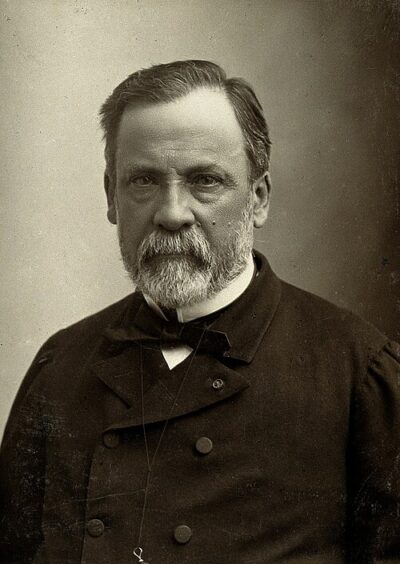 Louis Pasteur (1854–1857)French chemist and microbiologist (1822–1895)
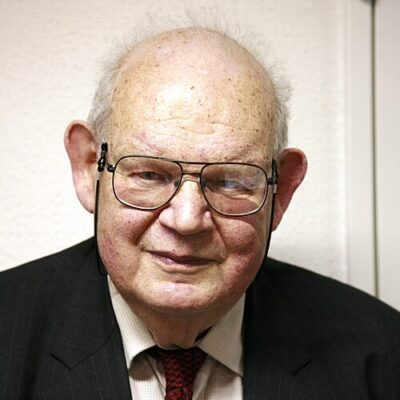 Benoit Mandelbrot (1952–1953)Polish-born, French and American mathematician (1924–2010)
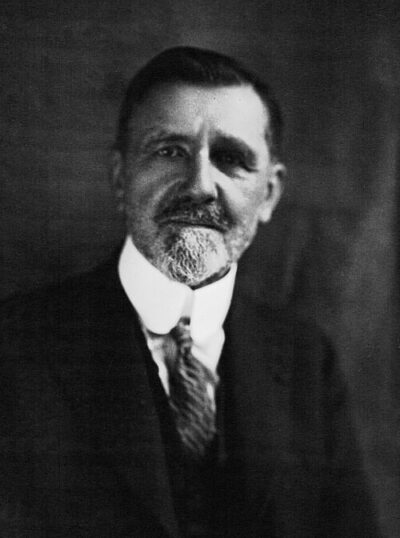 Émile Borel (1893–1897)French mathematician and politician (1871-1956)
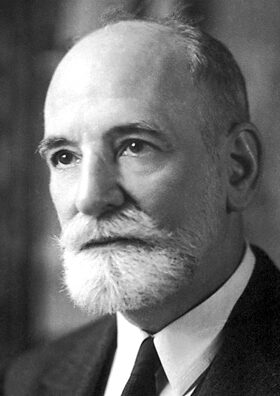 René Cassin (1920–1929)French jurist (1887-1976)
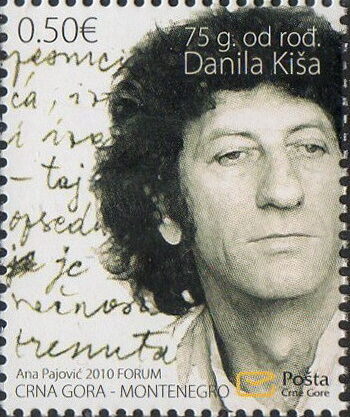 Danilo KišSerbian and Yugoslav novelist (1935–1989)