
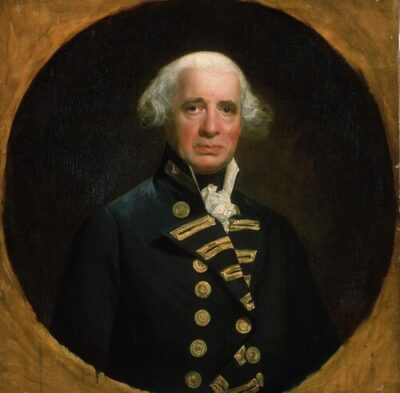
Richard Howe, 1st Earl Howe
Richard Howe, 1st Earl Howe was a Royal Navy Admiral of the Fleet. Born March 8, 1726, in London. Died August 5, 1799, in London. Positions held include member of the 11th Parliament of Great Britain, member of the 12th Parliament of Great Britain and member of the 13th Parliament of Great Britain. Educated at Westminster School and Eton College. Awards include Order of the Garter.
Facts
35 facts · 2 confirmed by two sources · 16 cited · 17 from one source
What’s different
- Born: we show March 8, 1726 (Confirmed). Wikidata also lists March 19, 1725
Where this comes from
Papalocal keeps its own record. It started from these sources; what each one said is kept here as it was copied, so a change on their side never changes this page by itself. Tap one to read its version.
What Wikidata says · copied November 17, 2026 · revision 2563035064
- Described as
- Royal Navy Admiral of the Fleet
- Other names
- Admiral Howe, Lord Howe, Admiral Richard Howe, 1st and last Earl Howe, Richard, Earl Howe
- Born
- March 8, 1726 · 2 references; March 19, 1725 · 1 reference
- Died
- August 5, 1799 · 6 references
- Born in
- London · 1 reference
- Died in
- London
- Citizen of
- Kingdom of Great Britain
- Occupation
- naval officer; politician; military officer · 1 reference; military commander · 1 reference; sailor · 1 reference; admiral · 1 reference
- Positions held
- member of the 11th Parliament of Great Britain; member of the 12th Parliament of Great Britain; member of the 13th Parliament of Great Britain; member of the 14th Parliament of Great Britain; member of the 15th Parliament of Great Britain; First Sea Lord (1763–1765); First Lord of the Admiralty (1783–1788)
- Education
- Westminster School; Eton College · 1 reference
- Awards
- Order of the Garter · 1 reference
- Field
- military affairs · 1 reference; navy · 1 reference
- Spouse
- Mary Hartop (1758–) · 3 references
- Children
- Sophia Charlotte Curzon, 2nd Baroness Howe · 2 references; Maria Juliana Howe · 2 references; Louisa Catherine Howe · 2 references
- Father
- Emanuel Howe, 2nd Viscount Howe · 2 references
- Mother
- Charlotte Howe, Viscountess Howe · 2 references
- Siblings
- William Howe, 5th Viscount Howe · 2 references; George Howe, 3rd Viscount Howe · 2 references
- Military branch
- Royal Navy
- Military rank
- admiral (1782–); vice admiral (1775–); rear admiral (1770–)
- Wikipedias with a page
- 25
Wikidata item Q332616 (wikidata.org/wiki/Q332616), public domain (CC0). Copied November 17, 2026.
What Wikipedia says · copied November 17, 2026 · revision 1384312112
Admiral of the Fleet Richard Howe, Earl Howe (8 March 1726 – 5 August 1799) was a Royal Navy officer and politician. After serving in the War of the Austrian Succession, he gained a reputation for his role in amphibious operations against the French coast as part of Britain's policy of naval descents during the Seven Years' War. He also took part, as a naval captain, in the decisive British naval victory at the Battle of Quiberon Bay in November 1759.
In North America, Howe is best known for his service during the American War of Independence, when he acted as a naval commander and a peace commissioner with the American rebels; he also conducted a successful relief during the Great Siege of Gibraltar in the later stages of the War. Howe later commanded the victorious British fleet during the Glorious First of June in June 1794 during the French Revolutionary Wars.
- Born, in its opening lines
- March 8, 1726
- Died, in its opening lines
- August 5, 1799
From the Wikipedia article “Richard Howe, Earl Howe” (en.wikipedia.org/wiki/Richard_Howe,_Earl_Howe), by its contributors, under CC BY-SA 4.0 (creativecommons.org/licenses/by-sa/4.0/). Copied November 17, 2026; not changed.
Confirmed Two sources agree. Cited One source, and it names where it got it. One source One source, without a reference of its own. Sources disagree The sources disagree. We show the best-supported value and keep theirs below.
