
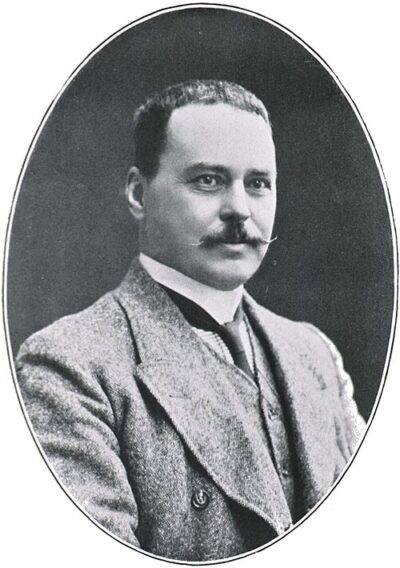
Ronald Ross
Ronald Ross was a British doctor, Nobel laureate, writer, and artist. Born May 13, 1857, in Almora. Died September 16, 1932, in London. Educated at Barts and The London School of Medicine and Dentistry. Awards include Fellow of the Royal Society, Nobel Prize in Physiology or Medicine and Knight Commander of the Order of the Bath.
Facts
37 facts · 2 confirmed by two sources · 15 cited · 20 from one source
Where this comes from
Papalocal keeps its own record. It started from these sources; what each one said is kept here as it was copied, so a change on their side never changes this page by itself. Tap one to read its version.
What Wikidata says · copied November 16, 2026 · revision 2568645577
- Described as
- British doctor, Nobel laureate, writer, and artist (1857–1932)
- Other names
- Ron.Ross, Sir Ronald Ross
- Born
- May 13, 1857 · 12 references
- Died
- September 16, 1932 · 11 references
- Born in
- Almora · 1 reference
- Died in
- London
- Buried in
- Putney Vale Cemetery · 1 reference
- Citizen of
- United Kingdom
- Occupation
- physician · 1 reference; mathematician; epidemiologist; poet · 1 reference; novelist; malariologist · 1 reference; microbiologist; zoologist
- Worked for
- King's College London
- Education
- Barts and The London School of Medicine and Dentistry
- Member of
- Royal Society of London (1901–); Royal Academy of Medicine of Belgium
- Awards
- Fellow of the Royal Society (1901) · 1 reference; Nobel Prize in Physiology or Medicine (1902) · 2 references; Knight Commander of the Order of the Bath (1911); James Tait Black Memorial Prize (1923) · 1 reference; Royal Medal (1909); Knight Commander of the Order of St Michael and St George (1918) · 1 reference; Manson Medal (1929) · 1 reference; Bisset Hawkins Medal (1914); Albert Medal (1923) · 1 reference; Cameron Prize of the University of Edinburgh; Honorary Fellow of the Royal Society Te Apārangi (1929–) · 1 reference
- Field
- parasitology; epidemiology
- Spouse
- Rosa Bessie Bloxam
- Children
- Charles Campbell Ross of that Ilk, younger · 1 reference
- Father
- Campbell Claye Grant Ross · 1 reference
- Mother
- Matilda Elderton · 1 reference
- Siblings
- Charles Ross
- Lived in
- Scotland · 1 reference
- Wikipedias with a page
- 94
Wikidata item Q102034 (wikidata.org/wiki/Q102034), public domain (CC0). Copied November 16, 2026.
What Wikipedia says · copied November 16, 2026 · revision 1383708307
Sir Ronald Ross (13 May 1857 – 16 September 1932) was a British medical doctor. He received the 1902 Nobel Prize for Physiology or Medicine "for his work on malaria, by which he has shown how it enters the organism and thereby has laid the foundation for successful research on this disease and methods of combating it". His discovery of the malarial parasite in the gastrointestinal tract of a mosquito in 1897 proved that malaria was transmitted by mosquitoes, and laid the foundation for the method of combating the disease.
Ross was a polymath, writing a number of poems, publishing several novels, and composing songs. He was also an amateur artist and mathematician. He worked in the Indian Medical Service for 25 years. It was during his service that he made the groundbreaking medical discovery. After resigning from his service in India, he joined the faculty of Liverpool School of Tropical Medicine, and continued as Professor and Chairman of Tropical Medicine of the institute for 10 years. In 1926, he became Director-in-Chief of the Ross Institute and Hospital for Tropical Diseases, which was established in honour of his works. He remained there until his death.
- Born, in its opening lines
- May 13, 1857
- Died, in its opening lines
- September 16, 1932
From the Wikipedia article “Ronald Ross” (en.wikipedia.org/wiki/Ronald_Ross), by its contributors, under CC BY-SA 4.0 (creativecommons.org/licenses/by-sa/4.0/). Copied November 16, 2026; not changed.
Confirmed Two sources agree. Cited One source, and it names where it got it. One source One source, without a reference of its own. Sources disagree The sources disagree. We show the best-supported value and keep theirs below.
